Wanderlust Ice & Ink — Interview: Alexander Liubchenko, the Driving Force Behind Ultimate Figure Skater and the Revolution Reinventing Figure Skating
«Go and enjoy the moment.» - Alexander Liubchenko


WANDERLUST ICE & INK — INTERVIEW: ALEXANDER LIUBCHENKO, THE DRIVING FORCE BEHIND ULTIMATE FIGURE SKATER AND THE REVOLUTION REINVENTING FIGURE SKATING. (c) ALEXANDER LIUBCHENKO

Throughout the history of figure skating, only a handful of individuals have dared to question the foundations of the sport itself. While most coaches dedicate their careers to developing athletes within the existing system, Alexander Liubchenko has chosen a far more ambitious path: rethinking how skating can evolve for the next generation. Formerly a competitive ice dancer, Liubchenko has gradually become one of the most influential innovators in the rapidly growing world of acrobatic figure skating. Over the past several years, his work has attracted athletes from across Europe and beyond, not simply because of the spectacular acrobatic elements he teaches, but because of the philosophy that underpins every aspect of his project. Through internationally recognised training camps, years of technical research, and the development of Ultimate Figure Skater, he has set out to challenge many of the assumptions that have shaped modern figure skating for decades. His ambition extends far beyond creating new skills or spectacular performances. Today, Alexander is recognised by many within the skating community not only as an athlete and coach, but also as one of the leading pioneers of modern acrobatic figure skating.
« His patience, generosity, humility, kindness, and unwavering belief in every individual encourage skaters to attempt skills they may once have considered unattainable. »
Indeed, through years of experimentation, athlete development, and technical innovation, he has helped transform what was once considered a niche discipline into a structured training methodology attracting participants from around the world. Perhaps this is what makes Alexander's work so distinctive. His greatest talent is not merely teaching backflips or complex aerial skills; it is recognising potential in athletes long before they recognise it themselves. His patience, generosity, humility, kindness, and unwavering belief in every individual encourage skaters to attempt skills they may once have considered unattainable. Watching him coach quickly reveals that technical ability alone is not what transforms an athlete. Confidence, trust, resilience, and self-belief are equally essential, and he possesses a remarkable ability to cultivate each of them. The impact of that philosophy extends far beyond the training rink. His Ultimate Figure Skater camps welcome competitive skaters, coaches, professional performers, and circus artists united by one objective: pushing the boundaries of what is possible on ice while doing so safely and methodically.
« Beyond the technical training, Ultimate Figure Skater camps, foster an environment where athletes share their passion for the sport, exchange ideas and experiences across different disciplines and cultures, and build friendships that often continue long after the camp has ended. It is an atmosphere where sport, artistry, and human connection naturally come together, creating memories that last a lifetime. »
More than an internationally recognised training camp and competition project, it has become one of the leading environments for athletes wishing to safely explore the rapidly expanding discipline of acrobatic figure skating. Figure skaters, show performers, coaches, circus artists, and professionals from around the world come together to exchange knowledge, refine their skills, and discover possibilities that often extend far beyond traditional competitive skating. Beyond the technical training, the camps foster an environment where athletes share their passion for the sport, exchange ideas and experiences across different disciplines and cultures, and build friendships that often continue long after the camp has ended. It is an atmosphere where sport, artistry, and human connection naturally come together, creating memories that last a lifetime.
« Figure skaters, show performers, coaches, circus artists, and professionals from around the world come together to exchange knowledge, refine their skills, and discover possibilities that often extend far beyond traditional competitive skating.
»
As both a professional pair skater and performer, I had the opportunity to attend one of Alexander's camps myself. What struck me most was not simply the difficulty of the acrobatic elements being taught, but the philosophy behind the entire learning process. Every progression follows a carefully structured methodology, where each exercise builds logically upon the previous one, every risk is meticulously managed, and technical development never comes at the expense of safety. Rather than creating pressure, the environment encourages curiosity, confidence, and continuous improvement. It quickly becomes apparent that Ultimate Figure Skater is built as much on education as it is on athletic performance. Every athlete, regardless of age, experience, competitive level, or professional background, is treated as an individual rather than simply another participant. Liubchenko and his team carefully adapt each progression to the athlete in front of them, creating an atmosphere where even the smallest achievement becomes another step towards unlocking greater potential. It is this balance between technical excellence, safety, mutual support, and a genuine sense of community that makes the experience unlike any traditional training camp.
In this exclusive interview for Wanderlust Ice & Ink, Alexander Liubchenko discusses the origins of Ultimate Figure Skater, the philosophy behind his internationally recognised camps, the development of a new judging system, and why he believes the next evolution of figure skating may begin by rethinking the sport from its very foundations.
INSTAGRAM I LIUBCHENKO AND CO: https://www.instagram.com/liubchenko_and_co?igsh=Z2R5d2VocDZpdjly
« His patience, generosity, humility, kindness, and unwavering belief in every individual encourage skaters to attempt skills they may once have considered unattainable. »
Indeed, through years of experimentation, athlete development, and technical innovation, he has helped transform what was once considered a niche discipline into a structured training methodology attracting participants from around the world. Perhaps this is what makes Alexander's work so distinctive. His greatest talent is not merely teaching backflips or complex aerial skills; it is recognising potential in athletes long before they recognise it themselves. His patience, generosity, humility, kindness, and unwavering belief in every individual encourage skaters to attempt skills they may once have considered unattainable. Watching him coach quickly reveals that technical ability alone is not what transforms an athlete. Confidence, trust, resilience, and self-belief are equally essential, and he possesses a remarkable ability to cultivate each of them. The impact of that philosophy extends far beyond the training rink. His Ultimate Figure Skater camps welcome competitive skaters, coaches, professional performers, and circus artists united by one objective: pushing the boundaries of what is possible on ice while doing so safely and methodically.
« Beyond the technical training, Ultimate Figure Skater camps, foster an environment where athletes share their passion for the sport, exchange ideas and experiences across different disciplines and cultures, and build friendships that often continue long after the camp has ended. It is an atmosphere where sport, artistry, and human connection naturally come together, creating memories that last a lifetime. »
More than an internationally recognised training camp and competition project, it has become one of the leading environments for athletes wishing to safely explore the rapidly expanding discipline of acrobatic figure skating. Figure skaters, show performers, coaches, circus artists, and professionals from around the world come together to exchange knowledge, refine their skills, and discover possibilities that often extend far beyond traditional competitive skating. Beyond the technical training, the camps foster an environment where athletes share their passion for the sport, exchange ideas and experiences across different disciplines and cultures, and build friendships that often continue long after the camp has ended. It is an atmosphere where sport, artistry, and human connection naturally come together, creating memories that last a lifetime.
« Figure skaters, show performers, coaches, circus artists, and professionals from around the world come together to exchange knowledge, refine their skills, and discover possibilities that often extend far beyond traditional competitive skating.
»
As both a professional pair skater and performer, I had the opportunity to attend one of Alexander's camps myself. What struck me most was not simply the difficulty of the acrobatic elements being taught, but the philosophy behind the entire learning process. Every progression follows a carefully structured methodology, where each exercise builds logically upon the previous one, every risk is meticulously managed, and technical development never comes at the expense of safety. Rather than creating pressure, the environment encourages curiosity, confidence, and continuous improvement. It quickly becomes apparent that Ultimate Figure Skater is built as much on education as it is on athletic performance. Every athlete, regardless of age, experience, competitive level, or professional background, is treated as an individual rather than simply another participant. Liubchenko and his team carefully adapt each progression to the athlete in front of them, creating an atmosphere where even the smallest achievement becomes another step towards unlocking greater potential. It is this balance between technical excellence, safety, mutual support, and a genuine sense of community that makes the experience unlike any traditional training camp.
In this exclusive interview for Wanderlust Ice & Ink, Alexander Liubchenko discusses the origins of Ultimate Figure Skater, the philosophy behind his internationally recognised camps, the development of a new judging system, and why he believes the next evolution of figure skating may begin by rethinking the sport from its very foundations.
INSTAGRAM I LIUBCHENKO AND CO: https://www.instagram.com/liubchenko_and_co?igsh=Z2R5d2VocDZpdjly
 video-output-F0E638FE-BA95-4C69-AFB5-77BE3469945F-1.mp3 (8.16 Mo)
Alexander Liubchenko: The Man Reimagining the Future of Figure Skating Worldwide

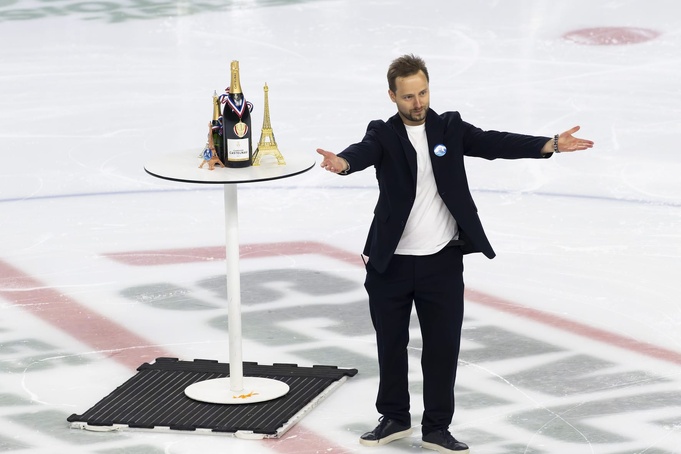
Q: Many describe your work as a revolution in the world of figure skating. Do you agree with that characterization, or do you see your project differently?
A: I'm very pleased that people see my work that way. To be honest, I'm not used to thinking of myself in terms of "revolution" – I see it more as a natural evolution of something that has long been overdue. But I admit the scale of the project is indeed large: I want to make our sport more interesting for spectators, clearer in terms of judging, and overall more honest – so that the result on the ice depends on skill and risk. If that's called a revolution, then let it be. What matters more to me is what exist behind it: a sport you want to believe in.
Q: Was there a moment when you realized that the existing figure skating system didn't work for you?
A: It didn't happen overnight. Gradually, I began to see that the system had too many weaknesses. At some point, I asked myself: were my victories truly only mine, and my defeats only mine? Or could external factors, unrelated to what happened on the ice, have influenced the outcome? I realized the problem was deeper than individual mistakes – it was in the system itself. If an athlete cannot be sure that the result depends solely on their performance, then the very foundation must change. But when I started working on this, I faced the biggest challenge – classification and creating clear evaluation criteria. It was incredibly meticulous work. And without Elena Osminina, I wouldn't have managed. She helped systematize scattered ideas and turn them into a working mathematical model. That was the key moment when the project stopped being just a dream and began to take real shape.
Q: Why didn't you try to change the system from the inside?
A: Changing such large international structures from the inside is extremely difficult. Any decision requires approval from many parties, and the process becomes very slow. I have acquaintances who work in committees and sincerely try to improve the system, but they often face bureaucracy.
I myself worked on the conseil fédéral of the French Ice Sports Federation and understood how it works from the inside. From my experience, if you consider such a structure as an independent company without state subsidies, it would struggle to survive. It has no sustainable financial model and cannot function without external support. It's not a business – it's a bureaucratic apparatus that isn't interested in real change. That's why we chose another path – building our own system. We have a more flexible model: we discuss decisions with athletes and participants, make decisions quickly, and test them immediately. That allows us to move faster and more effectively.
Q: What did you have to put on the line to create Ultimate Figure Skater?
A: The biggest cost was time. Years of learning, mistakes, modifications, and complete rethinking of the system. During this time, the project has undergone three major revisions, each of which restructured it significantly. But I don't see that as a loss – it's development. A system must constantly change, otherwise it becomes obsolete.
Q: Was there a moment when you doubted the project would succeed?
A: No. I always believed it was possible. I'm inspired by every new athlete and every new element they master. Sometimes they do it even without my initiative – simply because the environment itself pushes them forward. In those moments, I realize I'm not working for an idea – I'm working for people.
Q: Your acrobatic camps have attracted skaters from different countries and backgrounds. How does your training philosophy differ from classical figure skating schools?
A: Athletes come to us to learn and safely try transferring something new to the ice – with harnesses, mats, full risk control at every stage. That's probably the main difference from classical schools: we don't have a "conveyor belt," but an individual approach to each athlete. We don't force them to work within our interests or a single program – we help them safely study and transfer to the ice exactly the elements they want to master. So we are more like partners in their development, not instructors who impose their own system.
Q: You've created an environment where backflips, aerial moves, creativity, and showmanship are central. Did you feel that the world of figure skating lacked this freedom?
A: Actually, all of this already existed – backflips, acrobatics, show elements were already there, skaters were doing them. What was missing was an understanding of how to judge them. That's the key difference between a show and sport: a show can be judged by eye, by impression, but sport requires a clear system where the result is measurable and understandable. My task wasn't to "invent freedom," but to create a structure that would allow this freedom to exist within a sporting framework – with fair and transparent judging. A show is simple: you like it or you don't. Sport is a measurable result.
Q: Some observers believe acrobatic skating could become the next stage in the evolution of figure skating. Do you share this view?
A: Yes, absolutely. We are now preparing to launch the Ultimate Figure Skater online platform – for singles, both classical skaters and acrobats. But that's just the beginning. In the longer term, we have a project to develop pair acrobatic figure skating, and I believe that will be the pinnacle of our sport – a synthesis of technique, trust between partners, and acrobatics on ice at a level never seen before. That's the next logical step in evolution. Creating a New World System
Q: One of the most ambitious parts of your work is the judging system you are currently developing. What inspired you to start building an alternative structure?
A: Let me explain using one of our five tournaments – Classic Jump Rush 99 – and show how the Aerial system works in a nutshell. The skater's task is to perform 6 different classical figure skating jumps in 99 seconds. Simple and transparent. We have three tie-break levels:
1.
Attempt difficulty – rated on levels from 1 to 32.
· Level 1 = 2 any doubles + 4 singles.
2.
· Level 32 = 6 quadruple jumps.
Each jump gets its own weight, and total difficulty determines this indicator.
Execution quality – a system from –60% to +60%. These numbers feel more mathematically logical to me than vague points.
The starting point is the landing: · Fall = –60%
· 1⁄2 under‐rotation = –30%
· 1⁄4 under‐rotation = 0%
· Clean landing or with Q‐rotation = +30% Then four criteria, each with its own difficulty levels:
· Entry speed
· Entry difficulty
· Arm position during flight
· Landing difficulty
For each criterion, three levels: easy (0%), medium (+3.75%), difficult (+7.5%).
3.
Time – whoever completes all 6 jumps fastest is better. Only if all three tie‐breaks match do the skaters share the place. To give you an idea: it took me no more than a week to rationalise classical jumps. With acrobatic elements it's more complex – different axes of rotation, much more varied criteria. But I solved that task quickly, and I honestly don't understand why ISU leaders haven't thought of this approach. It's so obvious – make judging understandable for athletes, spectators, and judges alike. In our system, the athlete knows in advance exactly what to do to win. No uncertainty.
Q: Traditional judging systems are often criticised for being hard for spectators to understand. How will your system make skating more universal and accessible?
A: That's exactly why we decided to completely remove artistic evaluation from the Acrobatic Figure Skating program that affects world rankings and competition results. In our system, music, style, and choreography still exist – they are an important addition that the athlete can show, but they don't affect victory. We haven't forgotten about beauty and creativity – they will be evaluated separately, in a subjective format, for example in special show nominations or audience voting. So for the spectator, everything becomes clear: the technical result is numbers, artistry is emotion – and they don't mix. And for anyone who wants to dive deeper into the technical criteria, we will provide a free calculator on the website, where anyone can evaluate a performance by our rules and compare it with the official score. This makes sport honest and transparent, but doesn't cancel beauty – it just lives separately.
Q: Developing a judging system can be even harder than inventing new tricks. How do you reward technical difficulty while preserving creativity and artistry?
A: On the technical panel, we prioritise technical difficulty. Creativity and artistry cannot be objectively measured by numbers or clear factors, so they are deliberately excluded from the technical part. Everything that is measurable – element difficulty, execution, risk – is what gets scored. Artistry exists separately, in its own category, and does not mix with technique so as not to blur objectivity.
Q: Your vision seems to combine sport, spectacle, artistry, acrobatics, and entertainment. Is your goal to unify competitive skaters, show skaters, circus artists, and freestyle athletes into one discipline?
A: Not quite. My goal is to create a development platform for skaters who have been blocked for years by an unclear and opaque judging system, and to give them the ability to monetise their work and become media-active – not to depend on others' decisions, but to build their own career and recognition.
My target audience is primarily classical figure skaters, men and women aged 10–30. Acrobats and circus artists are a strong addition that enriches the discipline, but within a sporting framework, not as a replacement for the classics.
Q: Do you see your project coexisting with the ISU structure, or do you consider it a fundamentally different path for skating?
A: No, we don't plan coexistence in the sense of integration with the ISU. We are building a separate professional league – with its own structure, judging system, and development path. This is not an alternative inside the existing system; it's a fundamentally different path for skating.
Q: If a young skater from Brazil, Japan, France, or South Africa wanted to organise an acrobatic competition tomorrow under your rules – does your system allow that under unified universal rules?
A: Yes, absolutely. Our system is built precisely so that this is possible – unified, universal judging and competition rules that don't depend on country, federation, or local specifics. Any skater, in Brazil, Japan, France, or South Africa, can organise a competition under our standards and be sure the evaluation will be as fair and clear as everywhere else.
Q: Your long‐term ambition – is it to create an independent international tour, or would you like acrobatic skating to one day be recognised by major sports institutions – even, perhaps, at the Olympic level?
A: The Olympic Games are a grand event, but for us the important thing is different: rules must be the same for everyone without exceptions. No political decisions, no selective doping tests. We don't care what views the athlete holds, where they were born – the only thing that matters is what they show on the ice. In the Olympic structure, such exceptions have occurred repeatedly. That's why we are building our own professional league, where from the start the principle is: one athlete, one set of rules. We have already held UFS tournaments in real time in 2022, 2023, and 2024. That was an important stage that showed us that sport develops more slowly than we expected. And since sport is first and foremost about athletes, we decided to take a pause and focus on expansion and global outreach, to build a sustainable base for future growth. We are building infrastructure, attracting new participants, and preparing the ground for UFS to become a truly global movement. For us, dialogue with the Olympic movement is possible if the organisation's rules become equal for everyone and do not depend on political decisions – and if that is actually enforced, not just documented.
Q: What role can social media and digital broadcasting play in making acrobatic skating a truly global discipline?
A: I think social media today have a huge influence on what happens in the world, and in acrobatic figure skating it will also be a key tool. Through social media and digital broadcasting, I want skaters around the world to understand that with proper preparation and good training, acrobatic skating is no more dangerous than classical skating. For years, there have been many myths around this direction that slowed its development. Social media give us the chance to show the real picture – without intermediaries and without hidden interests, directly from athletes to the audience. Breaking Boundaries of Traditional Skating.
Q: Your performances blur the line between figure skating, extreme sports, and live entertainment. Why is it important for you to take skating beyond its traditional image?
A: Classical figure skating in its current form is, frankly, boring for the mass audience. After 4 minutes of performance, there are another 4 minutes of waiting for judges' scores, and during that time nothing happens at all. For the spectator, that's a loss – attention drops, interest fades. For a sport to be truly engaging, there must be continuous action that keeps the public on edge and, importantly, lets them understand who is winning or losing, why, and how – right now, not after several minutes of silence. That's why I'm taking skating beyond the traditional format – spectacle and sport must be one, not alternating with pauses.
Q: Do you think the younger generation is naturally more drawn to acrobatic skating than to classical competitive formats?
A: Yes, I do. In classical figure skating, the limit of physical capabilities is nearly reached – all quadruple jumps exist, maybe quintuples will appear in the future, but each skater already roughly knows and evaluates their ceiling. Acrobatic skating, on the other hand, is still developing and hasn't reached its limit – there is more room for growth, new elements, new records. The younger generation feels that: they are drawn where there is still space to grow, not where the ceiling has almost been hit.
Q: Some critics say traditional systems evolve too slowly. Is acrobatic skating partly your answer to that frustration?
A: It's telling that they had to change the 6.0 system only because they were threatened with exclusion from the Olympic Games – not on internal initiative, but under external pressure. Maybe in the future they'll try to introduce AI into judging, but I can't see how they'd do that with their approach – they have no clear criteria, everything is left to the judges' discretion, and AI can't judge "at discretion." With us, it is possible in principle, because we have strict, measurable criteria and rules from the start – we have a basis for automation. Building an International Community
Q: Your camps are more than just technique – they create a global community. Was that always part of your mission?
A: Yes, we are open to everyone – athletes and coaches. Our task is to show how all this works in practice and how to safely train athletes in new elements. And the goal is not to keep everything under our control, but on the contrary – so that independent camps appear elsewhere, with other coaches, creating new generations of athletes without our direct involvement. That's what a real community is – when an idea lives and spreads by itself.
Q: What does it mean to you to see athletes from different countries training together under one philosophy?
A: It's a great feeling – to see athletes from different countries under one roof. But an important point: each of them has their own philosophy, their own goals and tasks, and we respect and share that. We're not trying to fit everyone into a single idea – we try to be useful to each one individually, in their own journey.
Q: Could your judging and competition system over time allow independent events to emerge around the world outside traditional federations?
A: Yes, absolutely. Our Aerial system can serve as a technical foundation for any private project – it's not a closed structure, but a universal tool. Any independent organiser will be able to use it as a ready‐to‐use technical base for their competitions, outside traditional federations.
A: I'm very pleased that people see my work that way. To be honest, I'm not used to thinking of myself in terms of "revolution" – I see it more as a natural evolution of something that has long been overdue. But I admit the scale of the project is indeed large: I want to make our sport more interesting for spectators, clearer in terms of judging, and overall more honest – so that the result on the ice depends on skill and risk. If that's called a revolution, then let it be. What matters more to me is what exist behind it: a sport you want to believe in.
Q: Was there a moment when you realized that the existing figure skating system didn't work for you?
A: It didn't happen overnight. Gradually, I began to see that the system had too many weaknesses. At some point, I asked myself: were my victories truly only mine, and my defeats only mine? Or could external factors, unrelated to what happened on the ice, have influenced the outcome? I realized the problem was deeper than individual mistakes – it was in the system itself. If an athlete cannot be sure that the result depends solely on their performance, then the very foundation must change. But when I started working on this, I faced the biggest challenge – classification and creating clear evaluation criteria. It was incredibly meticulous work. And without Elena Osminina, I wouldn't have managed. She helped systematize scattered ideas and turn them into a working mathematical model. That was the key moment when the project stopped being just a dream and began to take real shape.
Q: Why didn't you try to change the system from the inside?
A: Changing such large international structures from the inside is extremely difficult. Any decision requires approval from many parties, and the process becomes very slow. I have acquaintances who work in committees and sincerely try to improve the system, but they often face bureaucracy.
I myself worked on the conseil fédéral of the French Ice Sports Federation and understood how it works from the inside. From my experience, if you consider such a structure as an independent company without state subsidies, it would struggle to survive. It has no sustainable financial model and cannot function without external support. It's not a business – it's a bureaucratic apparatus that isn't interested in real change. That's why we chose another path – building our own system. We have a more flexible model: we discuss decisions with athletes and participants, make decisions quickly, and test them immediately. That allows us to move faster and more effectively.
Q: What did you have to put on the line to create Ultimate Figure Skater?
A: The biggest cost was time. Years of learning, mistakes, modifications, and complete rethinking of the system. During this time, the project has undergone three major revisions, each of which restructured it significantly. But I don't see that as a loss – it's development. A system must constantly change, otherwise it becomes obsolete.
Q: Was there a moment when you doubted the project would succeed?
A: No. I always believed it was possible. I'm inspired by every new athlete and every new element they master. Sometimes they do it even without my initiative – simply because the environment itself pushes them forward. In those moments, I realize I'm not working for an idea – I'm working for people.
Q: Your acrobatic camps have attracted skaters from different countries and backgrounds. How does your training philosophy differ from classical figure skating schools?
A: Athletes come to us to learn and safely try transferring something new to the ice – with harnesses, mats, full risk control at every stage. That's probably the main difference from classical schools: we don't have a "conveyor belt," but an individual approach to each athlete. We don't force them to work within our interests or a single program – we help them safely study and transfer to the ice exactly the elements they want to master. So we are more like partners in their development, not instructors who impose their own system.
Q: You've created an environment where backflips, aerial moves, creativity, and showmanship are central. Did you feel that the world of figure skating lacked this freedom?
A: Actually, all of this already existed – backflips, acrobatics, show elements were already there, skaters were doing them. What was missing was an understanding of how to judge them. That's the key difference between a show and sport: a show can be judged by eye, by impression, but sport requires a clear system where the result is measurable and understandable. My task wasn't to "invent freedom," but to create a structure that would allow this freedom to exist within a sporting framework – with fair and transparent judging. A show is simple: you like it or you don't. Sport is a measurable result.
Q: Some observers believe acrobatic skating could become the next stage in the evolution of figure skating. Do you share this view?
A: Yes, absolutely. We are now preparing to launch the Ultimate Figure Skater online platform – for singles, both classical skaters and acrobats. But that's just the beginning. In the longer term, we have a project to develop pair acrobatic figure skating, and I believe that will be the pinnacle of our sport – a synthesis of technique, trust between partners, and acrobatics on ice at a level never seen before. That's the next logical step in evolution. Creating a New World System
Q: One of the most ambitious parts of your work is the judging system you are currently developing. What inspired you to start building an alternative structure?
A: Let me explain using one of our five tournaments – Classic Jump Rush 99 – and show how the Aerial system works in a nutshell. The skater's task is to perform 6 different classical figure skating jumps in 99 seconds. Simple and transparent. We have three tie-break levels:
1.
Attempt difficulty – rated on levels from 1 to 32.
· Level 1 = 2 any doubles + 4 singles.
2.
· Level 32 = 6 quadruple jumps.
Each jump gets its own weight, and total difficulty determines this indicator.
Execution quality – a system from –60% to +60%. These numbers feel more mathematically logical to me than vague points.
The starting point is the landing: · Fall = –60%
· 1⁄2 under‐rotation = –30%
· 1⁄4 under‐rotation = 0%
· Clean landing or with Q‐rotation = +30% Then four criteria, each with its own difficulty levels:
· Entry speed
· Entry difficulty
· Arm position during flight
· Landing difficulty
For each criterion, three levels: easy (0%), medium (+3.75%), difficult (+7.5%).
3.
Time – whoever completes all 6 jumps fastest is better. Only if all three tie‐breaks match do the skaters share the place. To give you an idea: it took me no more than a week to rationalise classical jumps. With acrobatic elements it's more complex – different axes of rotation, much more varied criteria. But I solved that task quickly, and I honestly don't understand why ISU leaders haven't thought of this approach. It's so obvious – make judging understandable for athletes, spectators, and judges alike. In our system, the athlete knows in advance exactly what to do to win. No uncertainty.
Q: Traditional judging systems are often criticised for being hard for spectators to understand. How will your system make skating more universal and accessible?
A: That's exactly why we decided to completely remove artistic evaluation from the Acrobatic Figure Skating program that affects world rankings and competition results. In our system, music, style, and choreography still exist – they are an important addition that the athlete can show, but they don't affect victory. We haven't forgotten about beauty and creativity – they will be evaluated separately, in a subjective format, for example in special show nominations or audience voting. So for the spectator, everything becomes clear: the technical result is numbers, artistry is emotion – and they don't mix. And for anyone who wants to dive deeper into the technical criteria, we will provide a free calculator on the website, where anyone can evaluate a performance by our rules and compare it with the official score. This makes sport honest and transparent, but doesn't cancel beauty – it just lives separately.
Q: Developing a judging system can be even harder than inventing new tricks. How do you reward technical difficulty while preserving creativity and artistry?
A: On the technical panel, we prioritise technical difficulty. Creativity and artistry cannot be objectively measured by numbers or clear factors, so they are deliberately excluded from the technical part. Everything that is measurable – element difficulty, execution, risk – is what gets scored. Artistry exists separately, in its own category, and does not mix with technique so as not to blur objectivity.
Q: Your vision seems to combine sport, spectacle, artistry, acrobatics, and entertainment. Is your goal to unify competitive skaters, show skaters, circus artists, and freestyle athletes into one discipline?
A: Not quite. My goal is to create a development platform for skaters who have been blocked for years by an unclear and opaque judging system, and to give them the ability to monetise their work and become media-active – not to depend on others' decisions, but to build their own career and recognition.
My target audience is primarily classical figure skaters, men and women aged 10–30. Acrobats and circus artists are a strong addition that enriches the discipline, but within a sporting framework, not as a replacement for the classics.
Q: Do you see your project coexisting with the ISU structure, or do you consider it a fundamentally different path for skating?
A: No, we don't plan coexistence in the sense of integration with the ISU. We are building a separate professional league – with its own structure, judging system, and development path. This is not an alternative inside the existing system; it's a fundamentally different path for skating.
Q: If a young skater from Brazil, Japan, France, or South Africa wanted to organise an acrobatic competition tomorrow under your rules – does your system allow that under unified universal rules?
A: Yes, absolutely. Our system is built precisely so that this is possible – unified, universal judging and competition rules that don't depend on country, federation, or local specifics. Any skater, in Brazil, Japan, France, or South Africa, can organise a competition under our standards and be sure the evaluation will be as fair and clear as everywhere else.
Q: Your long‐term ambition – is it to create an independent international tour, or would you like acrobatic skating to one day be recognised by major sports institutions – even, perhaps, at the Olympic level?
A: The Olympic Games are a grand event, but for us the important thing is different: rules must be the same for everyone without exceptions. No political decisions, no selective doping tests. We don't care what views the athlete holds, where they were born – the only thing that matters is what they show on the ice. In the Olympic structure, such exceptions have occurred repeatedly. That's why we are building our own professional league, where from the start the principle is: one athlete, one set of rules. We have already held UFS tournaments in real time in 2022, 2023, and 2024. That was an important stage that showed us that sport develops more slowly than we expected. And since sport is first and foremost about athletes, we decided to take a pause and focus on expansion and global outreach, to build a sustainable base for future growth. We are building infrastructure, attracting new participants, and preparing the ground for UFS to become a truly global movement. For us, dialogue with the Olympic movement is possible if the organisation's rules become equal for everyone and do not depend on political decisions – and if that is actually enforced, not just documented.
Q: What role can social media and digital broadcasting play in making acrobatic skating a truly global discipline?
A: I think social media today have a huge influence on what happens in the world, and in acrobatic figure skating it will also be a key tool. Through social media and digital broadcasting, I want skaters around the world to understand that with proper preparation and good training, acrobatic skating is no more dangerous than classical skating. For years, there have been many myths around this direction that slowed its development. Social media give us the chance to show the real picture – without intermediaries and without hidden interests, directly from athletes to the audience. Breaking Boundaries of Traditional Skating.
Q: Your performances blur the line between figure skating, extreme sports, and live entertainment. Why is it important for you to take skating beyond its traditional image?
A: Classical figure skating in its current form is, frankly, boring for the mass audience. After 4 minutes of performance, there are another 4 minutes of waiting for judges' scores, and during that time nothing happens at all. For the spectator, that's a loss – attention drops, interest fades. For a sport to be truly engaging, there must be continuous action that keeps the public on edge and, importantly, lets them understand who is winning or losing, why, and how – right now, not after several minutes of silence. That's why I'm taking skating beyond the traditional format – spectacle and sport must be one, not alternating with pauses.
Q: Do you think the younger generation is naturally more drawn to acrobatic skating than to classical competitive formats?
A: Yes, I do. In classical figure skating, the limit of physical capabilities is nearly reached – all quadruple jumps exist, maybe quintuples will appear in the future, but each skater already roughly knows and evaluates their ceiling. Acrobatic skating, on the other hand, is still developing and hasn't reached its limit – there is more room for growth, new elements, new records. The younger generation feels that: they are drawn where there is still space to grow, not where the ceiling has almost been hit.
Q: Some critics say traditional systems evolve too slowly. Is acrobatic skating partly your answer to that frustration?
A: It's telling that they had to change the 6.0 system only because they were threatened with exclusion from the Olympic Games – not on internal initiative, but under external pressure. Maybe in the future they'll try to introduce AI into judging, but I can't see how they'd do that with their approach – they have no clear criteria, everything is left to the judges' discretion, and AI can't judge "at discretion." With us, it is possible in principle, because we have strict, measurable criteria and rules from the start – we have a basis for automation. Building an International Community
Q: Your camps are more than just technique – they create a global community. Was that always part of your mission?
A: Yes, we are open to everyone – athletes and coaches. Our task is to show how all this works in practice and how to safely train athletes in new elements. And the goal is not to keep everything under our control, but on the contrary – so that independent camps appear elsewhere, with other coaches, creating new generations of athletes without our direct involvement. That's what a real community is – when an idea lives and spreads by itself.
Q: What does it mean to you to see athletes from different countries training together under one philosophy?
A: It's a great feeling – to see athletes from different countries under one roof. But an important point: each of them has their own philosophy, their own goals and tasks, and we respect and share that. We're not trying to fit everyone into a single idea – we try to be useful to each one individually, in their own journey.
Q: Could your judging and competition system over time allow independent events to emerge around the world outside traditional federations?
A: Yes, absolutely. Our Aerial system can serve as a technical foundation for any private project – it's not a closed structure, but a universal tool. Any independent organiser will be able to use it as a ready‐to‐use technical base for their competitions, outside traditional federations.

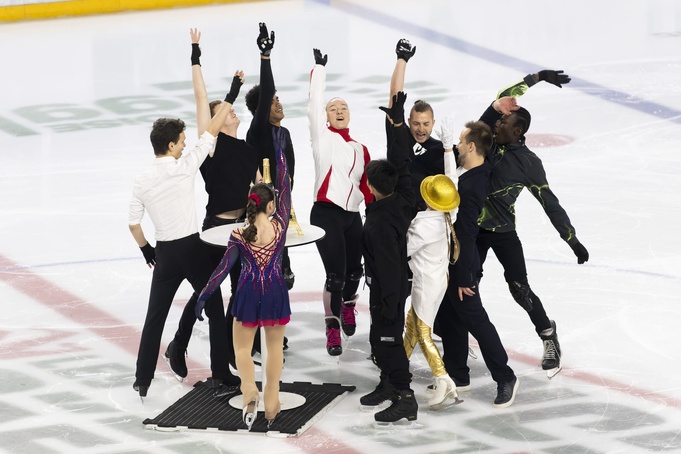
Q: What is most important to you in sport?
A: Honest sport, athletes' financial well‐being, and no politics. An athlete must be sure their result is honest. Professional athletes must be able to earn a living. And sport must remain free from political influence.
Q: What role do you give to spectators?
A: We plan to give spectators the opportunity to influence the outcome of the artistic evaluation at the judges' level, but the technical panel will remain untouched. Technique must stay objective, and the artistic component should be the link between athlete and audience.
Q: Why are you confident your project will succeed?
A: Because it gives athletes more opportunities than the existing system: transparency, development, and freedom. Competition also plays a big role – it drives sport forward.
Q: If your vision comes to pass over the next decade, what will the future of skating look like?
A: I want skating's future to look spectacular and professional – at the level of leagues like the NHL or UFC. Clear structure, understandable rules, sports stars known worldwide, and a product that is interesting to follow not only for figure skating fans but for a broad audience. Sport, show, and business in one package. As a global industry where sport, business, fashion, music, technology, and media are integrated into one system, with athletes at the centre.
Q: Do you think acrobatic skating could eventually compete in popularity with traditional competitive skating?
A: Yes, of course. We have more elements, more spectacular and impressive ones – and therefore more interesting for a wide audience, not only for specialists and fans of classics. Over time, this advantage in diversity and dynamics will inevitably affect popularity.
Q: Can UFS become bigger than you?
A: Yes. And I want that. The rules of a sport cannot be patented. If other leagues appear – that's good. Competition develops sport.
Q: When will you know your work is done?
A: When I and my team – Elena Osminina and Maxim Bezanilla – can sit among the spectators and simply enjoy what is happening.
Q: What matters more to you – the project or your name?
A: The project matters more. If in a hundred years my name is forgotten, but Ultimate Figure Skater continues to live and develop, then everything was done right.
Q: What do you fear as the project creator?
A: I fear that if something happens to me too soon, the project will remain unfinished.
Q: What would you say to a child stepping onto the ice for the first time?
A: I would say: «Go and enjoy the moment.» Because sport is not only about goals and victories. It's a path that stays in memory for a lifetime.
Final.
Q: In fifty years, when people look back on skating history, what would you like them to say about what Alexander Liubchenko changed?
A: First of all, I would like it to simply work. We live in a world where there will always be those who are happy and those who are not – let them love it or not, that's not really what matters. What matters to me is that athletes can break out of the current system, build their lives and careers, develop, and be evaluated honestly – not as it happens now. If in fifty years they say that – that after me, athletes finally became free and protected by a fair system – then it wasn't all for nothing.
Q: What does Ultimate Figure Skater exist for?
A: So that athletes have more freedom, opportunities, and fair competition. So that sport unites people. So that in a hundred years, children around the world step onto the ice with a smile. And so that none of them ever wonders who created it all. Because a creator's true goal is to one day become unnecessary.
Q: And if one day you are forgotten?
A: That means the system became bigger than its creator.
And that's exactly what I want.
───
Q: A Final thought?
A: Go and enjoy the moment.
A: Honest sport, athletes' financial well‐being, and no politics. An athlete must be sure their result is honest. Professional athletes must be able to earn a living. And sport must remain free from political influence.
Q: What role do you give to spectators?
A: We plan to give spectators the opportunity to influence the outcome of the artistic evaluation at the judges' level, but the technical panel will remain untouched. Technique must stay objective, and the artistic component should be the link between athlete and audience.
Q: Why are you confident your project will succeed?
A: Because it gives athletes more opportunities than the existing system: transparency, development, and freedom. Competition also plays a big role – it drives sport forward.
Q: If your vision comes to pass over the next decade, what will the future of skating look like?
A: I want skating's future to look spectacular and professional – at the level of leagues like the NHL or UFC. Clear structure, understandable rules, sports stars known worldwide, and a product that is interesting to follow not only for figure skating fans but for a broad audience. Sport, show, and business in one package. As a global industry where sport, business, fashion, music, technology, and media are integrated into one system, with athletes at the centre.
Q: Do you think acrobatic skating could eventually compete in popularity with traditional competitive skating?
A: Yes, of course. We have more elements, more spectacular and impressive ones – and therefore more interesting for a wide audience, not only for specialists and fans of classics. Over time, this advantage in diversity and dynamics will inevitably affect popularity.
Q: Can UFS become bigger than you?
A: Yes. And I want that. The rules of a sport cannot be patented. If other leagues appear – that's good. Competition develops sport.
Q: When will you know your work is done?
A: When I and my team – Elena Osminina and Maxim Bezanilla – can sit among the spectators and simply enjoy what is happening.
Q: What matters more to you – the project or your name?
A: The project matters more. If in a hundred years my name is forgotten, but Ultimate Figure Skater continues to live and develop, then everything was done right.
Q: What do you fear as the project creator?
A: I fear that if something happens to me too soon, the project will remain unfinished.
Q: What would you say to a child stepping onto the ice for the first time?
A: I would say: «Go and enjoy the moment.» Because sport is not only about goals and victories. It's a path that stays in memory for a lifetime.
Final.
Q: In fifty years, when people look back on skating history, what would you like them to say about what Alexander Liubchenko changed?
A: First of all, I would like it to simply work. We live in a world where there will always be those who are happy and those who are not – let them love it or not, that's not really what matters. What matters to me is that athletes can break out of the current system, build their lives and careers, develop, and be evaluated honestly – not as it happens now. If in fifty years they say that – that after me, athletes finally became free and protected by a fair system – then it wasn't all for nothing.
Q: What does Ultimate Figure Skater exist for?
A: So that athletes have more freedom, opportunities, and fair competition. So that sport unites people. So that in a hundred years, children around the world step onto the ice with a smile. And so that none of them ever wonders who created it all. Because a creator's true goal is to one day become unnecessary.
Q: And if one day you are forgotten?
A: That means the system became bigger than its creator.
And that's exactly what I want.
───
Q: A Final thought?
A: Go and enjoy the moment.
Ultimate Figure Skater
At the heart of Ultimate Figure Skater lies a much broader vision: building a transparent and universal sporting framework where technical difficulty, measurable performance, and objective judging become the foundation of competition. Rather than asking athletes to adapt to an opaque system, Liubchenko is working to create one in which every competitor understands exactly how success is earned. It is a philosophy that seeks to make skating more accessible for athletes, easier to understand for spectators, and fairer for everyone involved. At the same time, elements developed and refined through Alexander methodology are increasingly finding their way into elite competition, with several Olympic-level skaters incorporating acrobatic techniques explored during his camps into their own performances. It is another indication of the growing influence his work is beginning to have on the evolution of the sport. International ice shows, touring productions, cruise ship entertainment, circuses, and live performance companies increasingly seek athletes who combine exceptional skating skills with creativity, versatility, and acrobatic ability. By equipping athletes with these additional disciplines,
Ultimate Figure Skater is not simply expanding the technical vocabulary of figure skating, it is helping redefine what a modern skating career can look like. For many participants, the skills acquired during these camps become valuable assets that open doors to professional opportunities across the global entertainment industry. Yet reducing Ultimate Figure Skater to a pathway towards professional performance would overlook the broader significance of the project. At its core, it represents a philosophy of continuous innovation, lifelong learning, and athlete empowerment. It challenges skaters to think beyond conventional boundaries, to embrace creativity without compromising technical excellence, and to view their careers not as being limited by existing structures, but as something they can actively shape for themselves. What is already undeniable, is that Alexander Liubchenko has ignited an important conversation about transparency, innovation, athlete development, and the future direction of the sport. His work invites coaches, athletes, and spectators alike to reflect on what figure skating could become when technical progress, objective judging, creativity, and opportunity are allowed to evolve together.
Ultimate Figure Skater is not simply expanding the technical vocabulary of figure skating, it is helping redefine what a modern skating career can look like. For many participants, the skills acquired during these camps become valuable assets that open doors to professional opportunities across the global entertainment industry. Yet reducing Ultimate Figure Skater to a pathway towards professional performance would overlook the broader significance of the project. At its core, it represents a philosophy of continuous innovation, lifelong learning, and athlete empowerment. It challenges skaters to think beyond conventional boundaries, to embrace creativity without compromising technical excellence, and to view their careers not as being limited by existing structures, but as something they can actively shape for themselves. What is already undeniable, is that Alexander Liubchenko has ignited an important conversation about transparency, innovation, athlete development, and the future direction of the sport. His work invites coaches, athletes, and spectators alike to reflect on what figure skating could become when technical progress, objective judging, creativity, and opportunity are allowed to evolve together.
Building a New Language for Acrobatic Figure Skating
To understand the significance of ''Ultimate Figure Skater'', it is first necessary to understand how modern figure skating is judged. Since 2004, international competitions organised under the International Skating Union (ISU) have been governed by the ''Code of Points'', a judging system introduced to make scoring more transparent, consistent and objective. Rather than awarding a single overall mark, the Code of Points breaks every performance into dozens of individual components, each carrying its own value and criteria. Every recognised technical element included in the ISU rulebook, whether a jump, spin, lift, throw, death spiral, twist, step sequence or twizzle, has a predetermined base value reflecting its level of difficulty. More complex elements receive a higher starting value, encouraging athletes to continuously push the technical boundaries of the sport. The evaluation process itself is divided between two independent groups of officials. A ''Technical Panel'' first identifies every element performed and determines whether it satisfies the requirements established by the ISU rulebook. In disciplines such as pair skating, for example, judges do not simply recognise that a lift or twist has been performed; they also determine its level according to specific technical features, each adding to the element's overall value. Once the element has been identified, a separate panel of judges evaluates ''how well'' it was executed through the ''Grade of Execution (GOE)'', ranging from ''–5 to +5''. Exceptional speed, flow, height, precision, control and effortless quality increase the score, while errors such as poor landings, lack of synchronisation, instability or interruptions reduce it. Technical excellence alone, however, is not enough to produce a winning performance. Alongside the Technical Element Score, judges award ''Program Component Scores'', assessing broader qualities that cannot be measured by individual elements alone. These components evaluate the skater's skating skills, the composition and structure of the program, and the quality of the presentation, rewarding athletes who combine technical mastery with musical interpretation, performance quality and overall artistic coherence.
The final score therefore reflects a balance between athletic achievement and artistic expression, encouraging skaters to develop both dimensions simultaneously. This system has proven remarkably effective in evaluating the traditional disciplines governed by the ISU, men's and women's singles, pair skating and ice dance. Yet its very precision is built upon a catalogue of recognised elements specifically created for those disciplines. Every score depends on a predefined technical vocabulary. If an element does not exist within that vocabulary, it cannot easily be assigned a base value, a level of difficulty or consistent judging criteria. The Code of Points was never intended to evaluate a discipline centred on acrobatic movement, aerial transitions and entirely new categories of technical skills.
The final score therefore reflects a balance between athletic achievement and artistic expression, encouraging skaters to develop both dimensions simultaneously. This system has proven remarkably effective in evaluating the traditional disciplines governed by the ISU, men's and women's singles, pair skating and ice dance. Yet its very precision is built upon a catalogue of recognised elements specifically created for those disciplines. Every score depends on a predefined technical vocabulary. If an element does not exist within that vocabulary, it cannot easily be assigned a base value, a level of difficulty or consistent judging criteria. The Code of Points was never intended to evaluate a discipline centred on acrobatic movement, aerial transitions and entirely new categories of technical skills.
It is precisely this challenge that inspired Alexander Liubchenko to develop Ultimate Figure Skater. Rather than attempting to expand the existing ISU Code of Points, Alexander has chosen to create a judging framework specifically designed for acrobatic figure skating. His vision is based on a simple observation: a discipline cannot truly develop without a system capable of measuring and comparing its performances. While traditional figure skating already benefits from decades of technical classifications and internationally recognised judging standards, acrobatic figure skating remains a rapidly evolving discipline in which many elements have never been formally identified, categorised or assigned objective evaluation criteria. Ultimate Figure Skater therefore begins by creating a technical vocabulary unique to the discipline. Instead of asking athletes to adapt their performances to an existing rulebook, the project seeks to identify the different categories of acrobatic elements, define their characteristics and establish consistent methods for evaluating them. In practical terms, this means creating a common reference through which judges can distinguish not only the successful completion of a skill, but also its degree of difficulty, quality of execution, body control, precision, originality, risk management and artistic integration within a program. The objective is not simply to reward spectacular tricks, but to evaluate how those elements contribute to the overall quality of a complete performance.
Beyond competition itself, Alexander views the judging system as the foundation upon which the discipline can continue to evolve. A shared technical language allows coaches to teach progressively more advanced skills using common definitions, enables athletes from different countries to prepare according to the same standards, and provides judges with consistent criteria for evaluating performances regardless of where an event is held. It also creates a structure through which new acrobatic elements can be introduced, classified and incorporated into the discipline as it continues to evolve, much as traditional figure skating has expanded its own technical repertoire over decades of international competition. In this sense, Ultimate Figure Skater extends beyond the creation of a new competition. It represents an effort to establish the infrastructure of an emerging sport. Every recognised discipline, from gymnastics to diving, freestyle skiing and figure skating itself, has relied on a structured rulebook capable of defining technical difficulty and ensuring consistent judging. Alexander's ambition is to provide acrobatic figure skating with that same foundation: a common language, internationally recognised standards and a judging system capable of supporting the discipline's long-term development. For Alexander, Ultimate Figure Skater is therefore not conceived as an alternative to the ISU, nor as a replacement for traditional figure skating. Instead, it represents the creation of a complementary discipline with its own technical identity, judging philosophy and competitive standards. His ambition is to give acrobatic figure skating the organisational structure necessary to mature as a sport, allowing athletes, coaches and organisers around the world to build upon a shared framework while continuing to push the boundaries of what is possible on the ice.
Beyond competition itself, Alexander views the judging system as the foundation upon which the discipline can continue to evolve. A shared technical language allows coaches to teach progressively more advanced skills using common definitions, enables athletes from different countries to prepare according to the same standards, and provides judges with consistent criteria for evaluating performances regardless of where an event is held. It also creates a structure through which new acrobatic elements can be introduced, classified and incorporated into the discipline as it continues to evolve, much as traditional figure skating has expanded its own technical repertoire over decades of international competition. In this sense, Ultimate Figure Skater extends beyond the creation of a new competition. It represents an effort to establish the infrastructure of an emerging sport. Every recognised discipline, from gymnastics to diving, freestyle skiing and figure skating itself, has relied on a structured rulebook capable of defining technical difficulty and ensuring consistent judging. Alexander's ambition is to provide acrobatic figure skating with that same foundation: a common language, internationally recognised standards and a judging system capable of supporting the discipline's long-term development. For Alexander, Ultimate Figure Skater is therefore not conceived as an alternative to the ISU, nor as a replacement for traditional figure skating. Instead, it represents the creation of a complementary discipline with its own technical identity, judging philosophy and competitive standards. His ambition is to give acrobatic figure skating the organisational structure necessary to mature as a sport, allowing athletes, coaches and organisers around the world to build upon a shared framework while continuing to push the boundaries of what is possible on the ice.