Wanderlust Ice & Ink — Life On Board Cruise Ship: From Ocean Liners to Floating Cities: Five Facts About the Birth of Modern Cruise Ships
"I must go down to the sea again, to the lonely sea and the sky; and all I ask is a tall ship and a star to steer her by." — John Masefield


Wanderlust Ice & Ink — Life On Board Cruise Ship: From Ocean Liners to Floating Cities: Five Facts About the Birth of Modern Cruise Ships. (c) @sarahaerial.ice

From the outside, a modern cruise ship can appear almost impossible in scale. Rising several decks above the water, it carries thousands of passengers and crew members while bringing together restaurants, theatres, swimming pools, shops, sports facilities, entertainment venues and even ice rinks within a single moving structure. Some ships are divided into distinct neighbourhoods, each designed to create the feeling of exploring a different part of a city.
For today’s passengers, the ship is no longer simply a means of travelling from one port to another. It has become a destination in its own right: a place where people can spend an entire holiday eating, watching shows, relaxing, shopping and discovering new activities without ever stepping ashore. In some cases, the experience offered on board has become just as important as the itinerary itself. Yet cruise ships were not always designed as floating resorts.
Indeed, before the rise of commercial aviation, passenger ships fulfilled a much more essential role. Ocean liners connected continents according to regular schedules, carrying travellers, migrants, mail and merchandise across the world. Their principal purpose was transportation. The voyage could last several days or even weeks, and the conditions experienced by passengers depended heavily on their social class and the price of their ticket. During the nineteenth and early twentieth centuries, transatlantic liners became symbols of industrial progress and national prestige. Shipping companies competed to construct vessels that were larger, faster, safer and more luxurious. These ships did more than cross the ocean: they represented the technological ambitions of their time. Their grand dining rooms, sweeping staircases and elegant public spaces also introduced a new vision of travel, one in which comfort and spectacle gradually became part of the journey. The development of commercial aviation fundamentally changed this world.
Travellers who had once needed several days to cross the Atlantic could now reach another continent within hours. Ocean liners could no longer compete with aircraft on speed alone, and maritime companies were forced to rethink the purpose of passenger ships. The journey itself therefore became the attraction.
For today’s passengers, the ship is no longer simply a means of travelling from one port to another. It has become a destination in its own right: a place where people can spend an entire holiday eating, watching shows, relaxing, shopping and discovering new activities without ever stepping ashore. In some cases, the experience offered on board has become just as important as the itinerary itself. Yet cruise ships were not always designed as floating resorts.
Indeed, before the rise of commercial aviation, passenger ships fulfilled a much more essential role. Ocean liners connected continents according to regular schedules, carrying travellers, migrants, mail and merchandise across the world. Their principal purpose was transportation. The voyage could last several days or even weeks, and the conditions experienced by passengers depended heavily on their social class and the price of their ticket. During the nineteenth and early twentieth centuries, transatlantic liners became symbols of industrial progress and national prestige. Shipping companies competed to construct vessels that were larger, faster, safer and more luxurious. These ships did more than cross the ocean: they represented the technological ambitions of their time. Their grand dining rooms, sweeping staircases and elegant public spaces also introduced a new vision of travel, one in which comfort and spectacle gradually became part of the journey. The development of commercial aviation fundamentally changed this world.
Travellers who had once needed several days to cross the Atlantic could now reach another continent within hours. Ocean liners could no longer compete with aircraft on speed alone, and maritime companies were forced to rethink the purpose of passenger ships. The journey itself therefore became the attraction.

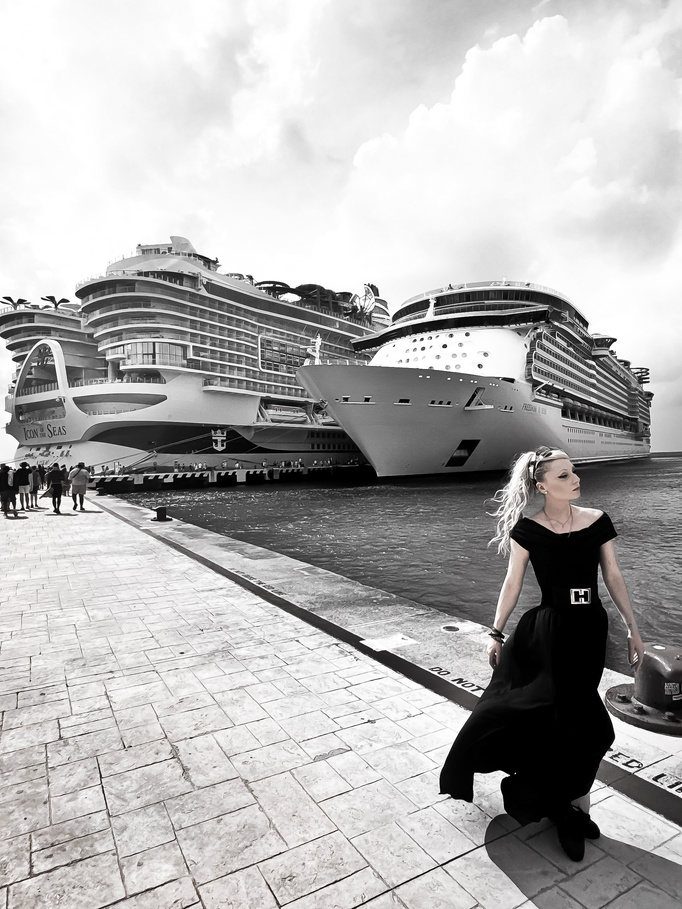
Instead of focusing exclusively on transportation, companies began designing ships around leisure, entertainment and exploration. Cabins became more comfortable, itineraries became more varied and public areas became increasingly elaborate. Over time, the traditional ocean liner evolved into the modern cruise ship: not simply a vessel travelling between destinations, but a complete holiday environment moving across the sea.
This transformation also created an extraordinarily complex world behind the passenger areas. A cruise ship must produce food, water, electricity and entertainment while accommodating thousands of people far from land. Its restaurants, cabins, technical systems and performance venues operate through an immense network of officers, engineers, technicians, hospitality teams, cooks, cleaners, musicians, dancers, acrobats and professional skaters. Therefore, for passengers, the ship may be a temporary escape. For the people who work on board, it is simultaneously a workplace, a home and a small international society with its own routines, rules and hidden spaces.
Through five key facts, this article retraces the transformation of the great transatlantic liners into the floating cities we know today. It explores not only how the ships changed, but also how the very meaning of travelling by sea was reinvented.
This transformation also created an extraordinarily complex world behind the passenger areas. A cruise ship must produce food, water, electricity and entertainment while accommodating thousands of people far from land. Its restaurants, cabins, technical systems and performance venues operate through an immense network of officers, engineers, technicians, hospitality teams, cooks, cleaners, musicians, dancers, acrobats and professional skaters. Therefore, for passengers, the ship may be a temporary escape. For the people who work on board, it is simultaneously a workplace, a home and a small international society with its own routines, rules and hidden spaces.
Through five key facts, this article retraces the transformation of the great transatlantic liners into the floating cities we know today. It explores not only how the ships changed, but also how the very meaning of travelling by sea was reinvented.
Fact 1 — Ocean Liners Were Built for Transportation and Postal Matters

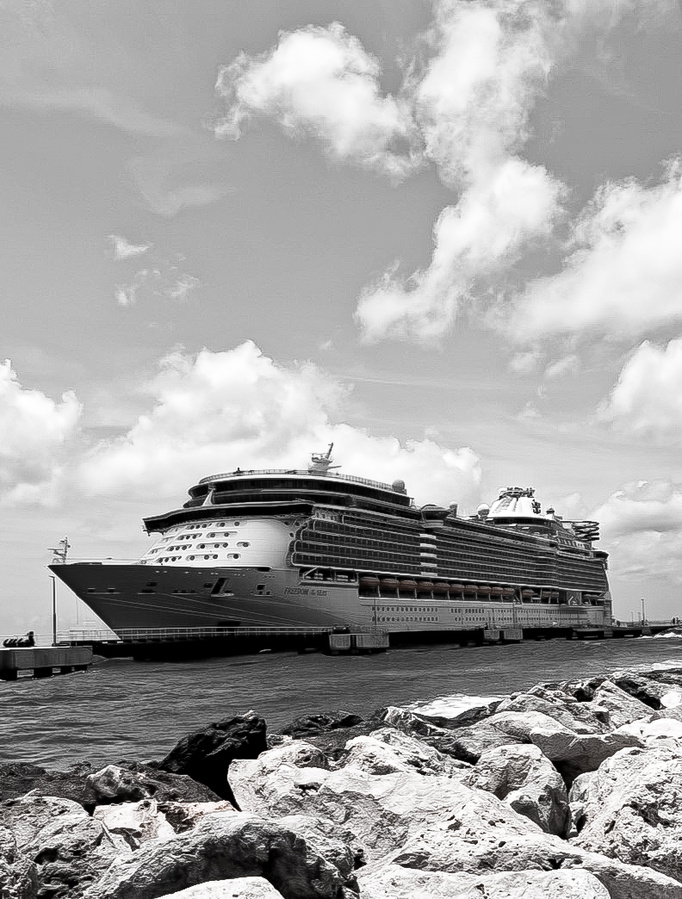
Before cruise ships became symbols of holidays and entertainment, crossing an ocean was rarely considered a vacation. For many passengers, it was a necessity, and sometimes a journey without return. Throughout the nineteenth and early twentieth centuries, ships connected populations that had no other way of travelling between continents. They carried businesspeople, government representatives, soldiers, workers and families, but also enormous quantities of cargo and correspondence. Millions of migrants boarded with everything they owned, leaving Europe in the hope of building a different life in North America. The purpose of these ships was simple: to move people, goods and information from one side of the ocean to the other as reliably as the available technology allowed.
The first revolution was not because of the speed, but because of schedule matters
Before the widespread use of steam power, ships depended largely on the wind. A departure date could be announced, but the arrival remained uncertain. Weather conditions could accelerate a voyage, delay it considerably or force a vessel to change course. An important but often forgotten innovation arrived before the great steam liners: the packet ship. From the early nineteenth century, packet ships began sailing on announced routes and departure dates, carrying passengers, cargo and packets of mail between ports. The idea that a ship should leave according to a schedule, even if it was not full, was revolutionary. Maritime transportation was slowly becoming an organised service instead of a voyage controlled entirely by cargo availability and favourable weather. Steam power made this system much more reliable. The Savannah completed the first steam-assisted Atlantic crossing in 1819, although it used its sails for most of the journey. Regular transatlantic steamship services only became established during the 1840s. One of their pioneers was Cunard’s Britannia, which departed Liverpool in July 1840 for Halifax and Boston. The vessel was approximately 63 metres long, travelled at around eight and a half knots and consumed close to 38 tonnes of coal every day. Compared with today’s ships, it was remarkably small and slow. At the time, however, its ability to maintain a regular service represented a major technological achievement.
The letters “RMS” were not a symbol of luxury
Many famous liners carried the initials RMS, including the Titanic, the Olympic and the Queen Mary. They are now strongly associated with prestigious passenger ships, but their original meaning was much more practical. RMS stood for Royal Mail Ship, or historically Royal Mail Steamer. The designation could only be used by commercial ships contracted to transport British mail. Postal subsidies helped shipping companies expand their routes, while the obligation to deliver correspondence encouraged them to follow strict schedules. In other words, passengers were not necessarily the only reason these vessels had to arrive on time. The mail was one of the forces that made ocean travel more regular and dependable. Some liners contained functioning post offices where mail was sorted during the crossing. The Titanic, for example, was carrying 3,364 bags of mail and had five postal workers on board. Its post office and mail room were located deep inside the ship, on decks F and G. When water began entering the vessel, the postal workers reportedly tried to move registered mail sacks to higher decks instead of immediately abandoning their workplace. Behind one of history’s most famous passenger ships was therefore another, less remembered identity: the Titanic was also a working mail carrier.
Early ocean liners carried their own source of fresh milk
Food preservation presented a serious challenge before modern refrigeration. Ships needed to carry sufficient provisions for passengers and crew, but fresh ingredients could not remain edible throughout a long Atlantic crossing. The solution could be unexpectedly literal. The Britannia carried a cow on board to provide fresh milk during the voyage. It was kept in a specially protected deckhouse with padded sides, while poultry travelled in coops on deck. The milk was primarily reserved for women, children and passengers who were ill. The cow also reveals how different early steamships were from modern passenger vessels. They were not self-contained resorts supplied by industrial refrigeration systems. They were moving communities forced to recreate basic elements of life on land with the limited technology available at the time.
Travelling on the same ship did not mean sharing the same journey
The ocean liner was a physical representation of the social hierarchy ashore. First-class passengers travelled in private cabins and used elegant dining rooms, lounges, libraries and smoking rooms. On many early ships, the captain dined with cabin passengers. As competition between shipping companies intensified, luxurious interiors became an effective way of attracting wealthy travellers and demonstrating national prestige. Second class offered fewer luxuries but generally provided a degree of comfort and privacy. Third-class passengers, commonly described as travelling in steerage, experienced an entirely different Atlantic. The name came from the lower area of the ship, historically located close to the steering equipment and later used for the cheapest passenger accommodation. These spaces were often dark, damp, overcrowded and poorly ventilated. Passengers slept, ate and spent much of the voyage in the same communal area. Rats, insects, seasickness and disease could become part of the crossing. One of the most surprising details is that steerage passengers were sometimes expected to bring their own bedding. Food might be included in the price of the ticket, but passengers on some nineteenth-century vessels had to cook their rations themselves in an extremely small shared cooking area. During rough weather, preparing a hot meal could become nearly impossible. When the sea was too dangerous, passengers could spend days below deck with limited fresh air. If steerage was not occupied by travellers on the return voyage, the same area could be used to carry freight. The space occupied by hundreds of human beings in one direction might therefore transport ordinary cargo in the other.
Even immigration procedures were divided according to class
The separation between passengers did not necessarily end when the ship reached New York. After the opening of Ellis Island in 1892, first- and second-class passengers were usually given a brief inspection on board their ship. Officials assumed that people who could afford more expensive tickets were less likely to become financially dependent on the American state. Steerage passengers, by contrast, were transferred by ferry or barge to Ellis Island for a more detailed medical and legal examination. Their class of travel therefore influenced not only the comfort of the crossing, but also the way authorities treated them upon arrival. Passenger manifests eventually reflected this social division as well. Under twentieth-century American immigration regulations, different colours were used for different classes: pink forms for first class, yellow for second class and white for steerage.
Each immigrant could also receive a numbered ticket corresponding to the page and line on which their name appeared in the ship’s manifest. Long before digital databases, the ship itself was transporting both the people and the paper records that would determine whether they could enter the country. More than 12 million immigrants passed through Ellis Island between 1892 and 1954. Major companies, including Cunard, White Star, Red Star, Holland America and Hamburg-America, played an essential role in carrying them across the Atlantic.
Ocean liners were built to connect two points
These historical details explain the fundamental difference between an ocean liner and a cruise ship. An ocean liner was created to operate between two distant ports, usually according to a regular timetable. Its structure needed to endure repeated open-ocean crossings, difficult weather conditions and the powerful waves of the North Atlantic. Speed and punctuality were commercial priorities because passengers, mail and cargo all needed to reach a destination. A cruise ship follows a different logic. Its purpose is primarily recreational. The itinerary may form a loop, visiting several ports before returning passengers to their original point of departure. Comfort and entertainment are not simply additions to the journey: they are central to the product being offered. By the beginning of the twentieth century, ocean liners had already started resembling floating palaces. Shipping companies competed to construct vessels that were larger, faster and more elegant, introducing grand staircases, sophisticated dining rooms and increasingly impressive public spaces. Yet their luxurious appearance should not obscure their original function. These vessels were first and foremost part of the world’s transportation network. The ship was not yet the destination. It was the connection between the life a passenger had left behind and the one waiting on the other side of the ocean.
The first revolution was not because of the speed, but because of schedule matters
Before the widespread use of steam power, ships depended largely on the wind. A departure date could be announced, but the arrival remained uncertain. Weather conditions could accelerate a voyage, delay it considerably or force a vessel to change course. An important but often forgotten innovation arrived before the great steam liners: the packet ship. From the early nineteenth century, packet ships began sailing on announced routes and departure dates, carrying passengers, cargo and packets of mail between ports. The idea that a ship should leave according to a schedule, even if it was not full, was revolutionary. Maritime transportation was slowly becoming an organised service instead of a voyage controlled entirely by cargo availability and favourable weather. Steam power made this system much more reliable. The Savannah completed the first steam-assisted Atlantic crossing in 1819, although it used its sails for most of the journey. Regular transatlantic steamship services only became established during the 1840s. One of their pioneers was Cunard’s Britannia, which departed Liverpool in July 1840 for Halifax and Boston. The vessel was approximately 63 metres long, travelled at around eight and a half knots and consumed close to 38 tonnes of coal every day. Compared with today’s ships, it was remarkably small and slow. At the time, however, its ability to maintain a regular service represented a major technological achievement.
The letters “RMS” were not a symbol of luxury
Many famous liners carried the initials RMS, including the Titanic, the Olympic and the Queen Mary. They are now strongly associated with prestigious passenger ships, but their original meaning was much more practical. RMS stood for Royal Mail Ship, or historically Royal Mail Steamer. The designation could only be used by commercial ships contracted to transport British mail. Postal subsidies helped shipping companies expand their routes, while the obligation to deliver correspondence encouraged them to follow strict schedules. In other words, passengers were not necessarily the only reason these vessels had to arrive on time. The mail was one of the forces that made ocean travel more regular and dependable. Some liners contained functioning post offices where mail was sorted during the crossing. The Titanic, for example, was carrying 3,364 bags of mail and had five postal workers on board. Its post office and mail room were located deep inside the ship, on decks F and G. When water began entering the vessel, the postal workers reportedly tried to move registered mail sacks to higher decks instead of immediately abandoning their workplace. Behind one of history’s most famous passenger ships was therefore another, less remembered identity: the Titanic was also a working mail carrier.
Early ocean liners carried their own source of fresh milk
Food preservation presented a serious challenge before modern refrigeration. Ships needed to carry sufficient provisions for passengers and crew, but fresh ingredients could not remain edible throughout a long Atlantic crossing. The solution could be unexpectedly literal. The Britannia carried a cow on board to provide fresh milk during the voyage. It was kept in a specially protected deckhouse with padded sides, while poultry travelled in coops on deck. The milk was primarily reserved for women, children and passengers who were ill. The cow also reveals how different early steamships were from modern passenger vessels. They were not self-contained resorts supplied by industrial refrigeration systems. They were moving communities forced to recreate basic elements of life on land with the limited technology available at the time.
Travelling on the same ship did not mean sharing the same journey
The ocean liner was a physical representation of the social hierarchy ashore. First-class passengers travelled in private cabins and used elegant dining rooms, lounges, libraries and smoking rooms. On many early ships, the captain dined with cabin passengers. As competition between shipping companies intensified, luxurious interiors became an effective way of attracting wealthy travellers and demonstrating national prestige. Second class offered fewer luxuries but generally provided a degree of comfort and privacy. Third-class passengers, commonly described as travelling in steerage, experienced an entirely different Atlantic. The name came from the lower area of the ship, historically located close to the steering equipment and later used for the cheapest passenger accommodation. These spaces were often dark, damp, overcrowded and poorly ventilated. Passengers slept, ate and spent much of the voyage in the same communal area. Rats, insects, seasickness and disease could become part of the crossing. One of the most surprising details is that steerage passengers were sometimes expected to bring their own bedding. Food might be included in the price of the ticket, but passengers on some nineteenth-century vessels had to cook their rations themselves in an extremely small shared cooking area. During rough weather, preparing a hot meal could become nearly impossible. When the sea was too dangerous, passengers could spend days below deck with limited fresh air. If steerage was not occupied by travellers on the return voyage, the same area could be used to carry freight. The space occupied by hundreds of human beings in one direction might therefore transport ordinary cargo in the other.
Even immigration procedures were divided according to class
The separation between passengers did not necessarily end when the ship reached New York. After the opening of Ellis Island in 1892, first- and second-class passengers were usually given a brief inspection on board their ship. Officials assumed that people who could afford more expensive tickets were less likely to become financially dependent on the American state. Steerage passengers, by contrast, were transferred by ferry or barge to Ellis Island for a more detailed medical and legal examination. Their class of travel therefore influenced not only the comfort of the crossing, but also the way authorities treated them upon arrival. Passenger manifests eventually reflected this social division as well. Under twentieth-century American immigration regulations, different colours were used for different classes: pink forms for first class, yellow for second class and white for steerage.
Each immigrant could also receive a numbered ticket corresponding to the page and line on which their name appeared in the ship’s manifest. Long before digital databases, the ship itself was transporting both the people and the paper records that would determine whether they could enter the country. More than 12 million immigrants passed through Ellis Island between 1892 and 1954. Major companies, including Cunard, White Star, Red Star, Holland America and Hamburg-America, played an essential role in carrying them across the Atlantic.
Ocean liners were built to connect two points
These historical details explain the fundamental difference between an ocean liner and a cruise ship. An ocean liner was created to operate between two distant ports, usually according to a regular timetable. Its structure needed to endure repeated open-ocean crossings, difficult weather conditions and the powerful waves of the North Atlantic. Speed and punctuality were commercial priorities because passengers, mail and cargo all needed to reach a destination. A cruise ship follows a different logic. Its purpose is primarily recreational. The itinerary may form a loop, visiting several ports before returning passengers to their original point of departure. Comfort and entertainment are not simply additions to the journey: they are central to the product being offered. By the beginning of the twentieth century, ocean liners had already started resembling floating palaces. Shipping companies competed to construct vessels that were larger, faster and more elegant, introducing grand staircases, sophisticated dining rooms and increasingly impressive public spaces. Yet their luxurious appearance should not obscure their original function. These vessels were first and foremost part of the world’s transportation network. The ship was not yet the destination. It was the connection between the life a passenger had left behind and the one waiting on the other side of the ocean.
Fact 2 — Air Travel Forced Ships to Become Destinations

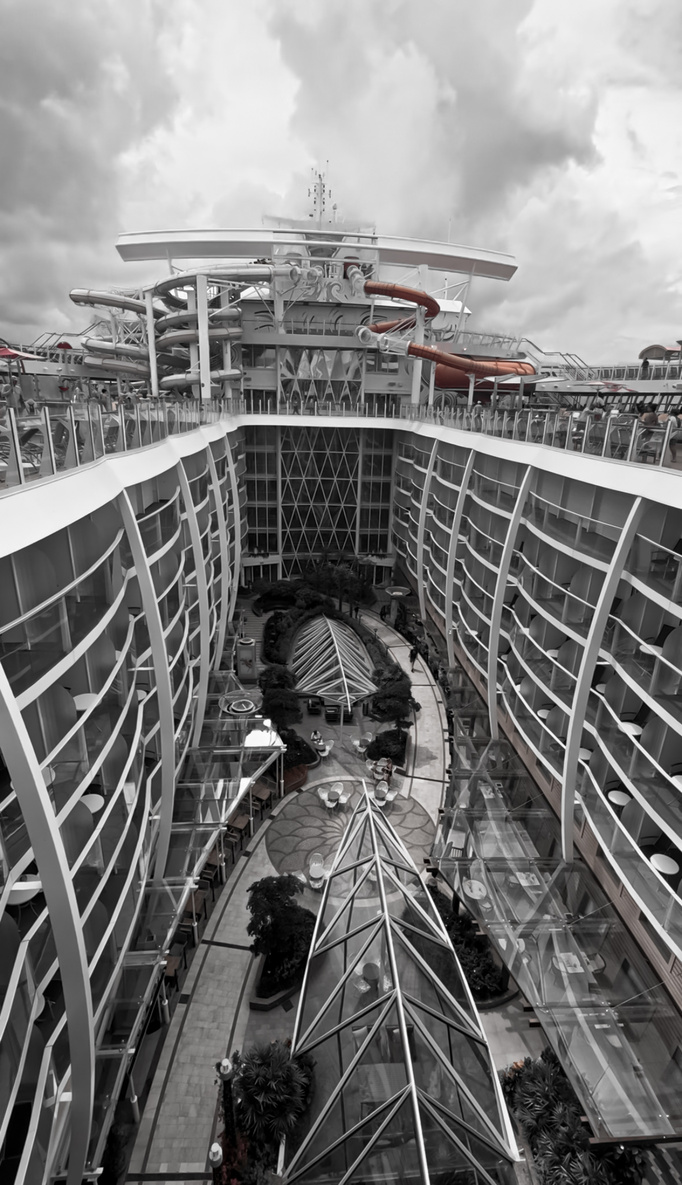
The modern cruise industry is often presented as a direct consequence of commercial aviation. According to this simplified version of history, passengers abandoned ocean liners for aeroplanes, and shipping companies responded by transforming their vessels into floating resorts.
The reality is more interesting. Pleasure cruises already existed decades before the first commercial passenger aircraft crossed the Atlantic. What aviation changed was not the invention of cruising itself, but its importance. Once flying became faster, more accessible and more practical, ships could no longer survive by offering transportation alone. They had to give travellers a completely different reason to board.
One of the first modern cruises began as a solution to an empty-ship problem
During the late nineteenth century, the North Atlantic passenger trade was highly seasonal. Winter crossings were less attractive, the weather was more difficult and some ships remained underused for months. An idle ocean liner, however, continued to cost its company money. German shipping executive Albert Ballin saw an opportunity. Instead of leaving one of his company’s ships inactive during the winter, he proposed sending it towards warmer destinations with passengers travelling purely for pleasure. On 22 January 1891, the Augusta Victoria departed from Cuxhaven, Germany, on a journey through the Mediterranean and the Near East. The voyage lasted almost two months and carried 241 passengers. Its itinerary included destinations such as Gibraltar, Egypt, Jerusalem, Damascus, Constantinople, Athens, Malta, Naples and Lisbon. For these passengers, reaching one final destination was no longer the purpose of the voyage. They boarded in order to experience the journey itself, visit a succession of ports and return home afterwards. The basic structure of the modern cruise itinerary had appeared. At first, some of Ballin’s colleagues reportedly considered the idea too risky. Yet the voyage proved successful, demonstrating that wealthy passengers could be persuaded to spend weeks at sea without needing to relocate, conduct business or cross the Atlantic. In other words, one of the foundations of the cruise industry emerged from a practical business question: what could a shipping company do with a passenger vessel during the quiet winter season?
The first purpose-built cruise ship looked more like a private yacht
The success of these early pleasure voyages revealed a problem. Ocean liners were not designed for leisurely exploration.
Their interiors were organised around passenger classes, their outdoor spaces were built for the cold and unpredictable North Atlantic, and much of their volume was reserved for engines, cargo and steerage accommodation. Their schedules prioritised speed and punctuality, not long days of relaxation beneath the sun. Ballin therefore commissioned a ship created specifically for cruising rather than transportation. Completed in 1900, the Prinzessin Victoria Luise is widely recognised as the first purpose-built cruise ship. Its appearance was unusual. Instead of resembling the enormous commercial liners of the period, it looked more like a luxurious private yacht. It had a long white hull, elegant public rooms and approximately 120 first-class cabins. There was no steerage accommodation because the vessel was not intended to transport large numbers of migrants. Every passenger was travelling for pleasure. This represented a fundamental change in maritime design. For the first time, a passenger ship did not need to justify its existence by carrying people from one continent to another. The voyage itself was the product. However, cruising remained largely reserved for wealthy travellers. Ocean liners continued to dominate international passenger transportation for another half-century.
The jet aircraft changed the value of time
The true crisis for ocean liners arrived after the Second World War. Early commercial aircraft had already begun crossing oceans, but flying remained expensive, exclusive and technically limited. Large liners still offered an important combination of capacity, comfort and reliability.
The arrival of the commercial jet changed that balance dramatically. On 26 October 1958, a Pan American Boeing 707 departed New York for Paris on the first scheduled American transatlantic jet passenger service. The event represented far more than the launch of a new aircraft. It changed how travellers understood distance. A journey that required several days aboard a liner could now be completed within hours. Business travellers no longer needed to sacrifice a significant part of their schedule simply to reach another continent. Migrants could fly without spending days at sea, while tourists gained more time at their actual destination. By the 1960s, commercial flights had overtaken ships as the most popular way to cross the oceans. No liner, regardless of its speed or luxury, could compete with the fundamental advantage of the jet aircraft: it gave passengers their time back. The great irony was that shipping companies had spent decades competing to build faster liners. They chased speed records, installed increasingly powerful engines and celebrated every hour removed from an Atlantic crossing. Then aviation entered the competition and made the difference between a four-day and five-day voyage almost irrelevant. The battle for speed was over.
Ocean liners suddenly had the wrong qualities
The features that made a vessel an excellent ocean liner did not necessarily make it a successful cruise ship. A liner needed a strong hull, powerful machinery and enormous fuel reserves to maintain regular high-speed crossings in difficult weather. Cabins and public spaces were often enclosed to protect passengers from the cold North Atlantic. Deck areas were not always designed for sunbathing, swimming or long periods outdoors. A cruise ship had almost opposite priorities. It did not need to cross an ocean as quickly as possible. Slower speeds could reduce fuel consumption and allow passengers more time to enjoy the ship. Warm-weather itineraries required swimming pools, open decks and outdoor bars. Public rooms, entertainment and views became more commercially valuable than raw engine power. The entire purpose of the vessel had changed. A successful cruise ship needed to persuade passengers that spending time on board was not a delay between two destinations. It was the main experience they had paid for.
Some liners became hotels, museums or scrap metal
When transatlantic demand declined, many famous ocean liners became financially difficult to operate. Some were withdrawn, sold or dismantled. Others found new lives as floating hotels, tourist attractions or cruise ships. The Queen Mary, for example, stopped regular passenger service in 1967 and became a permanently moored hotel and attraction in Long Beach, California. Instead of carrying passengers across the Atlantic, the ship became a destination that no longer travelled anywhere. This reversal perfectly illustrates the transformation of the industry. A vessel once celebrated for moving between continents could remain permanently stationary and still attract visitors because people now came to experience the ship itself. Yet one of the most important transformations involved a French liner built in Saint-Nazaire.
The SS France became a prototype for the megaship era
This ship entered service in 1962, only a few years after the first scheduled transatlantic jet service. Built at the Chantiers de l’Atlantique in Saint-Nazaire, she was designed as a symbol of French engineering, elegance and national prestige. But she entered the market at precisely the moment when the traditional ocean liner was losing its economic purpose. The France was fast and powerful, qualities essential for scheduled Atlantic crossings but extremely expensive to maintain. After the French government withdrew its financial support, the ship was taken out of service in 1974 and remained laid up at Le Havre. Her story could have ended there. Instead, Norwegian Caribbean Line purchased her in 1979 and renamed her the SS Norway. The former liner was extensively rebuilt for Caribbean cruising. Large outdoor recreation areas were created, passenger capacity increased and sections of her powerful machinery were deactivated because a cruise ship no longer needed to maintain transatlantic express speeds. Her conversion revealed a new economic principle: space could be more valuable than speed. The SS Norway entered cruise service in 1980 and became one of the vessels most closely associated with the beginning of the megaship era. Rather than operating merely as transportation between Caribbean islands, she was promoted as the main attraction. Her size allowed her to offer more cabins, larger public rooms and a broader entertainment experience than many contemporary cruise vessels. Passengers did not simply book an itinerary. They booked the opportunity to experience an enormous and famous ship.
A vessel built to preserve the tradition of transatlantic travel had helped create the model that would replace it.
Cruise itineraries changed because the passenger’s expectations changed
Once the ship became the destination, maritime itineraries no longer needed to resemble traditional transportation routes. Cruise companies increasingly concentrated on warm-weather regions such as the Caribbean, where passengers could enjoy outdoor decks, pools and beaches throughout much of the year. Voyages could begin and end at the same port, allowing companies to repeat itineraries and create a predictable holiday product. Ports were transformed from final destinations into temporary experiences. Passengers might spend only a few hours ashore before returning to the vessel for dinner, entertainment and accommodation. This created a completely new relationship between travellers and ships. On an ocean liner, the passenger tolerated the time spent at sea because it was necessary to reach another continent. On a cruise ship, days at sea could be deliberately included in the itinerary because the company wanted passengers to experience the vessel. Even the slowest part of the journey could now be sold as leisure.
The ship had to compete with the destination
The rise of aviation did not destroy passenger travel by sea. It forced the maritime industry to answer a more creative question. If an aircraft could transport someone across the ocean in a fraction of the time, why would that person still choose a ship? The answer was no longer transportation. It was space, service, entertainment, comfort and the experience of travelling differently. Ships stopped trying to defeat aircraft at their own game. They abandoned the race to offer the fastest connection and began offering something an aeroplane could never reproduce: days of life suspended between the sea and the horizon. The ocean liner had sold the destination waiting at the end of the crossing. The cruise ship began selling everything that could happen before the passenger arrived.
The reality is more interesting. Pleasure cruises already existed decades before the first commercial passenger aircraft crossed the Atlantic. What aviation changed was not the invention of cruising itself, but its importance. Once flying became faster, more accessible and more practical, ships could no longer survive by offering transportation alone. They had to give travellers a completely different reason to board.
One of the first modern cruises began as a solution to an empty-ship problem
During the late nineteenth century, the North Atlantic passenger trade was highly seasonal. Winter crossings were less attractive, the weather was more difficult and some ships remained underused for months. An idle ocean liner, however, continued to cost its company money. German shipping executive Albert Ballin saw an opportunity. Instead of leaving one of his company’s ships inactive during the winter, he proposed sending it towards warmer destinations with passengers travelling purely for pleasure. On 22 January 1891, the Augusta Victoria departed from Cuxhaven, Germany, on a journey through the Mediterranean and the Near East. The voyage lasted almost two months and carried 241 passengers. Its itinerary included destinations such as Gibraltar, Egypt, Jerusalem, Damascus, Constantinople, Athens, Malta, Naples and Lisbon. For these passengers, reaching one final destination was no longer the purpose of the voyage. They boarded in order to experience the journey itself, visit a succession of ports and return home afterwards. The basic structure of the modern cruise itinerary had appeared. At first, some of Ballin’s colleagues reportedly considered the idea too risky. Yet the voyage proved successful, demonstrating that wealthy passengers could be persuaded to spend weeks at sea without needing to relocate, conduct business or cross the Atlantic. In other words, one of the foundations of the cruise industry emerged from a practical business question: what could a shipping company do with a passenger vessel during the quiet winter season?
The first purpose-built cruise ship looked more like a private yacht
The success of these early pleasure voyages revealed a problem. Ocean liners were not designed for leisurely exploration.
Their interiors were organised around passenger classes, their outdoor spaces were built for the cold and unpredictable North Atlantic, and much of their volume was reserved for engines, cargo and steerage accommodation. Their schedules prioritised speed and punctuality, not long days of relaxation beneath the sun. Ballin therefore commissioned a ship created specifically for cruising rather than transportation. Completed in 1900, the Prinzessin Victoria Luise is widely recognised as the first purpose-built cruise ship. Its appearance was unusual. Instead of resembling the enormous commercial liners of the period, it looked more like a luxurious private yacht. It had a long white hull, elegant public rooms and approximately 120 first-class cabins. There was no steerage accommodation because the vessel was not intended to transport large numbers of migrants. Every passenger was travelling for pleasure. This represented a fundamental change in maritime design. For the first time, a passenger ship did not need to justify its existence by carrying people from one continent to another. The voyage itself was the product. However, cruising remained largely reserved for wealthy travellers. Ocean liners continued to dominate international passenger transportation for another half-century.
The jet aircraft changed the value of time
The true crisis for ocean liners arrived after the Second World War. Early commercial aircraft had already begun crossing oceans, but flying remained expensive, exclusive and technically limited. Large liners still offered an important combination of capacity, comfort and reliability.
The arrival of the commercial jet changed that balance dramatically. On 26 October 1958, a Pan American Boeing 707 departed New York for Paris on the first scheduled American transatlantic jet passenger service. The event represented far more than the launch of a new aircraft. It changed how travellers understood distance. A journey that required several days aboard a liner could now be completed within hours. Business travellers no longer needed to sacrifice a significant part of their schedule simply to reach another continent. Migrants could fly without spending days at sea, while tourists gained more time at their actual destination. By the 1960s, commercial flights had overtaken ships as the most popular way to cross the oceans. No liner, regardless of its speed or luxury, could compete with the fundamental advantage of the jet aircraft: it gave passengers their time back. The great irony was that shipping companies had spent decades competing to build faster liners. They chased speed records, installed increasingly powerful engines and celebrated every hour removed from an Atlantic crossing. Then aviation entered the competition and made the difference between a four-day and five-day voyage almost irrelevant. The battle for speed was over.
Ocean liners suddenly had the wrong qualities
The features that made a vessel an excellent ocean liner did not necessarily make it a successful cruise ship. A liner needed a strong hull, powerful machinery and enormous fuel reserves to maintain regular high-speed crossings in difficult weather. Cabins and public spaces were often enclosed to protect passengers from the cold North Atlantic. Deck areas were not always designed for sunbathing, swimming or long periods outdoors. A cruise ship had almost opposite priorities. It did not need to cross an ocean as quickly as possible. Slower speeds could reduce fuel consumption and allow passengers more time to enjoy the ship. Warm-weather itineraries required swimming pools, open decks and outdoor bars. Public rooms, entertainment and views became more commercially valuable than raw engine power. The entire purpose of the vessel had changed. A successful cruise ship needed to persuade passengers that spending time on board was not a delay between two destinations. It was the main experience they had paid for.
Some liners became hotels, museums or scrap metal
When transatlantic demand declined, many famous ocean liners became financially difficult to operate. Some were withdrawn, sold or dismantled. Others found new lives as floating hotels, tourist attractions or cruise ships. The Queen Mary, for example, stopped regular passenger service in 1967 and became a permanently moored hotel and attraction in Long Beach, California. Instead of carrying passengers across the Atlantic, the ship became a destination that no longer travelled anywhere. This reversal perfectly illustrates the transformation of the industry. A vessel once celebrated for moving between continents could remain permanently stationary and still attract visitors because people now came to experience the ship itself. Yet one of the most important transformations involved a French liner built in Saint-Nazaire.
The SS France became a prototype for the megaship era
This ship entered service in 1962, only a few years after the first scheduled transatlantic jet service. Built at the Chantiers de l’Atlantique in Saint-Nazaire, she was designed as a symbol of French engineering, elegance and national prestige. But she entered the market at precisely the moment when the traditional ocean liner was losing its economic purpose. The France was fast and powerful, qualities essential for scheduled Atlantic crossings but extremely expensive to maintain. After the French government withdrew its financial support, the ship was taken out of service in 1974 and remained laid up at Le Havre. Her story could have ended there. Instead, Norwegian Caribbean Line purchased her in 1979 and renamed her the SS Norway. The former liner was extensively rebuilt for Caribbean cruising. Large outdoor recreation areas were created, passenger capacity increased and sections of her powerful machinery were deactivated because a cruise ship no longer needed to maintain transatlantic express speeds. Her conversion revealed a new economic principle: space could be more valuable than speed. The SS Norway entered cruise service in 1980 and became one of the vessels most closely associated with the beginning of the megaship era. Rather than operating merely as transportation between Caribbean islands, she was promoted as the main attraction. Her size allowed her to offer more cabins, larger public rooms and a broader entertainment experience than many contemporary cruise vessels. Passengers did not simply book an itinerary. They booked the opportunity to experience an enormous and famous ship.
A vessel built to preserve the tradition of transatlantic travel had helped create the model that would replace it.
Cruise itineraries changed because the passenger’s expectations changed
Once the ship became the destination, maritime itineraries no longer needed to resemble traditional transportation routes. Cruise companies increasingly concentrated on warm-weather regions such as the Caribbean, where passengers could enjoy outdoor decks, pools and beaches throughout much of the year. Voyages could begin and end at the same port, allowing companies to repeat itineraries and create a predictable holiday product. Ports were transformed from final destinations into temporary experiences. Passengers might spend only a few hours ashore before returning to the vessel for dinner, entertainment and accommodation. This created a completely new relationship between travellers and ships. On an ocean liner, the passenger tolerated the time spent at sea because it was necessary to reach another continent. On a cruise ship, days at sea could be deliberately included in the itinerary because the company wanted passengers to experience the vessel. Even the slowest part of the journey could now be sold as leisure.
The ship had to compete with the destination
The rise of aviation did not destroy passenger travel by sea. It forced the maritime industry to answer a more creative question. If an aircraft could transport someone across the ocean in a fraction of the time, why would that person still choose a ship? The answer was no longer transportation. It was space, service, entertainment, comfort and the experience of travelling differently. Ships stopped trying to defeat aircraft at their own game. They abandoned the race to offer the fastest connection and began offering something an aeroplane could never reproduce: days of life suspended between the sea and the horizon. The ocean liner had sold the destination waiting at the end of the crossing. The cruise ship began selling everything that could happen before the passenger arrived.
Fact 3 — Cruise Ships Became Floating Cities

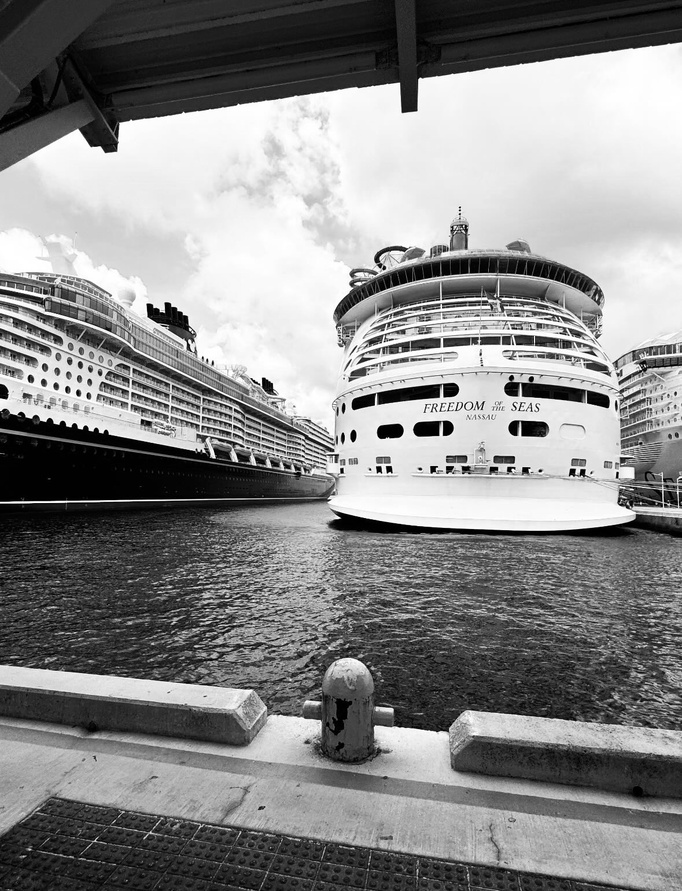
The expression floating city may sound like a marketing invention, but it describes a genuine transformation in naval architecture.
Once cruise ships no longer needed to compete with aircraft on speed, designers gained new freedom. The objective was no longer simply to move passengers efficiently between two points. Ships now had to accommodate thousands of people for several days while providing enough variety to keep them eating, exploring, shopping and attending performances without feeling confined inside a vessel. The most important change was therefore not simply that ships became larger. It was that they began to be organised like giant mall, or for instance, cities.
A ship’s tonnage does not reveal how much it weighs
Cruise ships are commonly compared using their gross tonnage, often abbreviated as GT. Despite its name, gross tonnage is not a measurement of the ship’s weight.It is calculated from the volume of the vessel’s enclosed interior spaces. A ship described as having a gross tonnage of 200,000 does not weigh 200,000 tonnes. The number essentially indicates how much enclosed space exists inside it. This distinction is important because the race to build larger cruise ships is largely a race to create more usable interior volume. Every additional section can contain more cabins, restaurants, shops, theatres or technical facilities. The growth of cruise ships was therefore not only about carrying more passengers. It was about creating enough space for those passengers to live parallel experiences. Just as residents of a city disperse between neighbourhoods, offices, restaurants and parks, passengers must be distributed throughout a ship to prevent thousands of people from gathering in one place. A successful megaship is not designed as one enormous room. It is designed as a collection of smaller worlds.
The SS Norway proved that the ship itself could attract passengers
As explained in the previous fact, the former SS France was converted into the SS Norway and entered Caribbean cruise service in 1980.
Her importance extended far beyond her size. She demonstrated that passengers could be attracted by the identity and scale of a ship, not merely by the ports included in its itinerary. The SS Norway had originally been designed for high-speed transatlantic transportation. During her conversion, part of that power became unnecessary. Machinery was reduced, outdoor recreation areas were expanded and sections of the interior were adapted to accommodate more passengers and entertainment. The economic priorities of ship design had changed. Powerful engines consumed space and fuel, but did not directly create new experiences for passengers. Cabins, lounges and entertainment venues did. The SS Norway therefore helped introduce a principle that continues to shape modern cruise ships: space can be more valuable than speed. Passengers might select a voyage because they wanted to visit the Caribbean, but they could also select it because they wanted to experience the SS Norway. The ship’s name, scale and facilities became part of the destination.
The atrium changed the centre of the ship
Traditional ocean liners were designed to look towards the sea. Their promenade decks, observation rooms and enclosed lounges allowed passengers to watch the horizon while remaining protected from North Atlantic weather. Modern cruise ships gradually developed a second orientation: inward.
When Sovereign of the Seas entered service in 1988, she was widely regarded as the first purpose-built modern megacruise ship. One of her most influential features was a spectacular multilevel atrium rising through the centre of the vessel. The atrium did more than create an impressive entrance. It helped passengers understand the ship spatially. Instead of moving through a succession of narrow corridors and enclosed rooms, they could return to a recognisable central space containing lifts, balconies, shops and gathering areas. This was an architectural idea borrowed from large hotels and shopping centres. The interior of the ship began to feel less like transportation and more like a public square. Atriums also changed the emotional experience of being on board. A passenger could stand several decks above sea level, surrounded by light, music and movement, without immediately seeing the ocean. For the first time, some of a cruise ship’s most important spaces were designed to make people temporarily forget that they were inside a ship.
That concept would later become central to the megaship.
Designers began creating streets instead of corridors
A major step arrived with Voyager of the Seas in 1999. At the centre of the vessel was the Royal Promenade, a long interior avenue lined with cafés, bars and shops. It resembled a pedestrian street placed inside the ship. This changed the traditional relationship between decks. On older vessels, passengers generally moved horizontally along one deck before taking stairs or lifts to another. A large promenade created a vertical public space extending through several levels, with cabins overlooking the interior rather than the sea. That detail was more revolutionary than it initially appeared. An interior-facing cabin could have a window overlooking a street, even though it had no ocean view. Designers had effectively created a new form of shipboard landscape: passengers could watch parades and public activity below them just as someone might look from an apartment onto a city avenue. The promenade could also host celebrations, live music and events. A passageway that might once have existed only to move passengers from one room to another became an entertainment venue in its own right. On a modern cruise ship, circulation is never only circulation. A staircase can become a photograph location, a corridor can become a shopping street and a lift journey can become a view across a monumental atrium.
The first permanent ice rink at sea changed the meaning of entertainment
When Voyager of the Seas entered service on November 21, 1999, it introduced something that had previously appeared technically improbable: the world’s first permanent ice-skating rink aboard a cruise ship. The vessel had been christened one day earlier by two-time Olympic figure-skating champion Katarina Witt, an especially symbolic choice for a ship about to transform entertainment at sea. Before that moment, shipboard entertainment generally took place in theatres, lounges, bars and outdoor areas. An ice rink required an entirely different kind of infrastructure. Beneath the visible surface was a refrigeration system capable of maintaining the ice in a vessel travelling through warm climates such as the Caribbean. The rink was not installed only for recreational skating. It became a professional performance venue where casts of skaters could rehearse and present full productions at sea. This represented a larger change in cruise entertainment. The ship was no longer simply hosting portable acts that could be placed on a conventional stage. Entertainment was beginning to influence the physical construction of the vessel itself. A theatre can accommodate singers, dancers and comedians. An ice show requires the ship to carry the venue with it. The result is a performance space that remains almost invisible to anyone looking at the ship from the outside. Passengers boarding in tropical heat may have no idea that several decks below them, professional skaters are warming up beside a frozen performance surface. As someone who works and performs inside one of these venues, I am still fascinated by that contradiction: an ice rink travelling through the Caribbean, hidden within a steel city moving across the sea.
Cruise ships began to develop neighbourhoods
The next architectural transformation was to divide the ship into distinct districts. When Oasis of the Seas entered service in 2009, her design featured a split superstructure. Instead of building one continuous block above the hull, the two sides of the ship rose around a long central opening. This allowed architects to create outdoor neighbourhoods within the centre of the vessel. One of them, Central Park, was designed with more than 12,000 living plants and trees. It was not simply an indoor space decorated to resemble a park. It was an open-air area exposed to sunlight and rain, surrounded by restaurants, walkways and balcony cabins. The presence of living trees in the middle of a ship required careful consideration of irrigation, drainage, wind, salt exposure and plant selection. Gardening, traditionally associated with land, became another shipboard profession. Other areas were given their own identities and functions, including entertainment districts, pool zones, pedestrian promenades and family spaces. This division into neighbourhoods solves an important architectural problem. A vessel carrying several thousand passengers cannot feel like one uninterrupted crowd. By creating different destinations around the ship, designers encourage people to spread out according to their interests. Someone may be reading beneath the trees while another passenger is watching an ice show, swimming, shopping or eating dinner. These activities happen at the same time, inside the same moving structure, without every passenger sharing the same environment.
Some cruise ship cabins are installed like enormous drawers
The construction of a floating city also requires industrial methods that would surprise many passengers. A cruise ship is not always built room by room inside the completed steel structure. Many cabins and bathrooms are prefabricated as modules in a separate factory near the shipyard. Furniture, mirrors, lighting, plumbing components and interior finishes can be installed before the cabin ever enters the vessel. The completed module is then transported to the shipyard, lifted through an opening in the structure and positioned inside the ship. The process resembles inserting a large drawer into a steel frame. Modular construction allows hundreds or thousands of nearly identical cabins to be produced efficiently and according to consistent standards. It also explains why the design of a cruise ship must be planned in an extremely precise sequence. Once the surrounding sections of the vessel have been closed, moving a complete cabin module into place would become impossible. The room in which a passenger sleeps may therefore have existed as a finished room before the deck surrounding it was fully completed.
Balconies transformed the exterior of cruise ships
Older passenger ships often reserved private balconies for only the most expensive accommodation, if they offered them at all. Large areas of the hull were dedicated to machinery, public rooms and enclosed cabins designed for ocean crossings. As cruising moved towards warmer destinations, private access to the sea became increasingly valuable. Balcony cabins allowed passengers to experience the ocean without sharing a public deck. This changed the external appearance of ships. Instead of long, uninterrupted lines of portholes, modern vessels developed multiple levels of repeating balconies. The façade began to resemble a waterfront apartment building. Balconies also changed the relationship between private and public space. A passenger no longer had to visit a promenade deck to feel the wind, watch the arrival into port or see the horizon. Part of the maritime experience had been brought directly into the cabin. Yet some contemporary balconies do not face the ocean at all. They overlook interior promenades, parks or neighbourhoods. A person can stay aboard a ship, open the balcony door and look across at another part of the ship. This may be the clearest sign that the vessel has become a city: it has created its own views.
The largest cruise ships are designed to offer many different experiences at the same time
On an ocean liner, the day was structured by the crossing. Most passengers shared the same weather, the same movement of the sea and many of the same public spaces. A megaship offers a more fragmented experience. Thousands of passengers can be aboard the same vessel and experience entirely different holidays. One family may spend most of its time around pools and children’s activities. Another passenger may attend theatrical productions and live music. Someone else may focus on restaurants, fitness or quiet spaces. This variety is not accidental. It is an essential method of managing scale. The more passengers a ship carries, the more environments it needs to create. Restaurants must open at different times. Entertainment venues must offer repeated performances. Public spaces must attract different groups throughout the day. Size alone does not make a ship a floating city. A very large vessel without carefully organised public spaces would simply feel crowded. What creates the city is the combination of architecture, movement and simultaneous human activity.
Modern cruise ships have become destinations with their own geography
Passengers now study deck plans in the same way that travellers study city maps. They identify where they will sleep, eat, exercise and spend their evenings. They learn the quickest routes between neighbourhoods and develop favourite places during the voyage. The ship gradually therefore becomes temporary geography. Its streets have names. Its districts have different atmospheres. Its theatres follow schedules. Its restaurants require reservations. Its inhabitants travel between work, leisure and private spaces throughout the day. The comparison with a city is not perfect. A cruise ship remains a highly controlled environment with a fixed population, carefully managed movement and a commercial purpose. But its design reproduces many of the functions of urban life within an extraordinarily limited area. The original ocean liner was judged by how effectively it connected two cities. The modern cruise ship is increasingly expected to become one.
Once cruise ships no longer needed to compete with aircraft on speed, designers gained new freedom. The objective was no longer simply to move passengers efficiently between two points. Ships now had to accommodate thousands of people for several days while providing enough variety to keep them eating, exploring, shopping and attending performances without feeling confined inside a vessel. The most important change was therefore not simply that ships became larger. It was that they began to be organised like giant mall, or for instance, cities.
A ship’s tonnage does not reveal how much it weighs
Cruise ships are commonly compared using their gross tonnage, often abbreviated as GT. Despite its name, gross tonnage is not a measurement of the ship’s weight.It is calculated from the volume of the vessel’s enclosed interior spaces. A ship described as having a gross tonnage of 200,000 does not weigh 200,000 tonnes. The number essentially indicates how much enclosed space exists inside it. This distinction is important because the race to build larger cruise ships is largely a race to create more usable interior volume. Every additional section can contain more cabins, restaurants, shops, theatres or technical facilities. The growth of cruise ships was therefore not only about carrying more passengers. It was about creating enough space for those passengers to live parallel experiences. Just as residents of a city disperse between neighbourhoods, offices, restaurants and parks, passengers must be distributed throughout a ship to prevent thousands of people from gathering in one place. A successful megaship is not designed as one enormous room. It is designed as a collection of smaller worlds.
The SS Norway proved that the ship itself could attract passengers
As explained in the previous fact, the former SS France was converted into the SS Norway and entered Caribbean cruise service in 1980.
Her importance extended far beyond her size. She demonstrated that passengers could be attracted by the identity and scale of a ship, not merely by the ports included in its itinerary. The SS Norway had originally been designed for high-speed transatlantic transportation. During her conversion, part of that power became unnecessary. Machinery was reduced, outdoor recreation areas were expanded and sections of the interior were adapted to accommodate more passengers and entertainment. The economic priorities of ship design had changed. Powerful engines consumed space and fuel, but did not directly create new experiences for passengers. Cabins, lounges and entertainment venues did. The SS Norway therefore helped introduce a principle that continues to shape modern cruise ships: space can be more valuable than speed. Passengers might select a voyage because they wanted to visit the Caribbean, but they could also select it because they wanted to experience the SS Norway. The ship’s name, scale and facilities became part of the destination.
The atrium changed the centre of the ship
Traditional ocean liners were designed to look towards the sea. Their promenade decks, observation rooms and enclosed lounges allowed passengers to watch the horizon while remaining protected from North Atlantic weather. Modern cruise ships gradually developed a second orientation: inward.
When Sovereign of the Seas entered service in 1988, she was widely regarded as the first purpose-built modern megacruise ship. One of her most influential features was a spectacular multilevel atrium rising through the centre of the vessel. The atrium did more than create an impressive entrance. It helped passengers understand the ship spatially. Instead of moving through a succession of narrow corridors and enclosed rooms, they could return to a recognisable central space containing lifts, balconies, shops and gathering areas. This was an architectural idea borrowed from large hotels and shopping centres. The interior of the ship began to feel less like transportation and more like a public square. Atriums also changed the emotional experience of being on board. A passenger could stand several decks above sea level, surrounded by light, music and movement, without immediately seeing the ocean. For the first time, some of a cruise ship’s most important spaces were designed to make people temporarily forget that they were inside a ship.
That concept would later become central to the megaship.
Designers began creating streets instead of corridors
A major step arrived with Voyager of the Seas in 1999. At the centre of the vessel was the Royal Promenade, a long interior avenue lined with cafés, bars and shops. It resembled a pedestrian street placed inside the ship. This changed the traditional relationship between decks. On older vessels, passengers generally moved horizontally along one deck before taking stairs or lifts to another. A large promenade created a vertical public space extending through several levels, with cabins overlooking the interior rather than the sea. That detail was more revolutionary than it initially appeared. An interior-facing cabin could have a window overlooking a street, even though it had no ocean view. Designers had effectively created a new form of shipboard landscape: passengers could watch parades and public activity below them just as someone might look from an apartment onto a city avenue. The promenade could also host celebrations, live music and events. A passageway that might once have existed only to move passengers from one room to another became an entertainment venue in its own right. On a modern cruise ship, circulation is never only circulation. A staircase can become a photograph location, a corridor can become a shopping street and a lift journey can become a view across a monumental atrium.
The first permanent ice rink at sea changed the meaning of entertainment
When Voyager of the Seas entered service on November 21, 1999, it introduced something that had previously appeared technically improbable: the world’s first permanent ice-skating rink aboard a cruise ship. The vessel had been christened one day earlier by two-time Olympic figure-skating champion Katarina Witt, an especially symbolic choice for a ship about to transform entertainment at sea. Before that moment, shipboard entertainment generally took place in theatres, lounges, bars and outdoor areas. An ice rink required an entirely different kind of infrastructure. Beneath the visible surface was a refrigeration system capable of maintaining the ice in a vessel travelling through warm climates such as the Caribbean. The rink was not installed only for recreational skating. It became a professional performance venue where casts of skaters could rehearse and present full productions at sea. This represented a larger change in cruise entertainment. The ship was no longer simply hosting portable acts that could be placed on a conventional stage. Entertainment was beginning to influence the physical construction of the vessel itself. A theatre can accommodate singers, dancers and comedians. An ice show requires the ship to carry the venue with it. The result is a performance space that remains almost invisible to anyone looking at the ship from the outside. Passengers boarding in tropical heat may have no idea that several decks below them, professional skaters are warming up beside a frozen performance surface. As someone who works and performs inside one of these venues, I am still fascinated by that contradiction: an ice rink travelling through the Caribbean, hidden within a steel city moving across the sea.
Cruise ships began to develop neighbourhoods
The next architectural transformation was to divide the ship into distinct districts. When Oasis of the Seas entered service in 2009, her design featured a split superstructure. Instead of building one continuous block above the hull, the two sides of the ship rose around a long central opening. This allowed architects to create outdoor neighbourhoods within the centre of the vessel. One of them, Central Park, was designed with more than 12,000 living plants and trees. It was not simply an indoor space decorated to resemble a park. It was an open-air area exposed to sunlight and rain, surrounded by restaurants, walkways and balcony cabins. The presence of living trees in the middle of a ship required careful consideration of irrigation, drainage, wind, salt exposure and plant selection. Gardening, traditionally associated with land, became another shipboard profession. Other areas were given their own identities and functions, including entertainment districts, pool zones, pedestrian promenades and family spaces. This division into neighbourhoods solves an important architectural problem. A vessel carrying several thousand passengers cannot feel like one uninterrupted crowd. By creating different destinations around the ship, designers encourage people to spread out according to their interests. Someone may be reading beneath the trees while another passenger is watching an ice show, swimming, shopping or eating dinner. These activities happen at the same time, inside the same moving structure, without every passenger sharing the same environment.
Some cruise ship cabins are installed like enormous drawers
The construction of a floating city also requires industrial methods that would surprise many passengers. A cruise ship is not always built room by room inside the completed steel structure. Many cabins and bathrooms are prefabricated as modules in a separate factory near the shipyard. Furniture, mirrors, lighting, plumbing components and interior finishes can be installed before the cabin ever enters the vessel. The completed module is then transported to the shipyard, lifted through an opening in the structure and positioned inside the ship. The process resembles inserting a large drawer into a steel frame. Modular construction allows hundreds or thousands of nearly identical cabins to be produced efficiently and according to consistent standards. It also explains why the design of a cruise ship must be planned in an extremely precise sequence. Once the surrounding sections of the vessel have been closed, moving a complete cabin module into place would become impossible. The room in which a passenger sleeps may therefore have existed as a finished room before the deck surrounding it was fully completed.
Balconies transformed the exterior of cruise ships
Older passenger ships often reserved private balconies for only the most expensive accommodation, if they offered them at all. Large areas of the hull were dedicated to machinery, public rooms and enclosed cabins designed for ocean crossings. As cruising moved towards warmer destinations, private access to the sea became increasingly valuable. Balcony cabins allowed passengers to experience the ocean without sharing a public deck. This changed the external appearance of ships. Instead of long, uninterrupted lines of portholes, modern vessels developed multiple levels of repeating balconies. The façade began to resemble a waterfront apartment building. Balconies also changed the relationship between private and public space. A passenger no longer had to visit a promenade deck to feel the wind, watch the arrival into port or see the horizon. Part of the maritime experience had been brought directly into the cabin. Yet some contemporary balconies do not face the ocean at all. They overlook interior promenades, parks or neighbourhoods. A person can stay aboard a ship, open the balcony door and look across at another part of the ship. This may be the clearest sign that the vessel has become a city: it has created its own views.
The largest cruise ships are designed to offer many different experiences at the same time
On an ocean liner, the day was structured by the crossing. Most passengers shared the same weather, the same movement of the sea and many of the same public spaces. A megaship offers a more fragmented experience. Thousands of passengers can be aboard the same vessel and experience entirely different holidays. One family may spend most of its time around pools and children’s activities. Another passenger may attend theatrical productions and live music. Someone else may focus on restaurants, fitness or quiet spaces. This variety is not accidental. It is an essential method of managing scale. The more passengers a ship carries, the more environments it needs to create. Restaurants must open at different times. Entertainment venues must offer repeated performances. Public spaces must attract different groups throughout the day. Size alone does not make a ship a floating city. A very large vessel without carefully organised public spaces would simply feel crowded. What creates the city is the combination of architecture, movement and simultaneous human activity.
Modern cruise ships have become destinations with their own geography
Passengers now study deck plans in the same way that travellers study city maps. They identify where they will sleep, eat, exercise and spend their evenings. They learn the quickest routes between neighbourhoods and develop favourite places during the voyage. The ship gradually therefore becomes temporary geography. Its streets have names. Its districts have different atmospheres. Its theatres follow schedules. Its restaurants require reservations. Its inhabitants travel between work, leisure and private spaces throughout the day. The comparison with a city is not perfect. A cruise ship remains a highly controlled environment with a fixed population, carefully managed movement and a commercial purpose. But its design reproduces many of the functions of urban life within an extraordinarily limited area. The original ocean liner was judged by how effectively it connected two cities. The modern cruise ship is increasingly expected to become one.

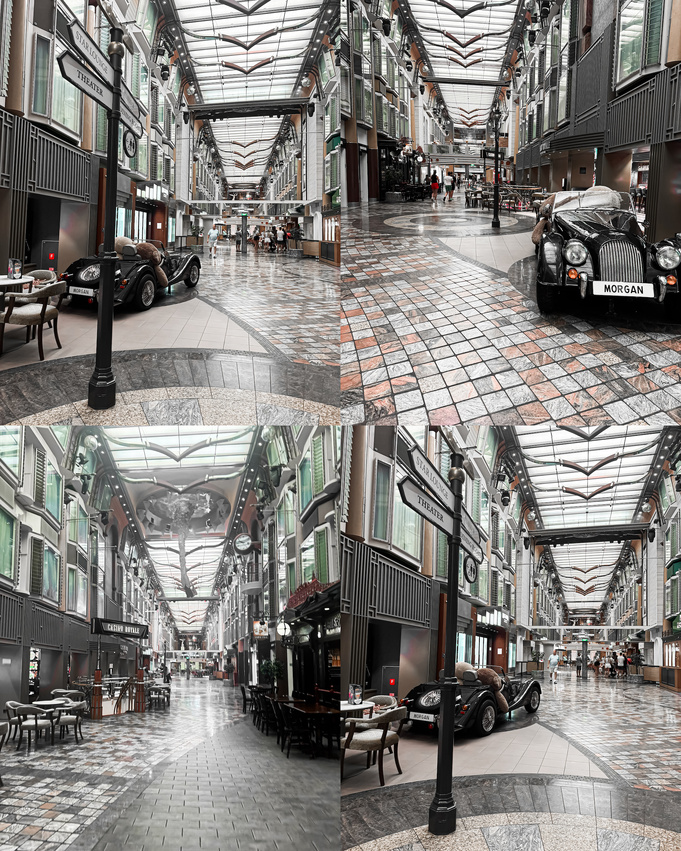
Fact 4 — Behind the Passenger Decks There Is Hidden Systems That Keep a Cruise Ship Alive

A passenger can spend an entire week aboard a cruise ship without seeing most of the vessel. The restaurants, theatres, pools and promenades form only its public face. Behind doors marked Crew Only, another version of the ship exists: a dense network of service corridors, industrial kitchens, storerooms, workshops, control rooms, water-treatment systems, waste-processing areas and technical spaces. These areas are rarely represented on the deck plans given to passengers. Yet they are the reason the visible ship can function. A cruise ship is not simply a hotel placed on top of a hull. It must generate power, produce and distribute water, preserve food, wash thousands of sheets, control its internal climate, process waste and respond to emergencies while moving far from land. The most impressive spaces on board may therefore be the ones passengers never know are there.
Two ships exist within the same structure
Modern cruise ships are designed around the separation of passenger and operational circulation. Passengers move through decorated corridors, carpeted staircases and public lifts. Crew members often use a different network of passageways, staircases and service elevators hidden behind the walls. This separation is practical. Food, luggage, laundry, equipment and waste must move around the vessel without blocking public spaces or disturbing the passenger experience. A waiter carrying a tray may disappear through an almost invisible service door and enter an entirely different environment. The carpet is replaced by a practical floor, decorative lighting gives way to bright functional fixtures and the carefully designed atmosphere of the passenger area ends immediately. On many large ships, a long service corridor runs through a significant part of the vessel. Crew members often nickname it I-95, after the major highway on the east coast of the United States. Like a city highway, it carries continuous traffic. Trolleys transport food, clean linen, beverages, supplies, luggage and equipment in one direction while waste, dirty dishes and used laundry travel in another. The corridor has no ocean view and little decoration. Yet it may be one of the most important circulation routes on the entire ship. Passengers experience a hotel. Behind its walls, the crew operates a logistics centre.
The food is loaded before anyone orders it
A cruise ship cannot simply contact a local supplier every time a restaurant runs out of an ingredient. Most of the food required for a voyage must be ordered, inspected and loaded during a limited period in port. Pallets of fruit, vegetables, meat, fish, dairy products, beverages and dry goods enter through service openings located far from the passenger gangway. The provisioning process must account for the length of the voyage, number of passengers, number of crew members, restaurant menus, dietary requirements and expected consumption patterns. It must also consider the order in which ingredients will be used. Fresh products needed near the end of the voyage must remain safe and presentable for several days. Once aboard, the supplies are divided between refrigerated rooms, freezers and dry-storage areas. These rooms can resemble the back of a supermarket or an industrial warehouse rather than a hotel pantry. Different products require different temperatures and storage conditions. Raw meat must remain separated from ready-to-eat food. Chemicals cannot be stored beside ingredients. Items entering the ship must be tracked because an isolated vessel has limited options if contamination is later discovered. The restaurant visible to passengers is therefore only the final metres of a much longer system. Behind it may be preparation rooms, bakeries, butcher areas, dishwashing stations, cold rooms, freezers and service corridors. Large ships do not have one single kitchen producing every meal. They operate networks of specialised galleys positioned to serve different restaurants and venues. Even the distance between a galley and a dining table matters. If a plate must travel too far through the ship, it may reach the passenger cold. Architects must therefore consider the movement of food while designing the vessel, sometimes years before the first menu is written.
The dishwashing machines can resemble car washes
The scale of the galleys is difficult to understand from a passenger restaurant. Thousands of plates, glasses and pieces of cutlery must be cleaned repeatedly throughout the day. Industrial dishwashing systems process large quantities in a continuous flow. On some megaships, they look less like domestic appliances than miniature car-wash tunnels. The cleaning process is carefully organised. Dirty dishes enter from one side, food waste is removed and the items travel through high-temperature washing and sanitising stages before emerging ready for reuse. This is not simply about speed. A cruise ship brings thousands of people into a confined environment, meaning that a failure in food hygiene can have serious consequences. Handwashing stations, temperature records, cleaning schedules and separation between clean and contaminated areas are part of daily operations. The United States Centers for Disease Control and Prevention even runs a dedicated Vessel Sanitation Program. Ships calling at American ports can be inspected in areas that passengers rarely see, including food storage, potable-water systems, galleys and medical facilities. A buffet may appear effortless. Behind it is a controlled industrial process.
Much of the freshwater can be produced at sea
One of the least visible questions aboard a ship is also one of the most essential: where does all the water come from? Thousands of people shower, flush toilets, wash their hands, clean dishes and use pools every day. Carrying every litre from the departure port would add enormous weight and require vast storage capacity. Modern cruise ships can therefore produce a significant proportion of their freshwater while at sea. Two common methods are evaporation and reverse osmosis. Evaporation systems use heat to turn seawater into vapour. Salt and many impurities remain behind, while the vapour is condensed into freshwater. Some systems can use heat recovered from the ship’s machinery, giving energy that might otherwise be wasted a second purpose. Reverse osmosis takes a different approach. Seawater is forced at high pressure through extremely fine membranes that separate freshwater from dissolved salts. The resulting water is not sent directly to a passenger’s bathroom. It must be treated, tested, stored and distributed through a protected potable-water system. Ships may also take on freshwater in port, a process sometimes called bunkering, but that water must meet health requirements before entering the drinking-water supply. According to industry data, some ships can now produce an amount equivalent to their total daily water consumption. Yet this does not mean water is unlimited. Producing, heating, cooling and pumping it requires energy, which is why water conservation remains operationally important. The glass filled at a restaurant may therefore contain water that was part of the ocean only hours or days earlier.
A cruise ship is also a moving power station
When a ship leaves port, it does not remain connected to a city’s electrical grid. Its propulsion, lighting, lifts, air-conditioning, kitchens, refrigeration, navigation equipment, theatres, sound systems, laundry machinery and countless other systems all require energy. The vessel must therefore operate as its own power station. Modern ships generally use several generator sets rather than depending on one single engine for every function. This provides flexibility and redundancy. The number of engines operating can be adjusted according to the amount of power required. This distinction also explains something many passengers do not realise: the engines generating electricity are not always mechanically connected to the propellers in the traditional way. On many contemporary vessels, engines produce electrical power, and electric motors then drive the propulsion system. The ship is essentially carrying a miniature electrical grid beneath the passenger decks. Energy produced on board also creates heat. Instead of allowing all of that heat to disappear, some ships recover part of it for other uses, including heating water for cabins, pools or technical processes. The hot shower in a passenger cabin may therefore be partly connected to energy recovered from machinery operating several decks below.
The air is controlled as carefully as the water
Most windows on a cruise ship do not open. This is not simply a design choice. Air pressure, weather protection, energy efficiency and fire safety all influence how air moves through the vessel. Cabins, theatres, restaurants, kitchens and technical rooms require different combinations of temperature, humidity, filtration and ventilation. The air-conditioning system must respond to changing conditions throughout the voyage. A ship may sail from a cool port into tropical humidity while carrying thousands of people who are constantly moving between enclosed and outdoor spaces. Kitchens produce heat and vapour. Theatres fill rapidly before a performance and empty shortly afterwards. Cabins require comfort throughout the night. Certain technical rooms must remain within strict temperature ranges to protect equipment. The ship’s heating, ventilation and air-conditioning system quietly manages these differences. It also forms part of the vessel’s fire strategy. Smoke must not be allowed to travel freely through ventilation ducts from one area to another. Systems can be isolated, stopped or controlled according to the location of an emergency. The comfortable atmosphere experienced by passengers is therefore being manufactured continuously.
Waste does not simply disappear below deck
Every meal, drink, delivery and cabin service produces waste. Behind the scenes, glass, metal, cardboard, plastics, food waste and other materials can be separated into different streams. Some waste is compacted to reduce the amount of storage space it occupies. Glass may be crushed. Certain approved materials may be processed in an onboard incinerator, while other waste must be stored and transferred to licensed facilities ashore. Food waste can be processed by specialised equipment, including biodigesters that break organic material down more efficiently. Some ships also use technology to measure which foods are being discarded and in what quantities, allowing kitchens to adjust preparation and reduce future waste. Wastewater is equally complex. Blackwater generally refers to sewage from toilets and medical areas. Greywater comes from sources such as showers, sinks and laundry facilities. Galley water contains food particles, fats and cleaning residues from kitchens. These streams cannot all be treated in the same way. Modern advanced wastewater-treatment systems can use several stages of biological treatment, filtration and disinfection before water reaches the standard required by applicable regulations. What passengers see as a simple flush or a draining sink is the beginning of an industrial treatment process.
The idea that everything is simply released into the ocean is inaccurate. International rules, regional restrictions, port requirements and company procedures determine how different substances must be processed, stored or discharged. The exact equipment varies from one vessel to another, but the principle remains the same: a floating city must also manage what that city leaves behind.
The laundry never truly closes
Every cabin generates towels, sheets and pillowcases. Restaurants use napkins and table linen. Pools require towels. Costumes, uniforms and crew clothing add further volume. A large ship can therefore operate an industrial laundry far below the passenger accommodation.
Huge washing machines, dryers, pressing machines and automated folding systems process fabric throughout the day. Clean linen must then be counted, stored and redistributed to the correct decks and departments. The operation depends on timing. If dirty linen arrives faster than it can be washed, the shortage eventually reaches cabins, restaurants or recreational areas. If clean items are delivered to the wrong location, another department may be unable to complete its work. Passengers may never see the laundry room, but they encounter its output constantly. The perfectly folded towel waiting in a cabin is the visible end of another hidden production line.
The bridge does not look like the wheelhouse people imagine
Popular culture often presents a ship’s bridge with a captain standing behind a large wooden wheel. The bridge of a modern cruise ship looks more like an advanced control centre. Navigation displays combine radar, electronic charts, position information, depth readings, weather data and information from the vessel’s many systems. Officers monitor traffic, communicate with ports and other ships, plan routes and track the ship’s movement. The vessel may follow a programmed route using automated systems, but this does not mean it navigates without human supervision. Bridge officers remain responsible for monitoring conditions, identifying risks and intervening when circumstances change. When entering or leaving port, a local maritime pilot may also come aboard. The pilot contributes specialised knowledge of the harbour, currents, traffic and local regulations, while the captain remains responsible for the vessel. Another surprising detail is that officers do not always control the ship from the exact centre of the bridge. Additional control positions can be located in the bridge wings, extending towards either side of the vessel. From there, officers can look directly along the ship’s side while manoeuvring close to a pier. Passengers may watch the ship approach the dock from their balconies without realising that officers are observing the same manoeuvre from a control station above them.
The hull is divided so one problem does not become a ship-wide disaster
A cruise ship may appear to be one enormous open structure, but internally it is divided into protected sections. Watertight doors can isolate parts of the vessel below the waterline. Fire-resistant divisions separate major zones above it. Ventilation, electrical and communication systems are designed with emergency scenarios in mind. The reason is simple: damage must be contained. If water enters one compartment, the ship’s design is intended to limit its ability to spread. If a fire begins in one area, doors, fire boundaries, alarms and suppression systems help prevent it from moving unchecked through the vessel. Modern passenger-ship regulations also emphasise redundancy. Essential systems should not depend entirely on one vulnerable location. Depending on the ship’s design, power, navigation or safety functions may have backups capable of continuing operation after a failure. Passengers generally notice these systems only during the mandatory safety drill or when passing a closed fire door. Most of the time, safety architecture remains blended into the walls around them.
The ship never goes to sleep
Passenger life follows a recognisable rhythm. Restaurants close, theatres empty, corridor noise fades and most cabin lights eventually disappear. The ship itself continues working. While passengers sleep, officers remain on the bridge, engineers monitor technical systems and night teams clean public areas. Waste is moved, food preparation begins, laundry continues and maintenance may be carried out while spaces are empty. Some of the most important work takes place precisely because passengers are not there to see it. By morning, chairs have returned to their positions, fresh linen has reached the cabins, breakfast is being prepared and the vessel may already be approaching another port.mThe illusion of effortless travel has been rebuilt overnight. Nothing aboard a cruise ship happens by accident. Every meal served, toilet flushed, lift activated, room cooled and spotlight illuminated depends on an infrastructure designed to function continuously in the middle of the sea. The passenger ship is the one advertised in photographs. The operational ship is the one that makes those photographs possible.
Two ships exist within the same structure
Modern cruise ships are designed around the separation of passenger and operational circulation. Passengers move through decorated corridors, carpeted staircases and public lifts. Crew members often use a different network of passageways, staircases and service elevators hidden behind the walls. This separation is practical. Food, luggage, laundry, equipment and waste must move around the vessel without blocking public spaces or disturbing the passenger experience. A waiter carrying a tray may disappear through an almost invisible service door and enter an entirely different environment. The carpet is replaced by a practical floor, decorative lighting gives way to bright functional fixtures and the carefully designed atmosphere of the passenger area ends immediately. On many large ships, a long service corridor runs through a significant part of the vessel. Crew members often nickname it I-95, after the major highway on the east coast of the United States. Like a city highway, it carries continuous traffic. Trolleys transport food, clean linen, beverages, supplies, luggage and equipment in one direction while waste, dirty dishes and used laundry travel in another. The corridor has no ocean view and little decoration. Yet it may be one of the most important circulation routes on the entire ship. Passengers experience a hotel. Behind its walls, the crew operates a logistics centre.
The food is loaded before anyone orders it
A cruise ship cannot simply contact a local supplier every time a restaurant runs out of an ingredient. Most of the food required for a voyage must be ordered, inspected and loaded during a limited period in port. Pallets of fruit, vegetables, meat, fish, dairy products, beverages and dry goods enter through service openings located far from the passenger gangway. The provisioning process must account for the length of the voyage, number of passengers, number of crew members, restaurant menus, dietary requirements and expected consumption patterns. It must also consider the order in which ingredients will be used. Fresh products needed near the end of the voyage must remain safe and presentable for several days. Once aboard, the supplies are divided between refrigerated rooms, freezers and dry-storage areas. These rooms can resemble the back of a supermarket or an industrial warehouse rather than a hotel pantry. Different products require different temperatures and storage conditions. Raw meat must remain separated from ready-to-eat food. Chemicals cannot be stored beside ingredients. Items entering the ship must be tracked because an isolated vessel has limited options if contamination is later discovered. The restaurant visible to passengers is therefore only the final metres of a much longer system. Behind it may be preparation rooms, bakeries, butcher areas, dishwashing stations, cold rooms, freezers and service corridors. Large ships do not have one single kitchen producing every meal. They operate networks of specialised galleys positioned to serve different restaurants and venues. Even the distance between a galley and a dining table matters. If a plate must travel too far through the ship, it may reach the passenger cold. Architects must therefore consider the movement of food while designing the vessel, sometimes years before the first menu is written.
The dishwashing machines can resemble car washes
The scale of the galleys is difficult to understand from a passenger restaurant. Thousands of plates, glasses and pieces of cutlery must be cleaned repeatedly throughout the day. Industrial dishwashing systems process large quantities in a continuous flow. On some megaships, they look less like domestic appliances than miniature car-wash tunnels. The cleaning process is carefully organised. Dirty dishes enter from one side, food waste is removed and the items travel through high-temperature washing and sanitising stages before emerging ready for reuse. This is not simply about speed. A cruise ship brings thousands of people into a confined environment, meaning that a failure in food hygiene can have serious consequences. Handwashing stations, temperature records, cleaning schedules and separation between clean and contaminated areas are part of daily operations. The United States Centers for Disease Control and Prevention even runs a dedicated Vessel Sanitation Program. Ships calling at American ports can be inspected in areas that passengers rarely see, including food storage, potable-water systems, galleys and medical facilities. A buffet may appear effortless. Behind it is a controlled industrial process.
Much of the freshwater can be produced at sea
One of the least visible questions aboard a ship is also one of the most essential: where does all the water come from? Thousands of people shower, flush toilets, wash their hands, clean dishes and use pools every day. Carrying every litre from the departure port would add enormous weight and require vast storage capacity. Modern cruise ships can therefore produce a significant proportion of their freshwater while at sea. Two common methods are evaporation and reverse osmosis. Evaporation systems use heat to turn seawater into vapour. Salt and many impurities remain behind, while the vapour is condensed into freshwater. Some systems can use heat recovered from the ship’s machinery, giving energy that might otherwise be wasted a second purpose. Reverse osmosis takes a different approach. Seawater is forced at high pressure through extremely fine membranes that separate freshwater from dissolved salts. The resulting water is not sent directly to a passenger’s bathroom. It must be treated, tested, stored and distributed through a protected potable-water system. Ships may also take on freshwater in port, a process sometimes called bunkering, but that water must meet health requirements before entering the drinking-water supply. According to industry data, some ships can now produce an amount equivalent to their total daily water consumption. Yet this does not mean water is unlimited. Producing, heating, cooling and pumping it requires energy, which is why water conservation remains operationally important. The glass filled at a restaurant may therefore contain water that was part of the ocean only hours or days earlier.
A cruise ship is also a moving power station
When a ship leaves port, it does not remain connected to a city’s electrical grid. Its propulsion, lighting, lifts, air-conditioning, kitchens, refrigeration, navigation equipment, theatres, sound systems, laundry machinery and countless other systems all require energy. The vessel must therefore operate as its own power station. Modern ships generally use several generator sets rather than depending on one single engine for every function. This provides flexibility and redundancy. The number of engines operating can be adjusted according to the amount of power required. This distinction also explains something many passengers do not realise: the engines generating electricity are not always mechanically connected to the propellers in the traditional way. On many contemporary vessels, engines produce electrical power, and electric motors then drive the propulsion system. The ship is essentially carrying a miniature electrical grid beneath the passenger decks. Energy produced on board also creates heat. Instead of allowing all of that heat to disappear, some ships recover part of it for other uses, including heating water for cabins, pools or technical processes. The hot shower in a passenger cabin may therefore be partly connected to energy recovered from machinery operating several decks below.
The air is controlled as carefully as the water
Most windows on a cruise ship do not open. This is not simply a design choice. Air pressure, weather protection, energy efficiency and fire safety all influence how air moves through the vessel. Cabins, theatres, restaurants, kitchens and technical rooms require different combinations of temperature, humidity, filtration and ventilation. The air-conditioning system must respond to changing conditions throughout the voyage. A ship may sail from a cool port into tropical humidity while carrying thousands of people who are constantly moving between enclosed and outdoor spaces. Kitchens produce heat and vapour. Theatres fill rapidly before a performance and empty shortly afterwards. Cabins require comfort throughout the night. Certain technical rooms must remain within strict temperature ranges to protect equipment. The ship’s heating, ventilation and air-conditioning system quietly manages these differences. It also forms part of the vessel’s fire strategy. Smoke must not be allowed to travel freely through ventilation ducts from one area to another. Systems can be isolated, stopped or controlled according to the location of an emergency. The comfortable atmosphere experienced by passengers is therefore being manufactured continuously.
Waste does not simply disappear below deck
Every meal, drink, delivery and cabin service produces waste. Behind the scenes, glass, metal, cardboard, plastics, food waste and other materials can be separated into different streams. Some waste is compacted to reduce the amount of storage space it occupies. Glass may be crushed. Certain approved materials may be processed in an onboard incinerator, while other waste must be stored and transferred to licensed facilities ashore. Food waste can be processed by specialised equipment, including biodigesters that break organic material down more efficiently. Some ships also use technology to measure which foods are being discarded and in what quantities, allowing kitchens to adjust preparation and reduce future waste. Wastewater is equally complex. Blackwater generally refers to sewage from toilets and medical areas. Greywater comes from sources such as showers, sinks and laundry facilities. Galley water contains food particles, fats and cleaning residues from kitchens. These streams cannot all be treated in the same way. Modern advanced wastewater-treatment systems can use several stages of biological treatment, filtration and disinfection before water reaches the standard required by applicable regulations. What passengers see as a simple flush or a draining sink is the beginning of an industrial treatment process.
The idea that everything is simply released into the ocean is inaccurate. International rules, regional restrictions, port requirements and company procedures determine how different substances must be processed, stored or discharged. The exact equipment varies from one vessel to another, but the principle remains the same: a floating city must also manage what that city leaves behind.
The laundry never truly closes
Every cabin generates towels, sheets and pillowcases. Restaurants use napkins and table linen. Pools require towels. Costumes, uniforms and crew clothing add further volume. A large ship can therefore operate an industrial laundry far below the passenger accommodation.
Huge washing machines, dryers, pressing machines and automated folding systems process fabric throughout the day. Clean linen must then be counted, stored and redistributed to the correct decks and departments. The operation depends on timing. If dirty linen arrives faster than it can be washed, the shortage eventually reaches cabins, restaurants or recreational areas. If clean items are delivered to the wrong location, another department may be unable to complete its work. Passengers may never see the laundry room, but they encounter its output constantly. The perfectly folded towel waiting in a cabin is the visible end of another hidden production line.
The bridge does not look like the wheelhouse people imagine
Popular culture often presents a ship’s bridge with a captain standing behind a large wooden wheel. The bridge of a modern cruise ship looks more like an advanced control centre. Navigation displays combine radar, electronic charts, position information, depth readings, weather data and information from the vessel’s many systems. Officers monitor traffic, communicate with ports and other ships, plan routes and track the ship’s movement. The vessel may follow a programmed route using automated systems, but this does not mean it navigates without human supervision. Bridge officers remain responsible for monitoring conditions, identifying risks and intervening when circumstances change. When entering or leaving port, a local maritime pilot may also come aboard. The pilot contributes specialised knowledge of the harbour, currents, traffic and local regulations, while the captain remains responsible for the vessel. Another surprising detail is that officers do not always control the ship from the exact centre of the bridge. Additional control positions can be located in the bridge wings, extending towards either side of the vessel. From there, officers can look directly along the ship’s side while manoeuvring close to a pier. Passengers may watch the ship approach the dock from their balconies without realising that officers are observing the same manoeuvre from a control station above them.
The hull is divided so one problem does not become a ship-wide disaster
A cruise ship may appear to be one enormous open structure, but internally it is divided into protected sections. Watertight doors can isolate parts of the vessel below the waterline. Fire-resistant divisions separate major zones above it. Ventilation, electrical and communication systems are designed with emergency scenarios in mind. The reason is simple: damage must be contained. If water enters one compartment, the ship’s design is intended to limit its ability to spread. If a fire begins in one area, doors, fire boundaries, alarms and suppression systems help prevent it from moving unchecked through the vessel. Modern passenger-ship regulations also emphasise redundancy. Essential systems should not depend entirely on one vulnerable location. Depending on the ship’s design, power, navigation or safety functions may have backups capable of continuing operation after a failure. Passengers generally notice these systems only during the mandatory safety drill or when passing a closed fire door. Most of the time, safety architecture remains blended into the walls around them.
The ship never goes to sleep
Passenger life follows a recognisable rhythm. Restaurants close, theatres empty, corridor noise fades and most cabin lights eventually disappear. The ship itself continues working. While passengers sleep, officers remain on the bridge, engineers monitor technical systems and night teams clean public areas. Waste is moved, food preparation begins, laundry continues and maintenance may be carried out while spaces are empty. Some of the most important work takes place precisely because passengers are not there to see it. By morning, chairs have returned to their positions, fresh linen has reached the cabins, breakfast is being prepared and the vessel may already be approaching another port.mThe illusion of effortless travel has been rebuilt overnight. Nothing aboard a cruise ship happens by accident. Every meal served, toilet flushed, lift activated, room cooled and spotlight illuminated depends on an infrastructure designed to function continuously in the middle of the sea. The passenger ship is the one advertised in photographs. The operational ship is the one that makes those photographs possible.

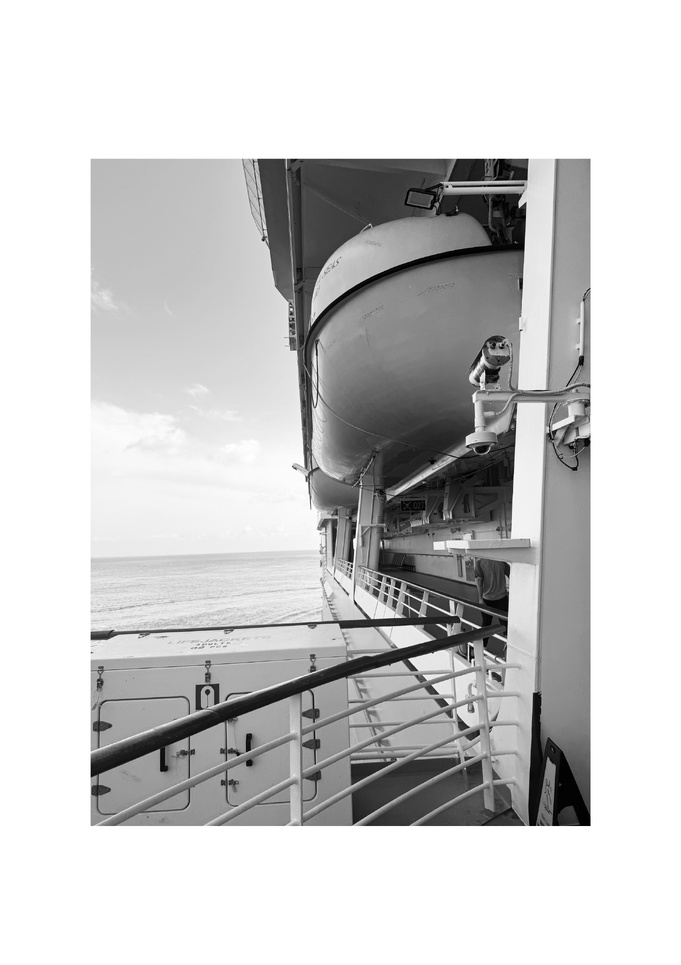
Fact 5 — Behind Every Floating City Is a Society the Passengers Rarely See, Bellow Deck

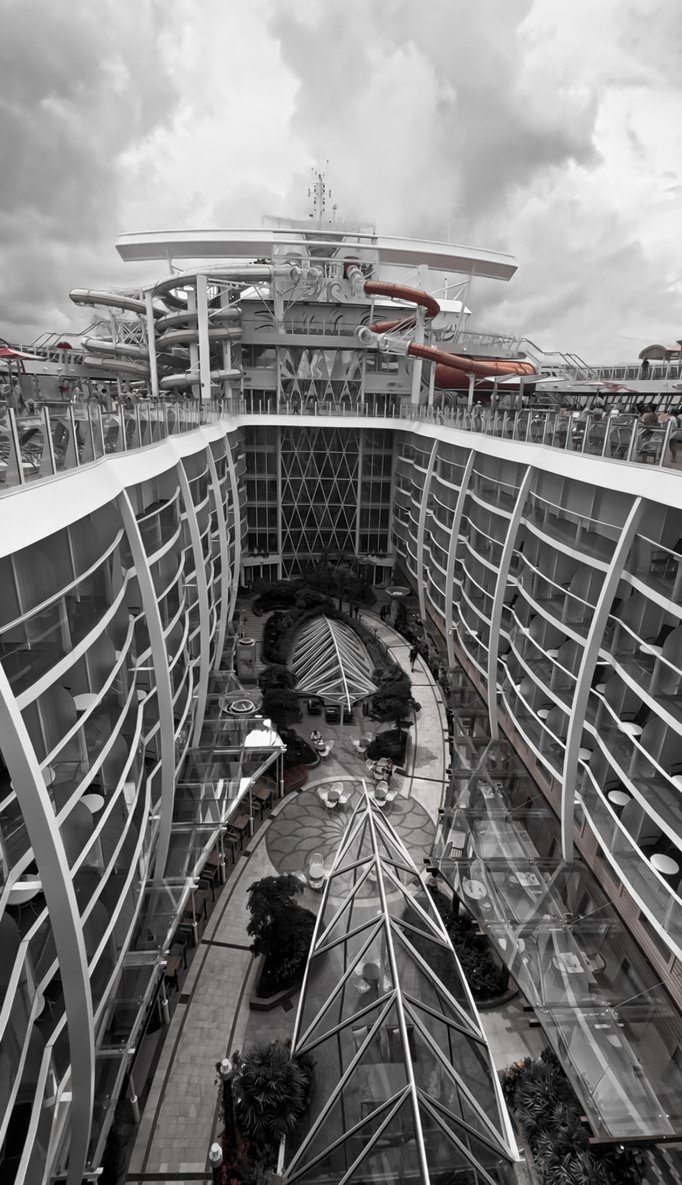
A cruise ship does not operate with a single crew in the traditional sense.It carries several professional worlds inside the same hull: officers navigating the vessel, engineers maintaining its technical systems, cooks preparing thousands of meals, housekeepers turning over cabins, technicians running theatres and artists performing on ice or in the air. They may work for different departments, follow different schedules and rarely enter the same spaces. Nevertheless, they all depend on one another. For passengers, a cruise usually lasts a few days or weeks. For crew members, the ship can become an entire temporary life. It is where they work, eat, sleep, exercise, receive medical care, form friendships and experience months of birthdays, holidays and family events from a distance. The ship may be sold as a holiday destination, but behind the passenger experience is a highly organised international society.
The captain is not the only person running the ship
Passengers often imagine the captain as the person making every important decision on board. The captain does hold ultimate authority over the safety and operation of the vessel, but a modern cruise ship is far too complex to be managed by one person. Its organisation is generally divided into several major departments. The deck department is responsible for navigation, bridge operations, mooring, maintenance of exterior areas and many safety procedures. It includes the captain, staff captain, deck officers, security personnel and deck crew. The engine department manages propulsion, electrical generation, machinery, plumbing, air-conditioning and other technical systems. Engineers may spend much of their working life in areas passengers will never visit. The hotel department oversees much of the visible cruise experience: cabins, restaurants, bars, guest services, retail, housekeeping and other hospitality operations. The entertainment department can include musicians, dancers, singers, production technicians, activity staff, stage managers, acrobats and professional figure skaters. The medical, security, financial and human-resources teams add further layers. This creates an unusual structure. A ship is simultaneously a vessel, a hotel, a restaurant complex, a theatre company and an international workplace. Each part has its own management, but during an emergency, all of them become part of one maritime command system. The person preparing a cocktail and the officer navigating the ship may appear to have completely unrelated jobs. In an emergency, however, both follow duties connected to the same safety plan.
Job titles do not reveal a crew member’s second role
One of the least-known realities of cruise-ship employment is that a crew member’s everyday job may not be their only responsibility. A dancer is hired to perform. A waiter is hired to serve food. A shop employee is hired to work in retail. But each person must also understand what to do if the ship experiences an emergency. Depending on the vessel and their assigned position, crew members may help guide passengers, monitor a staircase, report to an evacuation station, assist with lifejackets or support another part of the response. These responsibilities are organised through the ship’s muster list, which assigns duties to crew members before an emergency occurs. This means that the person smiling beneath the stage lights may also know where to report if an alarm sounds. Entertainment personnel are not separate from the maritime environment simply because their primary job is artistic. Before beginning normal work, crew members receive safety familiarisation. Many positions require approved maritime training covering subjects such as personal survival, fire prevention, first aid and emergency procedures. Regular drills continue throughout the contract. The exact schedule and responsibilities vary according to the vessel, position and applicable regulations, but safety training is not limited to officers. On land, a performer prepares for the show. At sea, a performer must also prepare for the possibility that the venue itself may face an emergency.
A crew member can live on a ship without seeing much of it
It sounds impossible, but someone can spend months aboard a cruise ship and still know only selected parts of the vessel. Access is linked to employment. A crew identification card can allow entry into work areas, accommodation sections and specific technical spaces, while other zones remain restricted. An engineer may know the machinery spaces in extraordinary detail but rarely enter the theatre. A performer may understand every entrance, backstage corridor and quick-change area while knowing almost nothing about the engine room. A waiter may move through restaurants and galleys that other crew members never use. Even within the crew areas, access is not universal. Some doors are controlled for security. Technical compartments may require specialised authorisation. The bridge, engine-control room, medical centre and food-storage areas cannot function as casual social spaces.
The result is a society in which thousands of people share the same structure but experience different versions of it. Passengers also often assume that crew members regularly enjoy every facility on board. In reality, access to passenger venues depends on company policy, rank, position, operational needs and sometimes specific permission. Living inside a floating resort does not mean living as a guest.
Rank can influence everyday life far beyond the job
Maritime hierarchy is visible in uniforms, officer stripes and job titles, but it can also shape where people eat, live and socialise. Depending on the company and vessel, different groups may use separate dining rooms, bars, lounges or accommodation areas. Officers, staff and crew can have access to different facilities. Cabin arrangements also vary. Senior officers may have private accommodation, while other crew members share compact cabins. Roommates can come from different countries, work opposite schedules and have completely different responsibilities. A night-shift employee may be trying to sleep while their roommate prepares for work. One person may finish a shift as the other begins. The cabin is not only a bedroom. It may be the only truly private space available during a contract lasting several months. The organisation of life on board therefore continues even after the working day ends. Where a person sleeps, eats and spends free time may reflect their position within the ship’s hierarchy. The vessel becomes a workplace in which professional rank and domestic life are physically connected.
Crew members work in a place that never closes
A cruise ship does not have conventional weekends. It operates every hour of every day, including Sundays, public holidays and the days when one group of passengers leaves and another arrives. Instead of following a Monday-to-Friday rhythm, crew members generally work according to the needs of their department. A contract may contain repeated working days, with time off measured in hours rather than full weekends. This does not mean that no rules exist. The International Labour Organization’s Maritime Labour Convention establishes minimum rest standards for seafarers covered by it. The minimum is generally no less than ten hours of rest in any 24-hour period and 77 hours in any seven-day period. The daily rest may be divided, but regulatory conditions apply. The distinction between rest and a day off is essential. A crew member may receive the legally required rest while still working every calendar day. Work and rest hours are recorded because fatigue is a maritime-safety issue, not merely a question of comfort. Someone responsible for navigation, machinery, emergency response or passenger safety must be sufficiently rested to perform their duties. However, the experience varies dramatically between departments. A performer may have rehearsals, maintenance calls, safety duties and shows concentrated at particular times. A housekeeper may begin early in the morning. A musician may work late into the night. An engineer may follow a watchkeeping system. Thousands of people can live on the same ship without sharing the same definition of morning.
The day passengers leave can be one of the busiest days for the crew
For passengers, departure morning marks the end of the voyage. They leave their cabin, walk down the gangway and return home. For the ship, the day is not an ending. It is a reset. On turnaround day, one group of passengers disembarks while another group boards, often only hours later. Cabins must be cleaned, inspected and prepared. Luggage must leave the ship and new luggage must arrive. Food, beverages and other supplies may be loaded. Waste may be transferred ashore. Maintenance work may be scheduled around the short period in port. At the same time, some crew members may be ending their contracts while their replacements are joining. This creates an extraordinary movement of people. Passengers, luggage, provisions, contractors, port officials and crew members all travel through controlled entry points according to a tightly managed schedule. A passenger entering a perfectly prepared cabin in the afternoon may never realise that another person was sleeping there that same morning. The ship does not pause between cruises. Its population changes while the city continues operating.
The crew itself is constantly changing
Passengers often speak about “the crew” as though it were one permanent group. In reality, crew members join and leave on different dates. Contracts begin and end throughout the season. One person may be in the first week of their first contract while their colleague is preparing to go home after several months. This rolling system prevents the entire operation from stopping while one workforce is replaced. It also means that the social community on board is always evolving. Friendships can become intense because people live and work together in a confined environment. Then, on a scheduled morning, one person signs off, walks down the gangway and disappears from the ship’s daily life. Their replacement may arrive the same day.
Crew members become accustomed to meeting people quickly and saying goodbye repeatedly. A close friend can leave while the remaining crew member continues working, sometimes in the same venue and following the same routine they previously shared. The ship stays almost identical while the people inside it change.
The flag on the stern has legal meaning
A cruise ship may be owned by a company based in one country, operated from another, built somewhere else and staffed by people from dozens of nationalities. Yet every vessel must be registered under a national flag. This flag state is not simply decorative. It plays an important legal role in the regulation and oversight of the ship. The flag state is responsible for implementing international maritime conventions and exercising jurisdiction over vessels registered under its authority. This helps explain why the name of a port such as Nassau, Panama City or Valletta may appear beneath the ship’s name, even when the company itself is headquartered elsewhere and the vessel rarely visits that place. A crew member’s working life can therefore involve several overlapping systems: the law of the flag state, international maritime regulations, the rules of the ports visited, the employment contract and the operating company’s policies. A cruise ship may travel between countries, but legally it is never simply floating outside every system.
A crew ID is part passport, part key and part time record
For passengers, the cruise card is mainly used to open a cabin, make purchases and identify the person when leaving or returning to the vessel.
For crew members, identification is connected to their entire life on board. The crew card can control access to accommodation and working areas. It is scanned when the crew member leaves or returns through the gangway, creating an important record of who is currently aboard.
This is essential because the ship must know its population. If an emergency occurs, knowing whether a crew member is on board or ashore is not an administrative detail. It affects accountability and emergency response. Crew members may also require passports, visas, seafarers’ documents, medical certificates and employment papers depending on their nationality, position and itinerary. The freedom to step ashore is therefore not automatic. It depends on operational schedules, immigration rules, port requirements, documentation and the amount of time available before the ship departs.
A passenger may see a port as the destination of the day. A crew member may see the same port through the practical questions of whether they are allowed to leave, whether they have enough time and whether their work schedule permits it.
The crew area has its own map and spacing
Behind the passenger decks, crew members develop routines within spaces most guests will never see. Depending on the ship, these may include crew dining rooms, a gym, recreation rooms, outdoor areas, a bar, training rooms and administrative offices. These spaces are not identical across vessels, and they do not reproduce the scale or design of passenger facilities. Their importance is social rather than spectacular. A crew bar can become the place where dozens of nationalities meet after work. A crew mess may be where friendships begin between people whose departments would otherwise never cross. A small outdoor deck may offer the only quiet view of the sea available during a working day. The crew community also develops its own language.
Maritime vocabulary is combined with company abbreviations, department-specific expressions and words borrowed from the many languages spoken on board. English commonly serves as the operational language, but conversations can move between several languages within minutes. People celebrate national holidays that their colleagues may never have heard of. They exchange food, music and traditions. They learn how the same gesture, joke or form of politeness can carry different meanings across cultures. The result is not a miniature version of one country. It is a temporary culture created by the people currently living on the ship.
Entertainment exists because hundreds of people support what happens on stage
Passengers see the final performance: costumes, lighting, music and artists appearing at exactly the right moment. They rarely see the work surrounding it. A production can depend on stage and automation technicians, sound and lighting teams, wardrobe staff, production managers, riggers and ice-maintenance specialists. The venue itself may need to be converted between different uses. Equipment must be inspected, costumes repaired and technical cues repeated until they become invisible. For an ice production, the surface must be maintained in an environment that is constantly moving. Skaters rehearse, warm up and prepare backstage while passengers several decks above them may be swimming beneath the Caribbean sun.
The performance also exists within the ship’s larger schedule. Rehearsals must coexist with safety drills, port operations, maintenance and other activities taking place in the same venue. As a professional pair skater living and performing on board, I experience both versions of the ship. There is the ship the audience sees: the lights, music and finished performance. Then there is the ship behind it: early rehearsals, safety responsibilities, shared corridors, quick changes, technical checks and the strange reality of leaving the ice rink after a show and remembering that the entire theatre is moving through the ocean. The performance may last less than an hour. The work and coordination making it possible continue long before and after the audience leaves.
Crew members can travel constantly without feeling like tourists
From the outside, working on a cruise ship can look like an endless opportunity to visit the world. Crew members may wake up beside Caribbean islands, Mediterranean cities, Alaskan landscapes or ports they once imagined visiting only once in their lives. But travelling for work is different from travelling for leisure. A crew member may return to the same destination repeatedly without having enough time to explore beyond the port. They may remain on board because of rehearsals, maintenance, safety drills or their working schedule. They may see a country only from the open deck, a crew bus or the few streets surrounding the terminal. At the same time, small periods ashore can become extraordinarily meaningful. A coffee, a supermarket visit or a few hours on a beach may provide a temporary return to ordinary life. The value of a port is not always measured by how much someone sees. Sometimes it is the freedom of walking without hearing announcements, checking the ship’s time or wearing a name badge. The ship offers travel, but it also defines the limits of that travel.
The people are the real infrastructure
Modern cruise ships are often described through numbers: their size, passenger capacity, restaurants, pools and entertainment venues. Those figures explain the scale of the vessel, but they do not explain how it feels alive. A cabin is ready because someone cleaned it. A theatre opens because someone completed the technical checks. A meal arrives because dozens of people ordered, stored, prepared and transported its ingredients. A safe arrival into port depends on officers, engineers, deck teams and local maritime professionals working together. mMany of these people remain invisible precisely because they are doing their jobs well. Passengers are not supposed to notice every trolley movement, technical inspection, schedule change or backstage correction. The result should appear seamless. But seamlessness is not the absence of work. It is work performed so precisely that it disappears. For passengers, a cruise ship is a temporary holiday destination. For thousands of crew members, it is a workplace, a home and a constantly changing international community. The steel creates the ship and he people, make it a city.
The captain is not the only person running the ship
Passengers often imagine the captain as the person making every important decision on board. The captain does hold ultimate authority over the safety and operation of the vessel, but a modern cruise ship is far too complex to be managed by one person. Its organisation is generally divided into several major departments. The deck department is responsible for navigation, bridge operations, mooring, maintenance of exterior areas and many safety procedures. It includes the captain, staff captain, deck officers, security personnel and deck crew. The engine department manages propulsion, electrical generation, machinery, plumbing, air-conditioning and other technical systems. Engineers may spend much of their working life in areas passengers will never visit. The hotel department oversees much of the visible cruise experience: cabins, restaurants, bars, guest services, retail, housekeeping and other hospitality operations. The entertainment department can include musicians, dancers, singers, production technicians, activity staff, stage managers, acrobats and professional figure skaters. The medical, security, financial and human-resources teams add further layers. This creates an unusual structure. A ship is simultaneously a vessel, a hotel, a restaurant complex, a theatre company and an international workplace. Each part has its own management, but during an emergency, all of them become part of one maritime command system. The person preparing a cocktail and the officer navigating the ship may appear to have completely unrelated jobs. In an emergency, however, both follow duties connected to the same safety plan.
Job titles do not reveal a crew member’s second role
One of the least-known realities of cruise-ship employment is that a crew member’s everyday job may not be their only responsibility. A dancer is hired to perform. A waiter is hired to serve food. A shop employee is hired to work in retail. But each person must also understand what to do if the ship experiences an emergency. Depending on the vessel and their assigned position, crew members may help guide passengers, monitor a staircase, report to an evacuation station, assist with lifejackets or support another part of the response. These responsibilities are organised through the ship’s muster list, which assigns duties to crew members before an emergency occurs. This means that the person smiling beneath the stage lights may also know where to report if an alarm sounds. Entertainment personnel are not separate from the maritime environment simply because their primary job is artistic. Before beginning normal work, crew members receive safety familiarisation. Many positions require approved maritime training covering subjects such as personal survival, fire prevention, first aid and emergency procedures. Regular drills continue throughout the contract. The exact schedule and responsibilities vary according to the vessel, position and applicable regulations, but safety training is not limited to officers. On land, a performer prepares for the show. At sea, a performer must also prepare for the possibility that the venue itself may face an emergency.
A crew member can live on a ship without seeing much of it
It sounds impossible, but someone can spend months aboard a cruise ship and still know only selected parts of the vessel. Access is linked to employment. A crew identification card can allow entry into work areas, accommodation sections and specific technical spaces, while other zones remain restricted. An engineer may know the machinery spaces in extraordinary detail but rarely enter the theatre. A performer may understand every entrance, backstage corridor and quick-change area while knowing almost nothing about the engine room. A waiter may move through restaurants and galleys that other crew members never use. Even within the crew areas, access is not universal. Some doors are controlled for security. Technical compartments may require specialised authorisation. The bridge, engine-control room, medical centre and food-storage areas cannot function as casual social spaces.
The result is a society in which thousands of people share the same structure but experience different versions of it. Passengers also often assume that crew members regularly enjoy every facility on board. In reality, access to passenger venues depends on company policy, rank, position, operational needs and sometimes specific permission. Living inside a floating resort does not mean living as a guest.
Rank can influence everyday life far beyond the job
Maritime hierarchy is visible in uniforms, officer stripes and job titles, but it can also shape where people eat, live and socialise. Depending on the company and vessel, different groups may use separate dining rooms, bars, lounges or accommodation areas. Officers, staff and crew can have access to different facilities. Cabin arrangements also vary. Senior officers may have private accommodation, while other crew members share compact cabins. Roommates can come from different countries, work opposite schedules and have completely different responsibilities. A night-shift employee may be trying to sleep while their roommate prepares for work. One person may finish a shift as the other begins. The cabin is not only a bedroom. It may be the only truly private space available during a contract lasting several months. The organisation of life on board therefore continues even after the working day ends. Where a person sleeps, eats and spends free time may reflect their position within the ship’s hierarchy. The vessel becomes a workplace in which professional rank and domestic life are physically connected.
Crew members work in a place that never closes
A cruise ship does not have conventional weekends. It operates every hour of every day, including Sundays, public holidays and the days when one group of passengers leaves and another arrives. Instead of following a Monday-to-Friday rhythm, crew members generally work according to the needs of their department. A contract may contain repeated working days, with time off measured in hours rather than full weekends. This does not mean that no rules exist. The International Labour Organization’s Maritime Labour Convention establishes minimum rest standards for seafarers covered by it. The minimum is generally no less than ten hours of rest in any 24-hour period and 77 hours in any seven-day period. The daily rest may be divided, but regulatory conditions apply. The distinction between rest and a day off is essential. A crew member may receive the legally required rest while still working every calendar day. Work and rest hours are recorded because fatigue is a maritime-safety issue, not merely a question of comfort. Someone responsible for navigation, machinery, emergency response or passenger safety must be sufficiently rested to perform their duties. However, the experience varies dramatically between departments. A performer may have rehearsals, maintenance calls, safety duties and shows concentrated at particular times. A housekeeper may begin early in the morning. A musician may work late into the night. An engineer may follow a watchkeeping system. Thousands of people can live on the same ship without sharing the same definition of morning.
The day passengers leave can be one of the busiest days for the crew
For passengers, departure morning marks the end of the voyage. They leave their cabin, walk down the gangway and return home. For the ship, the day is not an ending. It is a reset. On turnaround day, one group of passengers disembarks while another group boards, often only hours later. Cabins must be cleaned, inspected and prepared. Luggage must leave the ship and new luggage must arrive. Food, beverages and other supplies may be loaded. Waste may be transferred ashore. Maintenance work may be scheduled around the short period in port. At the same time, some crew members may be ending their contracts while their replacements are joining. This creates an extraordinary movement of people. Passengers, luggage, provisions, contractors, port officials and crew members all travel through controlled entry points according to a tightly managed schedule. A passenger entering a perfectly prepared cabin in the afternoon may never realise that another person was sleeping there that same morning. The ship does not pause between cruises. Its population changes while the city continues operating.
The crew itself is constantly changing
Passengers often speak about “the crew” as though it were one permanent group. In reality, crew members join and leave on different dates. Contracts begin and end throughout the season. One person may be in the first week of their first contract while their colleague is preparing to go home after several months. This rolling system prevents the entire operation from stopping while one workforce is replaced. It also means that the social community on board is always evolving. Friendships can become intense because people live and work together in a confined environment. Then, on a scheduled morning, one person signs off, walks down the gangway and disappears from the ship’s daily life. Their replacement may arrive the same day.
Crew members become accustomed to meeting people quickly and saying goodbye repeatedly. A close friend can leave while the remaining crew member continues working, sometimes in the same venue and following the same routine they previously shared. The ship stays almost identical while the people inside it change.
The flag on the stern has legal meaning
A cruise ship may be owned by a company based in one country, operated from another, built somewhere else and staffed by people from dozens of nationalities. Yet every vessel must be registered under a national flag. This flag state is not simply decorative. It plays an important legal role in the regulation and oversight of the ship. The flag state is responsible for implementing international maritime conventions and exercising jurisdiction over vessels registered under its authority. This helps explain why the name of a port such as Nassau, Panama City or Valletta may appear beneath the ship’s name, even when the company itself is headquartered elsewhere and the vessel rarely visits that place. A crew member’s working life can therefore involve several overlapping systems: the law of the flag state, international maritime regulations, the rules of the ports visited, the employment contract and the operating company’s policies. A cruise ship may travel between countries, but legally it is never simply floating outside every system.
A crew ID is part passport, part key and part time record
For passengers, the cruise card is mainly used to open a cabin, make purchases and identify the person when leaving or returning to the vessel.
For crew members, identification is connected to their entire life on board. The crew card can control access to accommodation and working areas. It is scanned when the crew member leaves or returns through the gangway, creating an important record of who is currently aboard.
This is essential because the ship must know its population. If an emergency occurs, knowing whether a crew member is on board or ashore is not an administrative detail. It affects accountability and emergency response. Crew members may also require passports, visas, seafarers’ documents, medical certificates and employment papers depending on their nationality, position and itinerary. The freedom to step ashore is therefore not automatic. It depends on operational schedules, immigration rules, port requirements, documentation and the amount of time available before the ship departs.
A passenger may see a port as the destination of the day. A crew member may see the same port through the practical questions of whether they are allowed to leave, whether they have enough time and whether their work schedule permits it.
The crew area has its own map and spacing
Behind the passenger decks, crew members develop routines within spaces most guests will never see. Depending on the ship, these may include crew dining rooms, a gym, recreation rooms, outdoor areas, a bar, training rooms and administrative offices. These spaces are not identical across vessels, and they do not reproduce the scale or design of passenger facilities. Their importance is social rather than spectacular. A crew bar can become the place where dozens of nationalities meet after work. A crew mess may be where friendships begin between people whose departments would otherwise never cross. A small outdoor deck may offer the only quiet view of the sea available during a working day. The crew community also develops its own language.
Maritime vocabulary is combined with company abbreviations, department-specific expressions and words borrowed from the many languages spoken on board. English commonly serves as the operational language, but conversations can move between several languages within minutes. People celebrate national holidays that their colleagues may never have heard of. They exchange food, music and traditions. They learn how the same gesture, joke or form of politeness can carry different meanings across cultures. The result is not a miniature version of one country. It is a temporary culture created by the people currently living on the ship.
Entertainment exists because hundreds of people support what happens on stage
Passengers see the final performance: costumes, lighting, music and artists appearing at exactly the right moment. They rarely see the work surrounding it. A production can depend on stage and automation technicians, sound and lighting teams, wardrobe staff, production managers, riggers and ice-maintenance specialists. The venue itself may need to be converted between different uses. Equipment must be inspected, costumes repaired and technical cues repeated until they become invisible. For an ice production, the surface must be maintained in an environment that is constantly moving. Skaters rehearse, warm up and prepare backstage while passengers several decks above them may be swimming beneath the Caribbean sun.
The performance also exists within the ship’s larger schedule. Rehearsals must coexist with safety drills, port operations, maintenance and other activities taking place in the same venue. As a professional pair skater living and performing on board, I experience both versions of the ship. There is the ship the audience sees: the lights, music and finished performance. Then there is the ship behind it: early rehearsals, safety responsibilities, shared corridors, quick changes, technical checks and the strange reality of leaving the ice rink after a show and remembering that the entire theatre is moving through the ocean. The performance may last less than an hour. The work and coordination making it possible continue long before and after the audience leaves.
Crew members can travel constantly without feeling like tourists
From the outside, working on a cruise ship can look like an endless opportunity to visit the world. Crew members may wake up beside Caribbean islands, Mediterranean cities, Alaskan landscapes or ports they once imagined visiting only once in their lives. But travelling for work is different from travelling for leisure. A crew member may return to the same destination repeatedly without having enough time to explore beyond the port. They may remain on board because of rehearsals, maintenance, safety drills or their working schedule. They may see a country only from the open deck, a crew bus or the few streets surrounding the terminal. At the same time, small periods ashore can become extraordinarily meaningful. A coffee, a supermarket visit or a few hours on a beach may provide a temporary return to ordinary life. The value of a port is not always measured by how much someone sees. Sometimes it is the freedom of walking without hearing announcements, checking the ship’s time or wearing a name badge. The ship offers travel, but it also defines the limits of that travel.
The people are the real infrastructure
Modern cruise ships are often described through numbers: their size, passenger capacity, restaurants, pools and entertainment venues. Those figures explain the scale of the vessel, but they do not explain how it feels alive. A cabin is ready because someone cleaned it. A theatre opens because someone completed the technical checks. A meal arrives because dozens of people ordered, stored, prepared and transported its ingredients. A safe arrival into port depends on officers, engineers, deck teams and local maritime professionals working together. mMany of these people remain invisible precisely because they are doing their jobs well. Passengers are not supposed to notice every trolley movement, technical inspection, schedule change or backstage correction. The result should appear seamless. But seamlessness is not the absence of work. It is work performed so precisely that it disappears. For passengers, a cruise ship is a temporary holiday destination. For thousands of crew members, it is a workplace, a home and a constantly changing international community. The steel creates the ship and he people, make it a city.