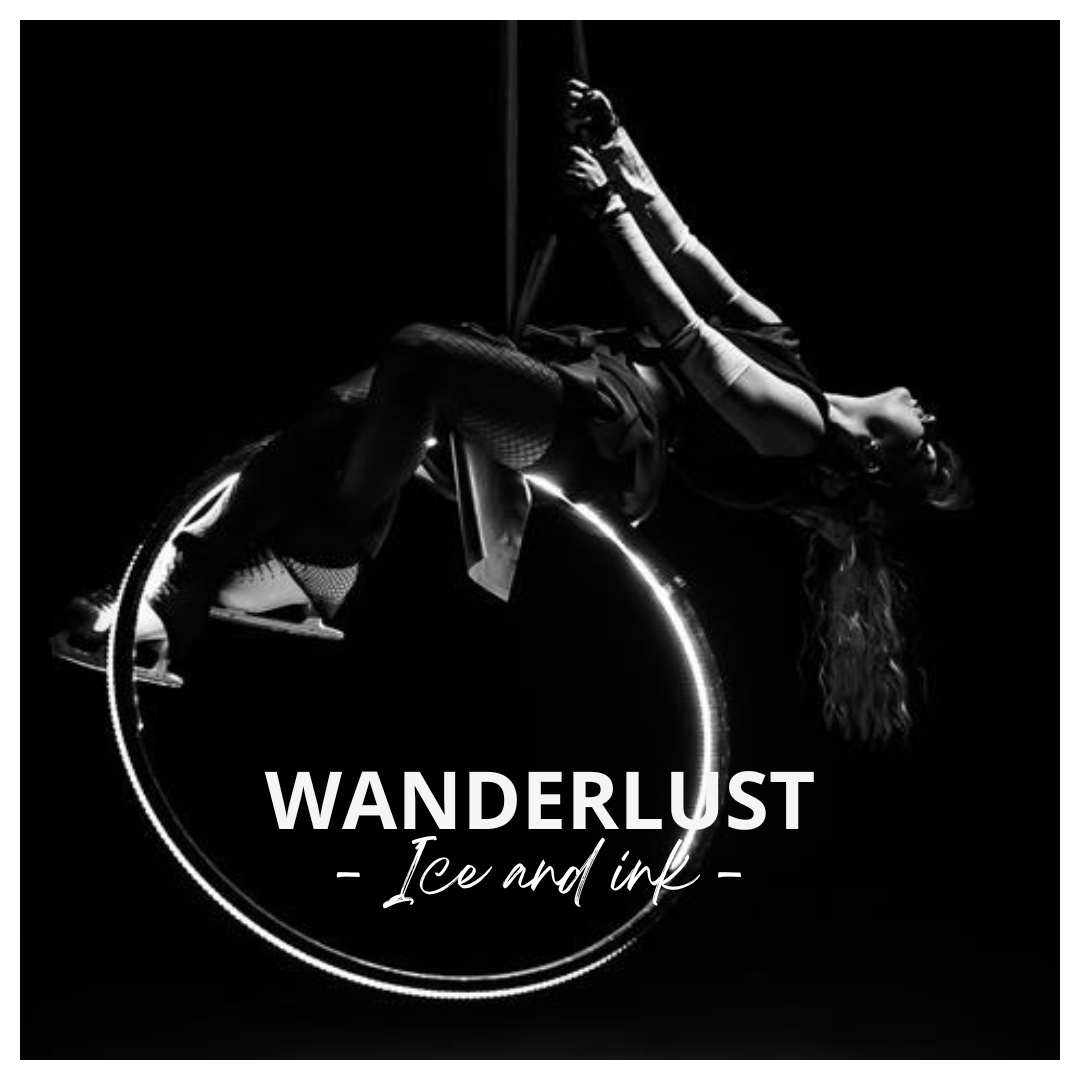
Wanderlust Ice & Ink – Edito: Life as a Professional Aerialist on Ice and Pair Figure Skater


Wanderlust Ice & Ink – Édito: Life as a Professional Aerialist on Ice and Pair Figure Skater. - With Josh Levitt. (c) Gaelle Robert, Daniel Zamora

I am a professional figure skater and an aerialist on ice, performing ice shows around the world. Today, these two disciplines define my work, the way my professional life is structured, and the continuity that exists whether I am on stage or between contracts. Performance is only one visible moment of a profession that extends far beyond shows, schedules, and appearances.
For a long time, I spoke about the path that led me here. The choices, transitions, and stages that shaped this trajectory were necessary to understand where I come from. But there comes a moment when recounting the road is no longer enough. What matters is defining what this life has become in practice, here and now. This profession cannot be reduced to what is seen. Being a professional pair skater and aerialist on ice means maintaining an ongoing relationship with training, preparation, physical intelligence, and artistic discipline. Work exists even when nothing is planned, nothing is visible, and no performance is scheduled. It is this continuity that defines the reality of the job.
This article sets the framework for that reality. It outlines what my professional life includes today, how work is structured beyond performances, and what remains constant regardless of context. The sections that follow explore, first, what my professional life looks like in the present, then the invisible part of the job that sustains it, and finally the logic that explains why this life is built, intentional, and not accidental. On stage and beyond, this is the perimeter within which my work exists.
For a long time, I spoke about the path that led me here. The choices, transitions, and stages that shaped this trajectory were necessary to understand where I come from. But there comes a moment when recounting the road is no longer enough. What matters is defining what this life has become in practice, here and now. This profession cannot be reduced to what is seen. Being a professional pair skater and aerialist on ice means maintaining an ongoing relationship with training, preparation, physical intelligence, and artistic discipline. Work exists even when nothing is planned, nothing is visible, and no performance is scheduled. It is this continuity that defines the reality of the job.
This article sets the framework for that reality. It outlines what my professional life includes today, how work is structured beyond performances, and what remains constant regardless of context. The sections that follow explore, first, what my professional life looks like in the present, then the invisible part of the job that sustains it, and finally the logic that explains why this life is built, intentional, and not accidental. On stage and beyond, this is the perimeter within which my work exists.
 WC Sarah talks.mp3 (1.43 Mo)

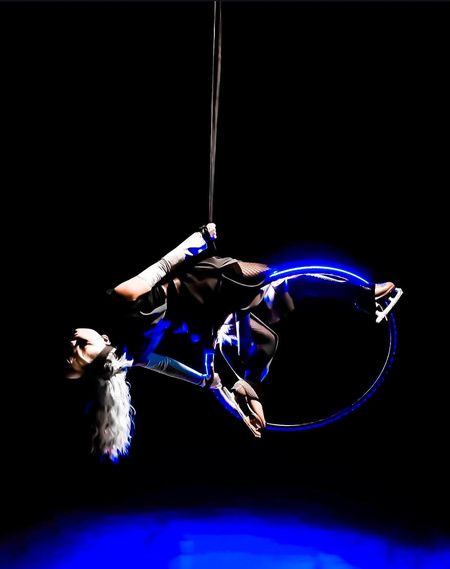
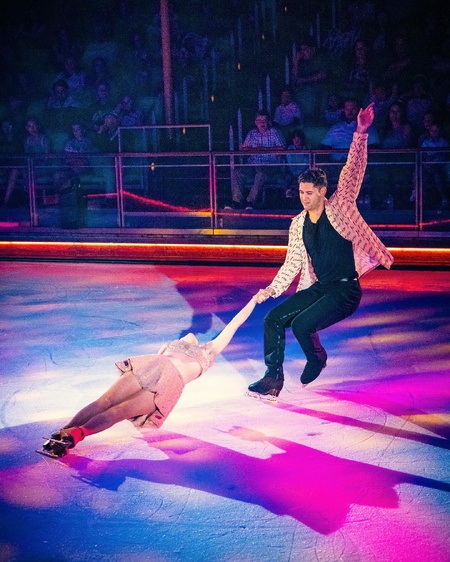
Today, my professional life is structured around continuity rather than moments. Being a professional pair skater and aerialist on ice is not defined by how often I perform, but by how deliberately I prepare my body and my work to be ready for performance at any time. Whether I am on stage, preparing for a future contract, or between engagements, the work never truly stops. Training, preparation, and physical maintenance are not optional phases of the job. They are the job. There is no true “off” period. Being between contracts does not mean stepping away from the profession, it means shifting the focus of the work. Training becomes less visible, more internal, and often more technical. Progress is protected through consistency rather than intensity. Losing sharpness can happen quickly. Rebuilding it takes far longer. Indeed, what may appear from the outside as a pause or a gap between contracts is, in reality, a purposeful phase of construction. Each period away from the stage has a clear objective. When I focus on my aerial work between contracts, it is not simply to stay in shape, but to build, refine, and prepare aerial acts to be presented to different companies. These acts are conceived as complete numbers, with specific themes, musical choices, and technical identities. Over time, this process has allowed me to develop a growing catalogue of aerial pieces, offering multiple artistic directions rather than a single format. At the same time, pair skating remains a central pillar of my work. When my partner, who is based abroad in the United States, comes to train in France between contracts, these periods are used very deliberately. We do not train to “stay warm,” but to prepare what comes next. This includes working on programs and numbers intended for future ships, refining technical elements, and returning to pure skating fundamentals. These sessions are used to clean up details, improve flow, adjust timing, and strengthen the overall quality of our skating as a pair.
Pair skating requires constant attention to timing, edge quality, lift mechanics, and the precision of shared movement. Trust is not something that exists once and for all. It is maintained through repetition, through refining entrances and exits, through adjusting grips, weight placement, and reaction time. Even outside of contract periods, pair elements must be revisited regularly to keep the body responsive and the partnership technically sharp. Between contracts, this work becomes a space for progression rather than maintenance, a moment to address areas that need improvement and reinforce foundations before returning to the stage.
Aerial work on ice follows a different logic. Training does not consist of endlessly repeating tricks, but of preparing the body to sustain inverted work safely and efficiently. Grip strength, shoulder stability, core engagement, and controlled descent are central to every session. Much of the work happens before the act itself, through conditioning, endurance training, and the refinement of transitions so that movements remain fluid and secure when performed above the ice. Small technical details, such as hand placement, entry angles, or the timing of release, are constantly adjusted to reduce risk and improve control. Over the past year, this research has taken a very specific direction with the development of aerial hoop performances using LED technology on ice. LED aerial hoop remains extremely rare in an ice context. Very few artists currently work with this apparatus on ice, and even fewer have developed complete acts around it. This is an area I am actively building, both technically and artistically, by adapting aerial vocabulary, visual effects, and safety requirements to the constraints of ice. The periods between contracts are essential to this process. They are where experimentation happens, where ideas are tested, refined, and prepared to be presented professionally.
Balancing these disciplines requires strategic choices. Certain phases prioritize strength and aerial conditioning, while others focus on skating quality, glide, and partnering work. Recovery, mobility, and injury prevention are treated as active components of training, not as afterthoughts. The goal is not to push endlessly, but to maintain a level of readiness that allows both disciplines to coexist without compromising safety or longevity. What defines my professional life today is not a routine designed to be shown, but a sustained, disciplined relationship with work that exists largely out of sight. Each phase serves a purpose. Each pause has a direction. The moments on stage are brief. What allows them to exist is a continuous process of preparation, research, and refinement. This is the reality of my profession as it exists now, between ice and air, on stage and beyond it.
Pair skating requires constant attention to timing, edge quality, lift mechanics, and the precision of shared movement. Trust is not something that exists once and for all. It is maintained through repetition, through refining entrances and exits, through adjusting grips, weight placement, and reaction time. Even outside of contract periods, pair elements must be revisited regularly to keep the body responsive and the partnership technically sharp. Between contracts, this work becomes a space for progression rather than maintenance, a moment to address areas that need improvement and reinforce foundations before returning to the stage.
Aerial work on ice follows a different logic. Training does not consist of endlessly repeating tricks, but of preparing the body to sustain inverted work safely and efficiently. Grip strength, shoulder stability, core engagement, and controlled descent are central to every session. Much of the work happens before the act itself, through conditioning, endurance training, and the refinement of transitions so that movements remain fluid and secure when performed above the ice. Small technical details, such as hand placement, entry angles, or the timing of release, are constantly adjusted to reduce risk and improve control. Over the past year, this research has taken a very specific direction with the development of aerial hoop performances using LED technology on ice. LED aerial hoop remains extremely rare in an ice context. Very few artists currently work with this apparatus on ice, and even fewer have developed complete acts around it. This is an area I am actively building, both technically and artistically, by adapting aerial vocabulary, visual effects, and safety requirements to the constraints of ice. The periods between contracts are essential to this process. They are where experimentation happens, where ideas are tested, refined, and prepared to be presented professionally.
Balancing these disciplines requires strategic choices. Certain phases prioritize strength and aerial conditioning, while others focus on skating quality, glide, and partnering work. Recovery, mobility, and injury prevention are treated as active components of training, not as afterthoughts. The goal is not to push endlessly, but to maintain a level of readiness that allows both disciplines to coexist without compromising safety or longevity. What defines my professional life today is not a routine designed to be shown, but a sustained, disciplined relationship with work that exists largely out of sight. Each phase serves a purpose. Each pause has a direction. The moments on stage are brief. What allows them to exist is a continuous process of preparation, research, and refinement. This is the reality of my profession as it exists now, between ice and air, on stage and beyond it.
Aerial Work On and Off the Ice and the Discipline of Safety

When a training day is dedicated entirely to aerial work, its purpose is not maintenance alone, but construction. These days are used to develop, refine, and prepare aerial acts as complete professional pieces, meant to be presented to different companies. The objective is never simply to repeat existing material, but to build a repertoire of acts with distinct identities, themes, and technical demands. Between contracts, this aerial-focused work also serves a strategic purpose. It allows me to prepare a catalogue of aerial acts rather than a single piece. Each act is conceived as a complete number, with its own musical choice, visual language, and technical structure. This approach makes it possible to adapt proposals to different productions and artistic contexts, rather than forcing one format to fit every situation. Over the past year, this work has increasingly focused on the development of aerial hoop performances using LED technology on ice. LED aerial hoop remains extremely rare in an ice environment. Very few artists currently work with this apparatus on ice, and even fewer have developed complete acts around it. Integrating LED technology adds an additional layer of complexity, requiring careful consideration of visual effects, spatial perception, timing, and safety, all of which must be coordinated closely with the rigger.
Much of this work begins long before I ever step onto the ice. During the Covid period, I trained intensively off-ice with circus coaches, learning aerial techniques in a controlled environment before bringing them into an ice context. This off-ice foundation remains crucial today. Many elements must first be tested, understood, and mastered in a traditional aerial space before they can be adapted safely above the ice. I cannot experiment freely on ice if the movement has not already been explored and secured off-ice. Ice is where the act takes its final form, but the real technical research often starts elsewhere. Once on the ice, aerial training days are structured around preparation before performance. Conditioning, grip endurance, shoulder stability, and core engagement form the base of each session. This preparatory work is essential to ensure that inverted positions, dynamic transitions, and controlled descents can be sustained safely and consistently. Without this foundation, repetition becomes counterproductive.
These aerial days often begin very early in the morning, when the rink is still quiet and cold. Working in these conditions requires physical and mental readiness, but it also represents a rare privilege: access to ice for aerial training. Being able to practice aerial disciplines directly on ice is extremely uncommon in the professional world. Most aerialists never have this possibility, and many ice performers do not have a secure framework that allows aerial work above the rink. Having regular access to both the ice and the appropriate technical support is therefore not something I take for granted — it is a fundamental condition of how my work can exist at all. Before even beginning any aerial work on ice, a significant part of my training always takes place off the rink. I spend many hours warming up and preparing my body on the ground, working on mobility, activation, and alignment so that I can approach the ice in a safe and effective way. This off-ice preparation is not optional, it is a fundamental step of my process. Many elements require extensive conditioning and rehearsal away from the ice before they can be translated above it. In reality, a large portion of my aerial work happens off-ice, because only a body that is fully prepared, awake, and properly engaged can then perform with control and clarity on the ice.
Then once I finish my warm up or the off ice work, I can transfer everything I plan to put in my number on ice. However, aerial training on ice never happens alone. Every session requires the presence of a qualified rigger, whose role is essential to both safety and performance. The rigger does not simply install equipment; they actively supervise timing, tension, placement, and stability throughout the session. Every movement in the air is connected to this technical dialogue between body, apparatus, and rigging. Without ice and without a professional rigger, aerial work on ice would simply not be possible, not only for practical reasons, but above all for safety. Technical research occupies a central place in these sessions. Transitions are tested, entries and exits are adjusted, and sequences are rewritten to improve fluidity and reduce unnecessary risk. Small details, such as hand placement, entry angles, or the timing of release, are constantly evaluated in coordination with the rigger. These adjustments are not cosmetic; they determine whether an act can be performed repeatedly, under different conditions, and over time. Aerial-focused training days are absolutely not about pushing limits for the sake of intensity. I work to look for precision, endurance, and long-term sustainability. The goal is to build acts that can be performed consistently, safely, and with clarity, rather than relying on isolated moments of risk. This is where much of the unseen work of my profession happens: away from the stage, but essential to everything that eventually appears on it.Beyond this technical framework, my work also relies on a deeper, human and artistic partnership with my husband Tanguy, who is himself a professional figure skater. He understands the codes of skating, the language of performance, and the precise timing required both on ice and in the air. Because he knows me intimately as an athlete and as an artist, he can anticipate my needs, read my movement, and respond in real time to what is happening above the ice. This shared understanding creates a level of trust and precision that is indispensable. Without the combination of an experienced rigger and someone who masters both the technical and artistic dimensions of skating and spectacle, I simply could not do the work that I do today. The importance of this collaboration is something I will explore in greater depth in future articles.
Much of this work begins long before I ever step onto the ice. During the Covid period, I trained intensively off-ice with circus coaches, learning aerial techniques in a controlled environment before bringing them into an ice context. This off-ice foundation remains crucial today. Many elements must first be tested, understood, and mastered in a traditional aerial space before they can be adapted safely above the ice. I cannot experiment freely on ice if the movement has not already been explored and secured off-ice. Ice is where the act takes its final form, but the real technical research often starts elsewhere. Once on the ice, aerial training days are structured around preparation before performance. Conditioning, grip endurance, shoulder stability, and core engagement form the base of each session. This preparatory work is essential to ensure that inverted positions, dynamic transitions, and controlled descents can be sustained safely and consistently. Without this foundation, repetition becomes counterproductive.
These aerial days often begin very early in the morning, when the rink is still quiet and cold. Working in these conditions requires physical and mental readiness, but it also represents a rare privilege: access to ice for aerial training. Being able to practice aerial disciplines directly on ice is extremely uncommon in the professional world. Most aerialists never have this possibility, and many ice performers do not have a secure framework that allows aerial work above the rink. Having regular access to both the ice and the appropriate technical support is therefore not something I take for granted — it is a fundamental condition of how my work can exist at all. Before even beginning any aerial work on ice, a significant part of my training always takes place off the rink. I spend many hours warming up and preparing my body on the ground, working on mobility, activation, and alignment so that I can approach the ice in a safe and effective way. This off-ice preparation is not optional, it is a fundamental step of my process. Many elements require extensive conditioning and rehearsal away from the ice before they can be translated above it. In reality, a large portion of my aerial work happens off-ice, because only a body that is fully prepared, awake, and properly engaged can then perform with control and clarity on the ice.
Then once I finish my warm up or the off ice work, I can transfer everything I plan to put in my number on ice. However, aerial training on ice never happens alone. Every session requires the presence of a qualified rigger, whose role is essential to both safety and performance. The rigger does not simply install equipment; they actively supervise timing, tension, placement, and stability throughout the session. Every movement in the air is connected to this technical dialogue between body, apparatus, and rigging. Without ice and without a professional rigger, aerial work on ice would simply not be possible, not only for practical reasons, but above all for safety. Technical research occupies a central place in these sessions. Transitions are tested, entries and exits are adjusted, and sequences are rewritten to improve fluidity and reduce unnecessary risk. Small details, such as hand placement, entry angles, or the timing of release, are constantly evaluated in coordination with the rigger. These adjustments are not cosmetic; they determine whether an act can be performed repeatedly, under different conditions, and over time. Aerial-focused training days are absolutely not about pushing limits for the sake of intensity. I work to look for precision, endurance, and long-term sustainability. The goal is to build acts that can be performed consistently, safely, and with clarity, rather than relying on isolated moments of risk. This is where much of the unseen work of my profession happens: away from the stage, but essential to everything that eventually appears on it.Beyond this technical framework, my work also relies on a deeper, human and artistic partnership with my husband Tanguy, who is himself a professional figure skater. He understands the codes of skating, the language of performance, and the precise timing required both on ice and in the air. Because he knows me intimately as an athlete and as an artist, he can anticipate my needs, read my movement, and respond in real time to what is happening above the ice. This shared understanding creates a level of trust and precision that is indispensable. Without the combination of an experienced rigger and someone who masters both the technical and artistic dimensions of skating and spectacle, I simply could not do the work that I do today. The importance of this collaboration is something I will explore in greater depth in future articles.
A Hybrid Day, Between Air and Pair Ice Skating

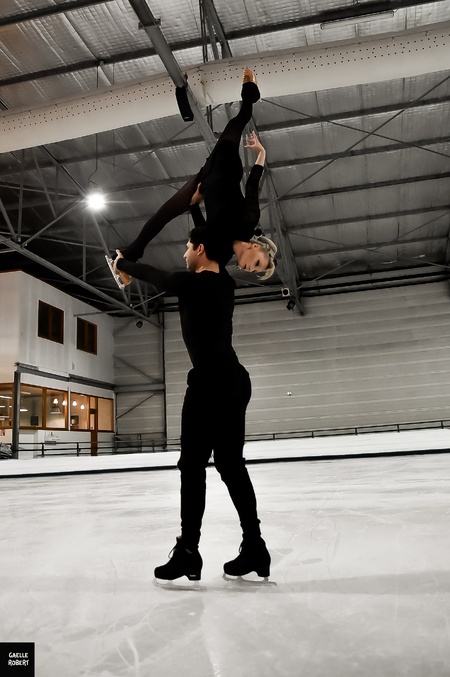
There are days when my work is not divided between aerial and skating, but when these two practices weave together into a single, continuous line of movement. These hybrid days are often the most demanding, but they are also the most revealing of what it truly means to be both a pair skater and an aerialist on ice. They are neither improvised nor chaotic. They are intentionally structured as one coherent trajectory where each discipline informs and strengthens the other. When my pair skating partner comes to train in France between contracts, these periods take on a strategic dimension. We do not meet simply to “stay in shape.” We work with a clear objective: preparing for the next season, the next ship, the next show. After my morning aerial session, pair training does not begin directly on the ice. We first spend about an hour working together off-ice. This stage is essential and almost entirely invisible to the public. We rehearse lifts on the ground, refine grips, test hand and arm placements, and revisit key positions. We also work through choreography, not to perform it fully, but to clarify intentions, transitions, and nuances of movement before translating them onto the ice.
These off-ice moments are also a space for reflection and creation. We brainstorm new lift ideas, search for variations, reinforce elements we already master, and test possibilities before bringing them onto the ice. It is both a technical and imaginative phase, where we build the quality of the partnership without the immediate constraints of gliding. Only then do we step onto the ice. Once there, our sessions focus on three core priorities: pure technique, quality of glide, and precision of partnership. We work extensively on skating skills, edge depth, fluid trajectories, and clarity of movement. This work can look subtle from the outside, but it is the foundation of everything. On the ice, we usually begin with lifts we already know well, to reconnect with reliable sensations and timing. From there, we also experiment with new lifts, carefully pushing our limits while staying within a secure framework. Every grip, every entry, and every exit is reviewed, adjusted, and reinforced. Trust is not something that exists once and for all. It is maintained through conscious repetition. We analyze posture, alignment, timing, and responsiveness, because a fraction of a second can make the difference between a clean element and a shaky one. These details often go unnoticed by the audience, yet they are the heart of our profession.
In a hybrid day, pair skating does not replace aerial work, it enters into dialogue with it. After time on the ice, I frequently return to more targeted aerial work. Sometimes I refine aerial hoop or aerial straps transitions, sometimes I explore a new quality of suspension, sometimes I search for a different breath within a movement I already know. The body retains the memory of skating, and aerial work allows me to investigate other qualities of control, weight, and spatial awareness. These days also require careful energy management. The goal is not to do everything at once, but to distribute effort intelligently between strength, endurance, and precision. Recovery, mobility, and injury prevention are treated as active parts of training, not secondary steps. The aim is not to accumulate hours, but to improve the quality of each one. Another important dimension of these hybrid days is that we are sometimes informed in advance of the programs we will perform on the next ship. When this happens, our work between contracts becomes even more purposeful. While on board, we often present or audition a number for a future contract. If that number is approved, it becomes the material we will continue to refine during the off-ship season. In that case, the time between ships is not simply maintenance. It is a period dedicated to polishing the program so that it is as close to show-ready as possible before we even return on board. We clean transitions, strengthen lifts, refine musicality, and ensure that the piece is technically solid and artistically coherent. This way, when we arrive for the next contract, the foundation is already in place rather than rushed into shape at the last minute. A hybrid day is therefore not just a mix of activities. It is a synthesis of my profession. It is the moment when skating and aerial work cease to exist as separate disciplines and become one unified way of working, thinking, and moving between air and ice, on stage and beyond. Working across these two disciplines is not only demanding, it is also deeply formative. Aerial work and pair skating appear to pull the body in opposite directions, yet in reality they constantly feed each other. The flexibility, mobility, and body awareness required in circus training directly support my work in pair skating, particularly in lifts, lines, and acrobatic transitions. At the same time, the strength, control, and precision developed through skating reinforce my aerial practice. This hybridity is therefore not a contradiction, but a source of athletic depth that strengthens both disciplines.
What is truly challenging is not the variety of work itself, but the speed at which I must shift mentally and physically between practices. Switching focus from aerial to skating, and allowing the body to recover within a very short window, requires discipline, self-awareness, and careful pacing. Yet this reality is not unique to me. It closely mirrors the conditions many professional dancers, circus artists, and multidisciplinary performers experience, especially during performance seasons. In that sense, my hybrid days between contracts resemble the intensity and rhythm of life on board, where versatility, adaptability, and endurance are constantly required.
These off-ice moments are also a space for reflection and creation. We brainstorm new lift ideas, search for variations, reinforce elements we already master, and test possibilities before bringing them onto the ice. It is both a technical and imaginative phase, where we build the quality of the partnership without the immediate constraints of gliding. Only then do we step onto the ice. Once there, our sessions focus on three core priorities: pure technique, quality of glide, and precision of partnership. We work extensively on skating skills, edge depth, fluid trajectories, and clarity of movement. This work can look subtle from the outside, but it is the foundation of everything. On the ice, we usually begin with lifts we already know well, to reconnect with reliable sensations and timing. From there, we also experiment with new lifts, carefully pushing our limits while staying within a secure framework. Every grip, every entry, and every exit is reviewed, adjusted, and reinforced. Trust is not something that exists once and for all. It is maintained through conscious repetition. We analyze posture, alignment, timing, and responsiveness, because a fraction of a second can make the difference between a clean element and a shaky one. These details often go unnoticed by the audience, yet they are the heart of our profession.
In a hybrid day, pair skating does not replace aerial work, it enters into dialogue with it. After time on the ice, I frequently return to more targeted aerial work. Sometimes I refine aerial hoop or aerial straps transitions, sometimes I explore a new quality of suspension, sometimes I search for a different breath within a movement I already know. The body retains the memory of skating, and aerial work allows me to investigate other qualities of control, weight, and spatial awareness. These days also require careful energy management. The goal is not to do everything at once, but to distribute effort intelligently between strength, endurance, and precision. Recovery, mobility, and injury prevention are treated as active parts of training, not secondary steps. The aim is not to accumulate hours, but to improve the quality of each one. Another important dimension of these hybrid days is that we are sometimes informed in advance of the programs we will perform on the next ship. When this happens, our work between contracts becomes even more purposeful. While on board, we often present or audition a number for a future contract. If that number is approved, it becomes the material we will continue to refine during the off-ship season. In that case, the time between ships is not simply maintenance. It is a period dedicated to polishing the program so that it is as close to show-ready as possible before we even return on board. We clean transitions, strengthen lifts, refine musicality, and ensure that the piece is technically solid and artistically coherent. This way, when we arrive for the next contract, the foundation is already in place rather than rushed into shape at the last minute. A hybrid day is therefore not just a mix of activities. It is a synthesis of my profession. It is the moment when skating and aerial work cease to exist as separate disciplines and become one unified way of working, thinking, and moving between air and ice, on stage and beyond. Working across these two disciplines is not only demanding, it is also deeply formative. Aerial work and pair skating appear to pull the body in opposite directions, yet in reality they constantly feed each other. The flexibility, mobility, and body awareness required in circus training directly support my work in pair skating, particularly in lifts, lines, and acrobatic transitions. At the same time, the strength, control, and precision developed through skating reinforce my aerial practice. This hybridity is therefore not a contradiction, but a source of athletic depth that strengthens both disciplines.
What is truly challenging is not the variety of work itself, but the speed at which I must shift mentally and physically between practices. Switching focus from aerial to skating, and allowing the body to recover within a very short window, requires discipline, self-awareness, and careful pacing. Yet this reality is not unique to me. It closely mirrors the conditions many professional dancers, circus artists, and multidisciplinary performers experience, especially during performance seasons. In that sense, my hybrid days between contracts resemble the intensity and rhythm of life on board, where versatility, adaptability, and endurance are constantly required.
Why this life is built
My professional life today is not defined by isolated performances, but by a continuous relationship to work that exists whether I am on stage or training away from it. What can look effortless in a show is sustained by many hours of preparation, repetition, and adjustment that mostly take place out of sight. Between ice and air, between solo work and partnership, my daily practice is shaped by discipline as much as by creativity. What I am able to do now is not the result of chance or sudden opportunity. It comes from years of training, choices, and persistence, built gradually through both successes and setbacks. This process has shaped not only my technique, but the way I approach my body, my work, and my profession. From this present moment, I want to explore these dimensions more deeply in the articles that follow. They will not focus on highlights, but on the foundations of my work, the technical, physical, and artistic layers that make performance possible. What years of work have sustained is not only a career, but a way of moving and thinking between air and ice, on stage and beyond.