

Wanderlust Ice & Ink – Travel: Milan, Five Facts About Italian Fashion and How La Scala Influenced The Fashion Code. (c) Sarah B.
But the roots of Milanese fashion go further back than the fashion industry itself. The city has always been a center of power, culture, and production. From the Roman city of Mediolanum to the Renaissan ce courts of the Visconti and Sforza, Milan developed a strong identity based on structure, discipline, and control. These elements are still visible today in the way fashion is designed and worn. One of the key influences in this evolution is Teatro alla Scala. Founded in 1778, La Scala became one of the most important cultural institutions in Europe. Opera in Milan was not only about music. It involved costume design, staging, posture, and visual presentation. Every detail was constructed to create a strong and controlled image on stage.
This approach influenced a broader aesthetic in the city. The importance of silhouette, the attention to detail, and the balance between expression and restraint can all be linked to this culture of performance. Over time, these elements became part of Milanese fashion. Understanding fashion in Milan therefore means understanding this connection between history, performance, and design. This connection is reinforced by the economic and industrial development of the city. During the nineteenth and twentieth centuries, Milan became one of the main industrial centers in Italy, particularly in textiles, tailoring, and manufacturing. This industrial base allowed the city to combine creative design with technical execution, creating a fashion system that is both conceptual and highly functional. Unlike Paris, which historically focused on haute couture and artistic expression, Milan built its fashion identity on ready-to-wear, precision, and production. This difference is essential to understanding why Milanese fashion appears more structured and pragmatic. The garment is not only an artistic object, it is designed to be worn, to function, and to last. At the same time, La Scala reinforced a visual discipline that went beyond industry. Opera imposed strict codes: posture had to be controlled, gestures had to be intentional, and costumes had to support both movement and visual clarity. Performers were trained to occupy space with precision, creating a form of elegance that was constructed rather than improvised. This idea of control and presence can still be observed in Milan today. The way clothing is worn often reflects this same discipline. Silhouettes are clean, colors are measured, and details are carefully considered. There is rarely excess, but there is always intention. The influence of costume design is also significant. At La Scala, costumes are not decorative elements, they are part of the narrative. They define character, status, and movement. This approach can be directly linked to the way Italian designers construct garments, where structure and purpose are central. Designers such as Giorgio Armani translated these cultural principles into modern fashion. By softening traditional tailoring while maintaining structure, Armani created a new form of elegance that remained controlled but more fluid. This balance between rigidity and movement reflects the same logic found in performance.
Similarly, brands like Prada and Versace interpreted Milanese codes in different ways, but always maintained a strong sense of identity. Whether minimal or expressive, their work remains grounded in structure, clarity, and visual coherence. Fashion Week in Milan also reflects this cultural background. The shows are not only presentations of clothing but carefully constructed environments where movement, rhythm, and staging play a central role. This reinforces the idea that fashion in Milan is closely linked to performance. Today, Milan continues to evolve as a global fashion capital, but its foundations remain unchanged. The city’s approach to style is still influenced by its history, its industrial strength, and its cultural institutions. Looking at Milan through this perspective allows a clearer understanding of its fashion identity. It is not only defined by designers or trends, but by a deeper system of values, structure, discipline, and controlled expression, that has been built over centuries. Here are five facts that help understand how Italian fashion and Teatro alla Scala define a distinct aesthetic code in Milan.
This approach influenced a broader aesthetic in the city. The importance of silhouette, the attention to detail, and the balance between expression and restraint can all be linked to this culture of performance. Over time, these elements became part of Milanese fashion. Understanding fashion in Milan therefore means understanding this connection between history, performance, and design. This connection is reinforced by the economic and industrial development of the city. During the nineteenth and twentieth centuries, Milan became one of the main industrial centers in Italy, particularly in textiles, tailoring, and manufacturing. This industrial base allowed the city to combine creative design with technical execution, creating a fashion system that is both conceptual and highly functional. Unlike Paris, which historically focused on haute couture and artistic expression, Milan built its fashion identity on ready-to-wear, precision, and production. This difference is essential to understanding why Milanese fashion appears more structured and pragmatic. The garment is not only an artistic object, it is designed to be worn, to function, and to last. At the same time, La Scala reinforced a visual discipline that went beyond industry. Opera imposed strict codes: posture had to be controlled, gestures had to be intentional, and costumes had to support both movement and visual clarity. Performers were trained to occupy space with precision, creating a form of elegance that was constructed rather than improvised. This idea of control and presence can still be observed in Milan today. The way clothing is worn often reflects this same discipline. Silhouettes are clean, colors are measured, and details are carefully considered. There is rarely excess, but there is always intention. The influence of costume design is also significant. At La Scala, costumes are not decorative elements, they are part of the narrative. They define character, status, and movement. This approach can be directly linked to the way Italian designers construct garments, where structure and purpose are central. Designers such as Giorgio Armani translated these cultural principles into modern fashion. By softening traditional tailoring while maintaining structure, Armani created a new form of elegance that remained controlled but more fluid. This balance between rigidity and movement reflects the same logic found in performance.
Similarly, brands like Prada and Versace interpreted Milanese codes in different ways, but always maintained a strong sense of identity. Whether minimal or expressive, their work remains grounded in structure, clarity, and visual coherence. Fashion Week in Milan also reflects this cultural background. The shows are not only presentations of clothing but carefully constructed environments where movement, rhythm, and staging play a central role. This reinforces the idea that fashion in Milan is closely linked to performance. Today, Milan continues to evolve as a global fashion capital, but its foundations remain unchanged. The city’s approach to style is still influenced by its history, its industrial strength, and its cultural institutions. Looking at Milan through this perspective allows a clearer understanding of its fashion identity. It is not only defined by designers or trends, but by a deeper system of values, structure, discipline, and controlled expression, that has been built over centuries. Here are five facts that help understand how Italian fashion and Teatro alla Scala define a distinct aesthetic code in Milan.
 Milan Fashion .mp3 (2.29 Mo)
Fact 1 — Milan Is One of the Capitals of Global Fashion

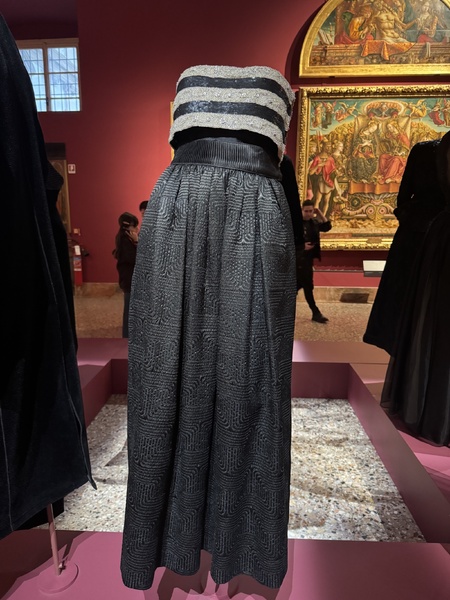
Milan stands alongside Paris, New York, and London as one of the four major fashion capitals in the world, but its position is built differently. The city did not become dominant through couture or image alone. It built fashion as an integrated system combining design, industry, and cultural influence.
This transformation accelerated in the post-war period, when northern Italy developed a strong industrial base. Milan became the center of a network connecting textile production in Lombardy and silk manufacturing in Como with design studios and fashion houses. This proximity between creation and production allowed designers to work directly with manufacturers, creating a model where ideas could quickly become finished garments. Unlike Paris, which historically focused on haute couture and exclusivity, Milan positioned itself around ready-to-wear. This shift was decisive. It allowed Italian fashion to expand internationally while maintaining high standards of craftsmanship. By the 1970s, Milan had overtaken Florence as the center of Italian fashion, largely due to this ability to combine creativity with industrial efficiency.
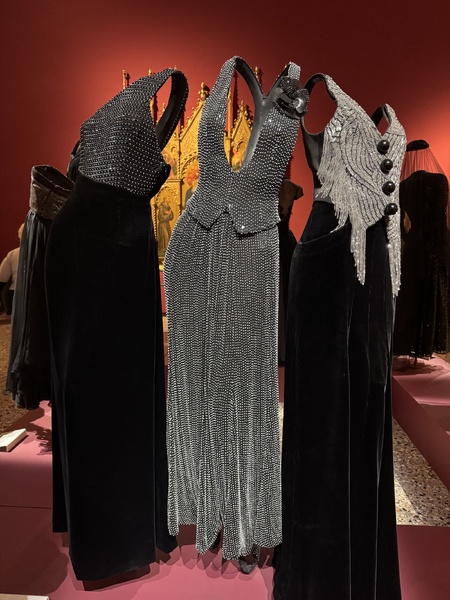
Designers such as Giorgio Armani played a key role in defining this identity. In 1975, Armani introduced ready-to-wear collections that redefined modern tailoring, moving away from rigid structures toward softer, more fluid silhouettes while maintaining precision and control. This approach changed not only fashion, but also how clothing interacted with the body, emphasizing movement and presence rather than decoration. This is where Milan becomes distinct. Fashion is not conceived as spectacle first. It is built through structure, proportion, and function. The garment must work, not just be seen. This explains why Milanese fashion often appears more restrained compared to other capitals. It avoids excess, focusing instead on clarity and construction. This logic is reinforced by the cultural environment of the city. Institutions such as Teatro alla Scala established a visual discipline based on control, staging, and presence. On stage, costumes are designed to support movement, posture is intentional, and every visual element contributes to a coherent image. This way of thinking extends beyond opera and can be observed in the way fashion is designed and worn in Milan. The connection becomes particularly visible in the relationship between performance and appearance. A performer at La Scala does not simply wear a costume — they embody it through posture and movement. Similarly, Milanese fashion emphasizes how clothing is carried. The silhouette is not only created by the garment itself, but by the way it is worn. Even the structure of Milan Fashion Week reflects this system. Unlike more theatrical presentations in other cities, Milan tends to prioritize coherence, construction, and clarity. Collections are designed as complete statements rather than isolated visual moments, reinforcing the idea that fashion here is part of a larger framework.
The city’s influence also extends into lifestyle and culture. From architecture to industrial design, Milan consistently values precision, efficiency, and long-term vision. Fashion becomes one expression of this broader system. Understanding Milan as a fashion capital therefore requires looking beyond its visibility. It is not simply a place where trends emerge, but a city where fashion is constructed through a combination of industry, discipline, and cultural influence. This is what allows Milan to remain central to the global fashion landscape.
This transformation accelerated in the post-war period, when northern Italy developed a strong industrial base. Milan became the center of a network connecting textile production in Lombardy and silk manufacturing in Como with design studios and fashion houses. This proximity between creation and production allowed designers to work directly with manufacturers, creating a model where ideas could quickly become finished garments. Unlike Paris, which historically focused on haute couture and exclusivity, Milan positioned itself around ready-to-wear. This shift was decisive. It allowed Italian fashion to expand internationally while maintaining high standards of craftsmanship. By the 1970s, Milan had overtaken Florence as the center of Italian fashion, largely due to this ability to combine creativity with industrial efficiency.
Designers such as Giorgio Armani played a key role in defining this identity. In 1975, Armani introduced ready-to-wear collections that redefined modern tailoring, moving away from rigid structures toward softer, more fluid silhouettes while maintaining precision and control. This approach changed not only fashion, but also how clothing interacted with the body, emphasizing movement and presence rather than decoration. This is where Milan becomes distinct. Fashion is not conceived as spectacle first. It is built through structure, proportion, and function. The garment must work, not just be seen. This explains why Milanese fashion often appears more restrained compared to other capitals. It avoids excess, focusing instead on clarity and construction. This logic is reinforced by the cultural environment of the city. Institutions such as Teatro alla Scala established a visual discipline based on control, staging, and presence. On stage, costumes are designed to support movement, posture is intentional, and every visual element contributes to a coherent image. This way of thinking extends beyond opera and can be observed in the way fashion is designed and worn in Milan. The connection becomes particularly visible in the relationship between performance and appearance. A performer at La Scala does not simply wear a costume — they embody it through posture and movement. Similarly, Milanese fashion emphasizes how clothing is carried. The silhouette is not only created by the garment itself, but by the way it is worn. Even the structure of Milan Fashion Week reflects this system. Unlike more theatrical presentations in other cities, Milan tends to prioritize coherence, construction, and clarity. Collections are designed as complete statements rather than isolated visual moments, reinforcing the idea that fashion here is part of a larger framework.
The city’s influence also extends into lifestyle and culture. From architecture to industrial design, Milan consistently values precision, efficiency, and long-term vision. Fashion becomes one expression of this broader system. Understanding Milan as a fashion capital therefore requires looking beyond its visibility. It is not simply a place where trends emerge, but a city where fashion is constructed through a combination of industry, discipline, and cultural influence. This is what allows Milan to remain central to the global fashion landscape.
Fact 2 — The Quadrilatero della Moda Is a Space of Power, Not Just Luxury

The Quadrilatero della Moda, located between Via Montenapoleone, Via della Spiga, Via Sant’Andrea, and Via Manzoni, is often presented as the most prestigious shopping district in Milan. While this is true, reducing it to a concentration of luxury boutiques overlooks its real function. The Quadrilatero is not only a commercial space, it is one of the most strategic and symbolic centers of the global fashion industry. Its development is closely linked to Milan’s transformation into a fashion capital during the twentieth century.
As Italian fashion moved from Florence to Milan in the 1970s, major houses began to establish their presence in this district. The choice was not accidental. The area already had historical prestige, characterized by neoclassical palaces and proximity to cultural landmarks such as La Scala. It offered both visibility and credibility. Over time, the Quadrilatero became a controlled environment where brands do not simply sell products, but construct their image. Flagship stores in this district are designed as architectural statements. Interiors are carefully curated, materials are selected to reflect identity, and the layout of each space contributes to the narrative of the brand. In this sense, the boutique becomes an extension of the collection itself. This is where the link with Milan’s broader cultural logic appears again. Just as at Teatro alla Scala, where staging, lighting, and costume define how a performance is perceived, the Quadrilatero operates through visual control. The street becomes a stage. Storefronts act as scenography. The passerby becomes both observer and participant in a carefully constructed environment. Presence matters here. The way people move through the district, the way they dress, even the pace at which they walk contributes to the atmosphere. It is not only a place of consumption, but a space where identity is displayed and interpreted. This reflects a deeper Milanese understanding of fashion as something that is performed in everyday life. Economically, the Quadrilatero also represents a concentration of global power. It hosts the headquarters or flagship stores of major Italian and international brands, making it one of the highest revenue-generating retail areas in Europe. Decisions made in these spaces influence global markets, from pricing strategies to visual merchandising trends. At the same time, the district reinforces the importance of consistency. Brands in Milan tend to present a coherent image across collections, stores, and communication. This continuity aligns with the Milanese preference for structure and clarity, distinguishing it from more experimental or disruptive approaches seen in other fashion capitals.
The Quadrilatero therefore functions on multiple levels. It is a commercial district, a cultural space, and a strategic platform where fashion is not only sold, but defined, staged, and controlled. Understanding its role helps explain why Milan’s influence goes beyond design. It lies in the city’s ability to create environments where fashion becomes part of a larger system of representation, where image, space, and presence are all carefully constructed.
As Italian fashion moved from Florence to Milan in the 1970s, major houses began to establish their presence in this district. The choice was not accidental. The area already had historical prestige, characterized by neoclassical palaces and proximity to cultural landmarks such as La Scala. It offered both visibility and credibility. Over time, the Quadrilatero became a controlled environment where brands do not simply sell products, but construct their image. Flagship stores in this district are designed as architectural statements. Interiors are carefully curated, materials are selected to reflect identity, and the layout of each space contributes to the narrative of the brand. In this sense, the boutique becomes an extension of the collection itself. This is where the link with Milan’s broader cultural logic appears again. Just as at Teatro alla Scala, where staging, lighting, and costume define how a performance is perceived, the Quadrilatero operates through visual control. The street becomes a stage. Storefronts act as scenography. The passerby becomes both observer and participant in a carefully constructed environment. Presence matters here. The way people move through the district, the way they dress, even the pace at which they walk contributes to the atmosphere. It is not only a place of consumption, but a space where identity is displayed and interpreted. This reflects a deeper Milanese understanding of fashion as something that is performed in everyday life. Economically, the Quadrilatero also represents a concentration of global power. It hosts the headquarters or flagship stores of major Italian and international brands, making it one of the highest revenue-generating retail areas in Europe. Decisions made in these spaces influence global markets, from pricing strategies to visual merchandising trends. At the same time, the district reinforces the importance of consistency. Brands in Milan tend to present a coherent image across collections, stores, and communication. This continuity aligns with the Milanese preference for structure and clarity, distinguishing it from more experimental or disruptive approaches seen in other fashion capitals.
The Quadrilatero therefore functions on multiple levels. It is a commercial district, a cultural space, and a strategic platform where fashion is not only sold, but defined, staged, and controlled. Understanding its role helps explain why Milan’s influence goes beyond design. It lies in the city’s ability to create environments where fashion becomes part of a larger system of representation, where image, space, and presence are all carefully constructed.
Fact 3 — Italian Designers Redefined Modern Elegance Through Structure, Not Excess

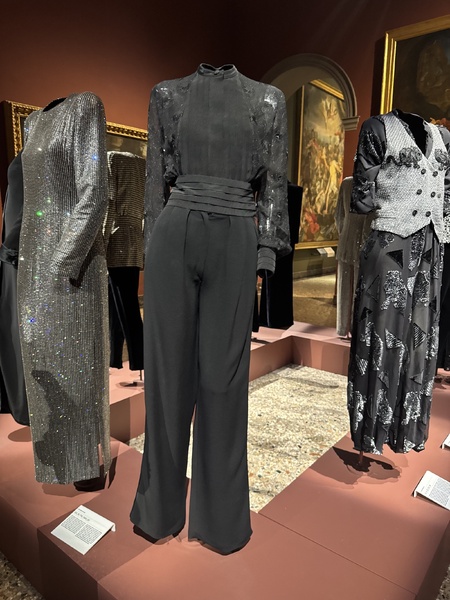
The global influence of Milan is inseparable from the designers who emerged from its system, but what distinguishes them is not only their visibility. It is the way they redefined elegance through structure, control, and clarity rather than spectacle.
In the 1970s and 1980s, figures such as Giorgio Armani, Gianni Versace, Gianfranco Ferré, and later Miuccia Prada did not simply create fashion, they reshaped how it functioned. Their work reflected the industrial and cultural environment of Milan, where design is closely linked to production and where garments are constructed with precision.
Giorgio Armani introduced a fundamental shift in modern tailoring. By removing rigid internal structures from jackets and softening the silhouette, he created a new type of suit that maintained authority while allowing movement. This approach changed the relationship between the body and the garment, making elegance appear more natural while still controlled. It also aligned with a broader Milanese idea: power does not need exaggeration.
Gianni Versace, while often associated with a more expressive aesthetic, operated within the same framework of control. His designs emphasized the body, using bold materials and cuts, but always with a strong sense of construction. The visual impact was immediate, but never accidental. Every element was designed to define presence.
Gianfranco Ferré, trained as an architect, approached fashion through structure. His garments were built with a precise understanding of volume and proportion, reinforcing the idea that clothing in Milan is designed as an object in space, not just as decoration.
Miuccia Prada introduced another dimension by combining intellectual references with strict construction. Her work challenged traditional ideas of beauty, but always within a controlled framework. Even when unconventional, her designs remain structured and deliberate, reflecting a Milanese preference for coherence over spontaneity.
What connects these designers is not a single aesthetic, but a shared method. They work through reduction, construction, and intention. Excess is avoided unless it serves a purpose. Decoration is secondary to structure. The garment must hold its shape, define the body, and function in movement. This approach can again be linked to the influence of performance. At Teatro alla Scala, costumes are not designed to distract, but to support the clarity of the character. Similarly, in Milanese fashion, the goal is not to overwhelm, but to define presence with precision. Over time, this method has become the foundation of Milan’s global identity. Even as trends evolve, the emphasis on structure, control, and wearability remains constant. Designers may differ in style, but they operate within a system that prioritizes construction over excess. Understanding the role of Italian designers in Milan therefore means looking beyond individual names. It means recognizing a collective approach that has redefined modern elegance as something built, measured, and sustained over time.
In the 1970s and 1980s, figures such as Giorgio Armani, Gianni Versace, Gianfranco Ferré, and later Miuccia Prada did not simply create fashion, they reshaped how it functioned. Their work reflected the industrial and cultural environment of Milan, where design is closely linked to production and where garments are constructed with precision.
Giorgio Armani introduced a fundamental shift in modern tailoring. By removing rigid internal structures from jackets and softening the silhouette, he created a new type of suit that maintained authority while allowing movement. This approach changed the relationship between the body and the garment, making elegance appear more natural while still controlled. It also aligned with a broader Milanese idea: power does not need exaggeration.
Gianni Versace, while often associated with a more expressive aesthetic, operated within the same framework of control. His designs emphasized the body, using bold materials and cuts, but always with a strong sense of construction. The visual impact was immediate, but never accidental. Every element was designed to define presence.
Gianfranco Ferré, trained as an architect, approached fashion through structure. His garments were built with a precise understanding of volume and proportion, reinforcing the idea that clothing in Milan is designed as an object in space, not just as decoration.
Miuccia Prada introduced another dimension by combining intellectual references with strict construction. Her work challenged traditional ideas of beauty, but always within a controlled framework. Even when unconventional, her designs remain structured and deliberate, reflecting a Milanese preference for coherence over spontaneity.
What connects these designers is not a single aesthetic, but a shared method. They work through reduction, construction, and intention. Excess is avoided unless it serves a purpose. Decoration is secondary to structure. The garment must hold its shape, define the body, and function in movement. This approach can again be linked to the influence of performance. At Teatro alla Scala, costumes are not designed to distract, but to support the clarity of the character. Similarly, in Milanese fashion, the goal is not to overwhelm, but to define presence with precision. Over time, this method has become the foundation of Milan’s global identity. Even as trends evolve, the emphasis on structure, control, and wearability remains constant. Designers may differ in style, but they operate within a system that prioritizes construction over excess. Understanding the role of Italian designers in Milan therefore means looking beyond individual names. It means recognizing a collective approach that has redefined modern elegance as something built, measured, and sustained over time.
Fact 4 — Teatro alla Scala Defined the Codes of Presence That Still Shape Milanese Fashion

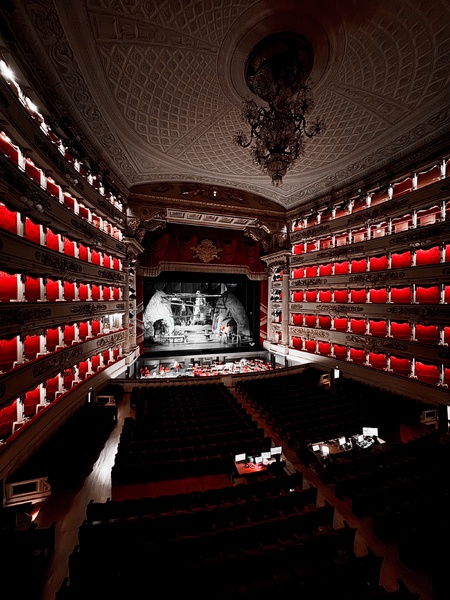
Teatro alla Scala is often presented as one of the most important opera houses in the world, but in Milan its influence extends far beyond music. Since its opening in 1778 under Austrian rule, La Scala has functioned as a cultural institution where visual discipline, social codes, and public representation were constructed and reinforced. It became a place not only to watch performances, but to be seen, to appear, and to present oneself within a highly codified environment.
From the beginning, attending La Scala was a social act as much as a cultural one. Members of the aristocracy and later the bourgeoisie occupied private boxes, where visibility mattered as much as the stage itself. Clothing, posture, and behavior were part of a broader system of representation. This environment contributed to defining standards of elegance based on control, precision, and awareness of one’s image in public space. On stage, this logic was even more structured. Opera at La Scala developed as a complete visual system in which costume, movement, and scenography were inseparable. Costumes were designed not only to reflect historical or narrative context, but to function within the constraints of performance. Fabrics had to react correctly under lighting, silhouettes had to remain legible from a distance, and construction had to support movement without losing form. This created a technical approach to clothing that goes beyond decoration. A costume at La Scala must perform. It must maintain structure, guide posture, and remain coherent throughout the performance. This requirement imposed a level of precision that is comparable to tailoring. The garment becomes an instrument, designed to support the body while controlling its appearance. This approach has clear parallels with Milanese fashion. In Milan, garments are constructed with a similar attention to structure and function. The silhouette is defined before decoration is considered. The objective is clarity. The viewer must immediately understand the form, just as an audience must immediately recognize a character on stage. The influence is also visible in the relationship between clothing and movement. At La Scala, performers are trained to control every gesture. Posture is deliberate, transitions are measured, and presence is maintained at all times. This discipline translates into the way fashion is worn in Milan. Elegance is not only visual, it is physical. It depends on how the body carries the garment. The importance of staging reinforces this connection. At La Scala, every element of the performance is coordinated. Lighting, set design, and costume are aligned to create a coherent visual composition. This concept of total control can be observed in Milanese fashion presentations, where shows are structured environments rather than spontaneous displays. The focus is on coherence, rhythm, and clarity. The historical continuity of La Scala also plays a role. Over the centuries, the theater has hosted composers, directors, and performers who contributed to refining this visual discipline. Productions became increasingly precise, and the relationship between costume and performance became more technical. This long-term evolution reinforced a culture where appearance is always constructed, never accidental.
Designers working in Milan operate within this cultural context, even when the reference is not explicit. The preference for structured silhouettes, controlled palettes, and functional elegance reflects a shared understanding of clothing as a system rather than an isolated object. This is why Milanese fashion often appears more restrained compared to other capitals. It avoids excess because excess disrupts clarity. The goal is not to create immediate impact through accumulation, but to maintain a strong and coherent presence over time. Understanding the influence of Teatro alla Scala therefore allows a more precise reading of Milanese fashion. It reveals a system based on discipline, construction, and control, where clothing is designed not only to be seen, but to function within a broader framework of movement, space, and representation.
From the beginning, attending La Scala was a social act as much as a cultural one. Members of the aristocracy and later the bourgeoisie occupied private boxes, where visibility mattered as much as the stage itself. Clothing, posture, and behavior were part of a broader system of representation. This environment contributed to defining standards of elegance based on control, precision, and awareness of one’s image in public space. On stage, this logic was even more structured. Opera at La Scala developed as a complete visual system in which costume, movement, and scenography were inseparable. Costumes were designed not only to reflect historical or narrative context, but to function within the constraints of performance. Fabrics had to react correctly under lighting, silhouettes had to remain legible from a distance, and construction had to support movement without losing form. This created a technical approach to clothing that goes beyond decoration. A costume at La Scala must perform. It must maintain structure, guide posture, and remain coherent throughout the performance. This requirement imposed a level of precision that is comparable to tailoring. The garment becomes an instrument, designed to support the body while controlling its appearance. This approach has clear parallels with Milanese fashion. In Milan, garments are constructed with a similar attention to structure and function. The silhouette is defined before decoration is considered. The objective is clarity. The viewer must immediately understand the form, just as an audience must immediately recognize a character on stage. The influence is also visible in the relationship between clothing and movement. At La Scala, performers are trained to control every gesture. Posture is deliberate, transitions are measured, and presence is maintained at all times. This discipline translates into the way fashion is worn in Milan. Elegance is not only visual, it is physical. It depends on how the body carries the garment. The importance of staging reinforces this connection. At La Scala, every element of the performance is coordinated. Lighting, set design, and costume are aligned to create a coherent visual composition. This concept of total control can be observed in Milanese fashion presentations, where shows are structured environments rather than spontaneous displays. The focus is on coherence, rhythm, and clarity. The historical continuity of La Scala also plays a role. Over the centuries, the theater has hosted composers, directors, and performers who contributed to refining this visual discipline. Productions became increasingly precise, and the relationship between costume and performance became more technical. This long-term evolution reinforced a culture where appearance is always constructed, never accidental.
Designers working in Milan operate within this cultural context, even when the reference is not explicit. The preference for structured silhouettes, controlled palettes, and functional elegance reflects a shared understanding of clothing as a system rather than an isolated object. This is why Milanese fashion often appears more restrained compared to other capitals. It avoids excess because excess disrupts clarity. The goal is not to create immediate impact through accumulation, but to maintain a strong and coherent presence over time. Understanding the influence of Teatro alla Scala therefore allows a more precise reading of Milanese fashion. It reveals a system based on discipline, construction, and control, where clothing is designed not only to be seen, but to function within a broader framework of movement, space, and representation.
Fact 5 — Giorgio Armani Redefined Milanese Elegance Through Structure and Control

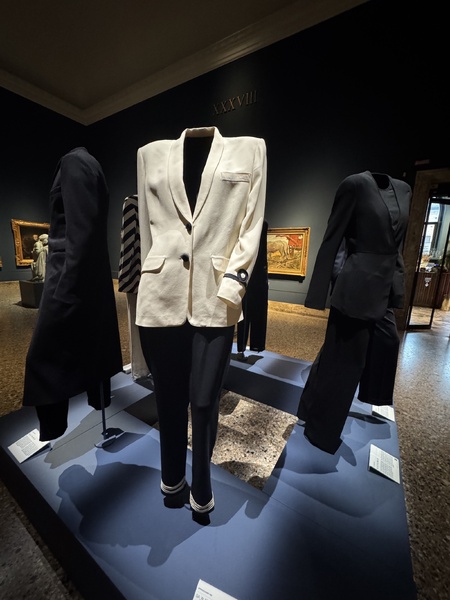
The modern identity of Milanese fashion cannot be understood without Giorgio Armani, whose work established a clear and lasting definition of elegance based on structure, control, and restraint.
Born in 1934 in Piacenza, Armani did not initially train as a designer. He worked in visual merchandising at La Rinascente in Milan before moving into menswear design in the 1960s. This background is essential to understanding his approach. He developed a strong awareness of how clothing is perceived, how it functions in space, and how it interacts with the body. When he founded his brand in 1975 with Sergio Galeotti, his objective was not to follow existing trends, but to redefine the structure of clothing itself. At the time, tailoring was rigid, formal, and often restrictive. Armani introduced a radical shift by deconstructing the traditional suit. He removed internal padding, softened the shoulder, and used lighter fabrics, allowing the garment to move naturally while maintaining a precise and controlled line. This became the foundation of his code. Armani’s aesthetic is based on reduction. He eliminates unnecessary elements and focuses on proportion, cut, and material. His color palette is deliberately restrained, greys, beiges, navy, black, creating a visual continuity that reinforces coherence. The result is a form of elegance that does not rely on decoration, but on precision. Another key element of his code is fluidity. Unlike traditional tailoring, which imposes structure on the body, Armani allows the body to define the garment. Movement becomes central. The clothing follows the wearer rather than constraining them. This creates a sense of ease that remains controlled, never casual. This balance between structure and fluidity is one of the defining characteristics of Milanese fashion. Armani’s approach is also deeply connected to the culture of Milan. His work reflects the city’s industrial logic, where design is closely linked to production. Garments are not conceived as isolated objects, but as part of a system that includes fabrication, wearability, and longevity. The influence of performance is also visible. Like costumes at Teatro alla Scala, Armani’s garments are designed to support presence. They must function in movement, maintain their structure under different conditions, and communicate identity clearly. The emphasis is not on excess, but on clarity. The wearer must be immediately legible, just as a character on stage must be understood at a glance. This connection is not only conceptual. Giorgio Armani has also designed costumes for productions at Teatro alla Scala, applying his approach to structure, material, and movement directly to the stage. In this context, clothing becomes a functional element of performance, subject to the same requirements of precision, visibility, and control. These constraints closely mirror Armani’s own design philosophy, reinforcing the continuity between fashion and opera in Milan. His international recognition accelerated in 1980 with the film American Gigolo, where Richard Gere’s wardrobe introduced Armani’s tailoring to a global audience. This moment marked a turning point, establishing a new visual code of masculinity based on control, simplicity, and confidence. Throughout the following decades, Armani expanded his influence across menswear, womenswear, and lifestyle, while maintaining strict consistency in his aesthetic. This continuity is essential. Unlike designers who redefine their style each season, Armani built a stable and recognizable code, reinforcing the idea of fashion as a long-term system rather than a series of trends.
Today, Armani remains one of the most influential figures in Milan. His work continues to define a model of elegance based on discipline, reduction, and control, aligning perfectly with the cultural codes shaped by the city. A city where fashion is not driven by excess, but by structure. Where elegance is not imposed, but constructed. And where style is defined by the way it is carried.
Born in 1934 in Piacenza, Armani did not initially train as a designer. He worked in visual merchandising at La Rinascente in Milan before moving into menswear design in the 1960s. This background is essential to understanding his approach. He developed a strong awareness of how clothing is perceived, how it functions in space, and how it interacts with the body. When he founded his brand in 1975 with Sergio Galeotti, his objective was not to follow existing trends, but to redefine the structure of clothing itself. At the time, tailoring was rigid, formal, and often restrictive. Armani introduced a radical shift by deconstructing the traditional suit. He removed internal padding, softened the shoulder, and used lighter fabrics, allowing the garment to move naturally while maintaining a precise and controlled line. This became the foundation of his code. Armani’s aesthetic is based on reduction. He eliminates unnecessary elements and focuses on proportion, cut, and material. His color palette is deliberately restrained, greys, beiges, navy, black, creating a visual continuity that reinforces coherence. The result is a form of elegance that does not rely on decoration, but on precision. Another key element of his code is fluidity. Unlike traditional tailoring, which imposes structure on the body, Armani allows the body to define the garment. Movement becomes central. The clothing follows the wearer rather than constraining them. This creates a sense of ease that remains controlled, never casual. This balance between structure and fluidity is one of the defining characteristics of Milanese fashion. Armani’s approach is also deeply connected to the culture of Milan. His work reflects the city’s industrial logic, where design is closely linked to production. Garments are not conceived as isolated objects, but as part of a system that includes fabrication, wearability, and longevity. The influence of performance is also visible. Like costumes at Teatro alla Scala, Armani’s garments are designed to support presence. They must function in movement, maintain their structure under different conditions, and communicate identity clearly. The emphasis is not on excess, but on clarity. The wearer must be immediately legible, just as a character on stage must be understood at a glance. This connection is not only conceptual. Giorgio Armani has also designed costumes for productions at Teatro alla Scala, applying his approach to structure, material, and movement directly to the stage. In this context, clothing becomes a functional element of performance, subject to the same requirements of precision, visibility, and control. These constraints closely mirror Armani’s own design philosophy, reinforcing the continuity between fashion and opera in Milan. His international recognition accelerated in 1980 with the film American Gigolo, where Richard Gere’s wardrobe introduced Armani’s tailoring to a global audience. This moment marked a turning point, establishing a new visual code of masculinity based on control, simplicity, and confidence. Throughout the following decades, Armani expanded his influence across menswear, womenswear, and lifestyle, while maintaining strict consistency in his aesthetic. This continuity is essential. Unlike designers who redefine their style each season, Armani built a stable and recognizable code, reinforcing the idea of fashion as a long-term system rather than a series of trends.
Today, Armani remains one of the most influential figures in Milan. His work continues to define a model of elegance based on discipline, reduction, and control, aligning perfectly with the cultural codes shaped by the city. A city where fashion is not driven by excess, but by structure. Where elegance is not imposed, but constructed. And where style is defined by the way it is carried.

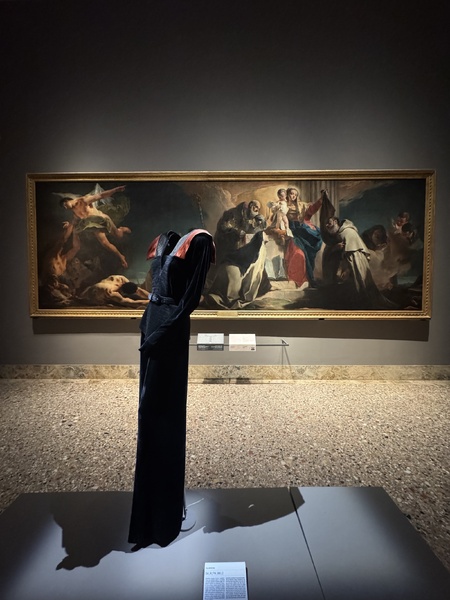
Looking at Milan through the lens of fashion alone gives an incomplete reading of the city. What defines its identity is the coherence between different fields, industry, culture, and performance, that have evolved together over time. Rather than existing separately, these elements reinforce one another, creating a stable framework within which style is produced, interpreted, and maintained.Within this structure, clothing is not treated as an isolated object. It is part of a broader system that includes how it is made, how it is presented, and how it is worn. This explains the consistency observed in Milanese fashion. Changes occur, but they are integrated within an existing logic rather than disrupting it. Teatro alla Scala plays a specific role in this construction. It established a model where visual clarity, control of movement, and coherence of form are essential. This approach introduced a disciplined way of thinking about appearance, where every element must contribute to a readable and controlled result. These principles extend beyond the theater. They can be observed in the way collections are structured, in the importance given to tailoring, and in the relationship between garment and body. The objective is not to create isolated visual effects, but to maintain continuity between design, movement, and context. This also explains the position Milan occupies within the global fashion landscape. Its influence is not based on rupture or constant reinvention, but on the ability to maintain a clear direction over time. The city operates through systems that prioritize execution, precision, and long-term coherence. Fashion in Milan therefore functions as an organized structure rather than a succession of trends. It integrates creation, production, and presentation into a unified process where each element has a defined role. Understanding this system allows a more precise reading of the city. Milan is not only a place where fashion is visible.
It is a place where it is constructed, regulated, and sustained through a set of interconnected practices.
It is a place where it is constructed, regulated, and sustained through a set of interconnected practices.


 Wanderlust Ice & Ink - Travel: Milan, Five Places to Eat That Define the City’s Traditional Dishes